
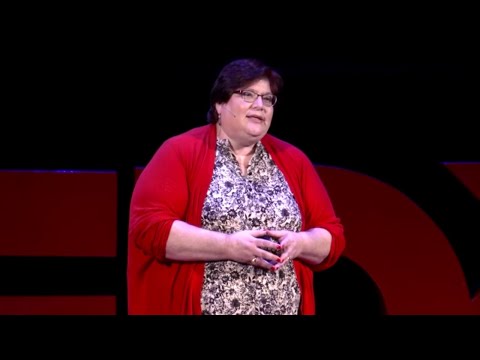
I want to talk with you about setting
goals that are based on your values I
suspect that when you hear that you
think we’re gonna talk about goals for
how to live your life we’re not we’re
actually going to talk about goals for
the end of life that’s not a
conversation anybody wants to have it’s
frightening it’s depressing nobody wants
to talk about death doctors don’t want
to talk about death either that’s one of
the reasons why the first explicit
conversation I ever had about death
happened at 10:30 at night in the
waiting room of the intensive care unit
about three weeks after I graduated from
medical school I’d been sent down there
to talk to a family I’d never met about
their mother who was a patient in that
intensive care unit she was dying they
didn’t know that and it was my job to
tell them I walked in the room I
introduced myself and I said we need to
talk about the ventilator that’s helping
your mother breathe because it’s really
not effective for her anymore and she’s
going to die I remember that
conversation with horror and I can only
imagine how that family remembers it
I’ve spent the rest of my career the
last 30 years trying to learn how to do
this better and to teach other people to
do it better
as well we know we need to do it better
because when we ask we know we’re not
serving people in the way that they want
to be served repeated surveys have told
us that the majority of Americans given
a choice want to die at home comfortably
with a minimum of medical intervention
but in 2014 65% of people who died in
the United States died in care either in
a hospital or a nursing home and 10 to
20 percent of those died in the
intensive care unit we’re not doing this
very well over the years one of the
things I’ve learned is that we need to
do it somewhere
else other than the intensive-care
waiting room we need to do it well
before anybody gets into the intensive
care unit we need to plan ahead thanks
to the work of Bob Arnold and Tim quill
I’ve also learned that we need to start
the conversation differently than we
usually do
ideally should be an opportunity to sit
down in an examining room or a
consultation room or your own home with
a doctor or somebody who can help you
through this and when I do this I start
out by saying tell me about yourself
what’s important to you what does a
really good day look like what are your
goals for your medical care what I’m
really asking what I really want to know
is what does quality of life mean to you
because that answer is going to be
different for everybody some people feel
that in order to have an acceptable
quality of life they have to be able to
move around independently other people
will say if I can communicate if I can
have a meaningful community interaction
with my friends and family then I don’t
care if I need assistance to move around
that’s that’s acceptable to me it’s
going it’s very individual it’s
different for everybody and that’s what
I need to know and once I figured that
out then I can say okay now let’s talk
about medical technology and I’ll tell
you what technology will help you meet
those goals and what technology we
really should put aside because it’s not
gonna get you where you want to go if we
do that planning ahead then when the
crisis comes we can make the right
choices if we do that planning ahead we
have to put it in writing it’s essential
to put it in writing for a number of
reasons
one is that it provides guidance to your
medical team to the people who are
taking care of you when you are
seriously ill about both what you want
done and
who you want to speak for you if you’re
unable to speak for yourself
putting it in writing means creating
both a living will and naming a
healthcare proxy or surrogate also
called
a durable power of attorney in
Pennsylvania both of those documents are
absolutely essential because
Pennsylvania has put legislation in pace
that tells us as physicians what to do
if we don’t have those documents it
tells us who your legal next of kin is
if you haven’t named anybody and you’re
unable to make your own decisions if
you’re legally married even if you’re
estranged from your spouse your spouse
is your legal next of kin and that’s the
person that I have to listen to who will
direct your medical care if you’re
married but you have adult children from
a previous relationship they have equal
standing in that decision and we have to
go by majority rule it’s not a position
people want to find themselves in it’s
not a position anybody want to put wants
to put their family in and in order to
avoid that you have to put it in writing
the living will says these are the
interventions I want if I am terminally
ill if I am coming to the end of my life
and these are the interventions I don’t
want in Pennsylvania the state has put
on the books that they’re going to
assume that everybody regardless of
their medical condition will want a
feeding tube unless they have
information in writing otherwise many
people feel strongly that that’s not
what they want you have to put it in
writing if you do that then when that
moment comes the people taking care of
you and the people who love you can make
the decisions you’d want them to make a
number of years ago I had the privilege
of taking care of a woman who suffered
through cancer three times the first
time she was in her early 70s she was
healthy she got diagnosed she had chemo
she did well cancer went away she was
fine several years later the cancer
recurred
she had chemotherapy again it was a
little rougher that time but she got
through it she survived and she was okay
the third time I got a letter from the
oncologist that says well the cancer has
returned and we’re going to start
chemotherapy I thought hmm I wonder
about that at this point the woman was
in her early 80s her husband had died a
few years before she was increasingly
frail she could no longer live on her
own so I called and invited her to come
into the office to discuss this with me
and she did she brought her two
daughters with her and I said to her so
what do you think about this and she
said I don’t want to do it I’ve been
waiting for somebody to tell me that I
don’t have to do it this conversation
took place on Friday chemotherapy was
scheduled to start the following Monday
and nobody had asked but because she and
I had had this conversation and I was
pretty sure I knew what her goals were
and what her values were I was able to
shift her care out of the chemotherapy
and into hospice which was what she
wanted and what her family supported
we’ve talked about planning ahead we’ve
talked about putting it in writing we’ve
talked about doing all that so that in a
moment of crisis we can do the right
thing but we don’t always know that it’s
a moment of crisis it’s not always so
clear cut we’re going to start
chemotherapy it doesn’t always happen
like that chronic diseases are well
chronic they go on for a long time they
change gradually people live with heart
disease and lung disease and
neurological conditions like Parkinson’s
disease for years they take medication
they get treatment they function pretty
well and then something changes the
treatment stops working they end up in
the hospital things have to get changed
and we don’t always know that that
change means we’re coming to the end
doctors don’t always know and even when
doctors
you know they’re often hesitant to say
so they don’t want to upset anybody and
doctors don’t like to talk about death
so what do you do if you’re in that
situation you have to ask the right
questions you have to ask what will my
life look like if I do this treatment
what will my life look like if I don’t
do this treatment how do you know that
this treatment will be effective for me
doctors have a lot of experience in
dealing with large numbers we can tell
you that this treatment is effective for
70% of the people in your situation ask
how they know that you fall into that
70% and ask what would happen if you did
nothing at all how many of you are
familiar with Atul Gawande book on being
mortal yeah
book came out about three years ago
Gawande as a cancer surgeon up in Boston
I read the book because I knew people
would have expected me to read the book
I didn’t want to read the book at that
point I’d been practicing as a hospice
medical director for a number of years
and I didn’t really see what anybody had
to teach me about end-of-life care even
some guy from Harvard I was wrong for
one thing the book is exquisitely
written and worth reading for that alone
but for another I actually did learn
something about end-of-life care in
addition to the questions that I had
always asked about quality of life and
goals and values go Andy offered me two
more he said ask what outcome is
unacceptable to you what what outcome
would take the treatment completely off
the table and ask what trade-offs are
you willing to make what are you willing
to give up what are you willing to
suffer through for the outcome that you
want and those questions transformed my
practice one of the things that
surprised me about that book was that
Gawande had been practicing
a cancer surgeon for a number of years
before he met the patient whose case
drove him to look at treatment at the
end of life
he’d been in practice all that time and
he’d never heard of palliative care when
he went looking for answers for his
patient he turned to a palliative care
colleague at dana-farber in Boston and
suddenly he learned about our discipline
I was surprised but I shouldn’t have
been most people don’t know about
palliative care
those who do think it’s only for people
with cancer or it’s only for people at
the very end of their lives when there’s
nothing more they can do for you and
they send you the palliative route as
someone said to me the other day that’s
not true
palliative care is a discipline that
offers care for people at any point in
the course of a serious illness they can
help people feel better they can help
reduce symptoms they can help improve
function throughout treatment and they
can help with those very difficult
decisions with those questions that it’s
so hard to ask they can help you get the
information you need from your doctors
to make the decisions that are best for
you
anybody facing serious or potentially
life-threatening illness could benefit
from a discussion with the palliative
care team nobody wants to have these
conversations but having those
conversations and making these plans can
be absolutely the greatest gift you can
give to your family my mother died a
couple of months ago after living with
dementia for a long time and because we
had this conversation when she was
capable of expressing her wishes my
brother and I knew exactly what she
wanted and exactly what she did not want
we that made it possible for her to die
comfortably at home in her own bed and
for my brother and I to know completely
and for sure
that we did the right thing there’s
tremendous peace in that knowledge and
busy
gift that she gave us and is it a gift
it is a gift that you can give your
loved ones as well nobody likes to talk
about death but when we do better things
can happen because you’re the expert on
your values and your goals and your
quality of life and I’m the expert on
what medical technology can get you
there and when it can’t and when those
two things are combined that’s when the
best medical care happens because your
values matter most thank you
[Applause]
Please follow and like us: