
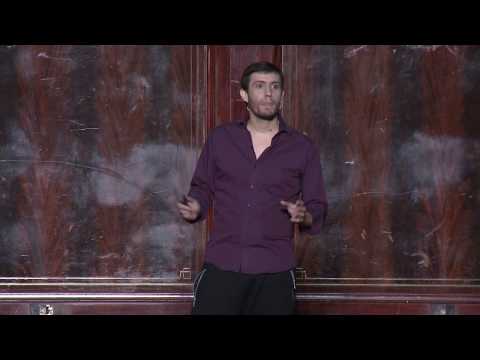
Translator: Daniel Moore Reviewer: Sebastian Betti
The truth is that I’m here because I love journalism.
If you see my backpack you will find lots of diaries
they stain your fingers with ink,
I’ll always walk with the scorer,
to see if I can get a story, to tell it,
because ultimately, that’s journalism,
and although I still use this recorder,
increasingly
I’m replacing it with the cell phone,
to always be willing to conquer some interview.
The dream of always is to have a strong investigation,
Spotlight type,
that of Boston’s pedophile priests,
we are always behind having “the” investigation,
that touches the entrails to power,
Make your own Watergate.
Obviously, the dream is to be on the street,
join with sources, find the data, get running to the newsroom,
sit down, put keys,
rub shoulders with journalism legends
who are sacrificing their health with liters of coffee, smoking, smoke,
perhaps, taking a whiskey, to be able to bank pressures,
because they are bothering power,
and there at that moment to put all the libido to the keys,
of being perhaps on the verge of a climax,
arrive at the close of each edition.
And here I am.
I’m a journalist, head of a section, that’s how newspapers are divided,
according to the topics that are published, and I deal with the subject of economics.
And there is, thankfully, not much smoke, because we are taking better care of ourselves,
coffee, more mate, there is some alcohol sometimes,
and the truth is that legends of journalism are not going to be,
either they retired, or they are giving them a voluntary retirement.
Always in the background are the company’s authorities,
worried because sales fall,
because advertising is carried by Google and Facebook,
because we are not The Washington Post, with Amazon behind,
We barely have two ads from a national supermarket.
And, in addition, there are a number of temporary workers, young people,
enthusiasts, who come with the same dreams,
and I receive them with this on my desk:
the extinction table of newspapers.
I have it in a corner, made by the people of the Reuters Institute:
In 2039, the paper diaries in Argentina are going to disappear.
The interns observe him, and then discover that next,
I have a magnet with another graphic,
the blue line: destruction of jobs in the newspaper industry.
They have to see the face of the intern, who arrives with the dreams intact,
of the same adrenaline of closures, of research, of Watergate.
You. Do they understand what is happening?
He and I feel that we arrived, we wanted to belong to the newspaper industry,
writing news that influences, and of blow, that work that
we just discovered that we have, where we are sitting,
that work, it does not exist anymore.
But the labor market, still has not realized,
not even the company where I work has done it, I hope you do not look at TED talks.
But, I perceive the grimace of despair, of sadness, in the intern,
and I have to take it out of the greatest temptation in all the newsrooms,
what is the complaint
If they go to the waiting room of an oncology clinic, they will believe
which is the red carpet of the Oscars next to four journalists talking.
And of course, to avoid the complaint, I say the same thing that I say to myself,
I put claw, creativity and I say, quiet, that adrenaline with which
you dreamed, that desire to have libidinous closures, now mutated.
Now, that new adrenaline is on the other side,
it is not knowing where our profession is going,
is not knowing what the formats are, what the languages are, the platforms,
how are we going to talk to the new audiences.
And there, the intern again looks at me, and I think I read in his eyes:
New adrenaline is that I will never have a stable job,
that in fact I’m going to lose this job that I just started.
The face of the intern is like that of a pet left by the moving truck.
There it is, it’s a drama, but it’s not strictly journalism,
You may be thinking that those of us who work in the media are
Facing this challenge and, in reality, is the same for all professions.
This can be the material of any other profession.
In the media it is clear what happens, there is Google, there is Facebook,
There is a change in the habits of millennials.
Enough of reports on them, please!
Now, if you look at what happens with economic journalism, which I do,
You will see that there is an even more structural problem,
because there are many financial applications that directly brings them the information
to those interested, going over the work of journalists,
but basically for a fundamental reason, and that is
the economy is boring.
Sure, numbers, graphs, technicalities, economic plans
with names longer than those of the shampoo.
Also, and this I can say because my wife is here,
economic journalism lives the same syndrome as independent theater,
she is an actress, and I perceive that the audience that is going to see her,
they are also independent theater actors.
And in economic journalism the same thing happens,
we speak the language of entrepreneurs, of investors, economists,
of the officials of the economic team, so that the investors can read them,
officials, businessmen, and government teams.
So the economy is boring, and it’s boring for four.
And there I think again about the new adrenaline,
to convince myself that maybe it means
do something different, because imagine if some day you want to get closer
to economic information, and someone talks to you in this way:
(Video) Here you can see that the electoral uncertainty puts pressure on the dollar
and the price is rising, that is why this uncertainty puts pressure on the dollar.
Electoral uncertainty puts pressure on the dollar,
and another financial analyst can talk to you like this:
(Video) Clearly, we live another black swan, which generates
a strong wait and see in the market, and what we are now seeing,
It is a great flight to quality.
With this, surely they will not feel desires to enter in the economic information,
and here we are talking about a journalist job crisis,
although not only of them, it is general, and we are facing collaborative works,
of crowdsourcing, of coworking, and even, we could talk
of the labor crisis of the spiderman.
(Video) Job insecurity in the spider man returned home.
Quiet, I will not tell you the movie that is being released
all over the world about our arachnid superhero,
but observe how the characters are presented.
The young student Peter Parker, is now an intern at the Ironman factory,
which is Tony Stark’s
Did you notice the meta message about labor relations
What’s in that movie?
Spiderman, our superhero, who has a supernatural gift,
is the intern in the factory of another person who does not have a talent like him,
but that has accumulated the necessary capital to invest in the technology that puts
in his suit and that makes him Ironman, in another superhero, at his height,
But that is also your boss!
Permanent plant already for Spiderman, enough of job precarization
in The Avengers!
From the labor crisis we could talk in this way.
Maybe make an online channel to talk about economics in an entertaining way,
can be a way to channel that new adrenaline,
or that deep fear, as you prefer to call it.
And an online channel of economics, obviously will not be the rage in the news,
and you will say, organizers, they cheated on me, they brought a person
that has an online channel, an old youtuber, démodée,
that can not even approach a famous youtuber.
Now, also in that you can do things differently,
because to talk about economics from an online channel in an entertaining way,
helps to understand that there are people who need
to explain economic issues in a simple way.
There are universities, companies, unions, and organizations of all kinds,
who are needing someone to explain them
to its affiliates, customers, suppliers, the economy in an entertaining way.
And then, an online channel, as a way to channel this new adrenaline,
It can even be a business, because content can be produced
to meet that need, and end up doing something similar to a stand up.
Then there you can detect that there is a demand for certain economic information,
but there is, perhaps, no offer, because the world of journalism
keep doing the same as before.
Well, here I told you about the law of supply and demand,
and it would be betraying the spirit of this talk,
if I do not do it in an entertaining way,
in such a way that my five-year-old daughter Vera can see it,
and for that, for example, I have to mix it with Frozen.
(Video) The law of supply and demand in Frozen,
yes, because they will know the story of Elsa, the princess who gets angry and freezes everything,
but few will have noticed the story of Kristoff, the ice seller,
that of: by the winter air and mountain rain.
Yes, Kristoff suffers a severe price crisis, because if everything is full
of snow, everything freezes, what he has to sell, is not worth anything.
How much will Kristoff have lost that ends up bargaining with the big man in the business,
there in the middle of the forest?
Has the State subsidized it?
Is there a line drop in the movie about market freedom,
with the end of the free song I am, free am I? Free prices?
At one point, things can be said in a simpler and more entertaining way.
You have to try, especially in journalism, to tell them differently,
because in the end, the spirit is to get a story to an audience.
And channeling the new adrenaline, in journalism, is looking for those formats,
because we do not know where it’s going to end
this transformation of the newspaper business,
how many companies will remain standing,
and what will happen to us, the economic journalists,
in a context in which all journalists
they are becoming economic, for the salary.
Actually, it’s not just a journalism problem, because the world is
in a very violent transformation, and most of the employees
who are looking for their first job, they will have difficulty
in finding something safe and stable.
Labor laws are increasingly outdated,
and there are many collective battles to take so as not to lose rights along the way,
but it is also our obligation,
from journalism, but in any other profession,
try to change the chip, especially for those of us who are lucky enough to be
inside the system, and many who are comfortable, comfortable,
and prevents them from seeing that walls are growing alongside,
and one day the market, the State, or Queen Elsa of Frozen will come
and he’s going to leave them buried.
And, maybe, the new adrenaline with which I try to deceive the intern,
and myself to hide the fright,
the new adrenaline of journalists,
but not only of journalists,
be that, be rebellious to try to stop doing
always the same.
Thank you very much.
(Applause)
Please follow and like us: