
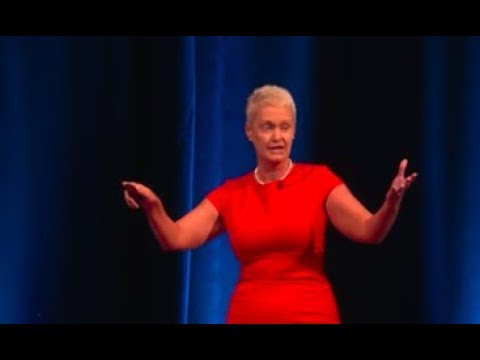
Wow how exciting is this and you guys
excited oh come on that’s lame are you
guys excited a fantastic conversation
that we’re having today and I’m very
happy to be here talking with you about
that so yeah I just hold on to that so I
didn’t I need to do a caveat first of
all I need to let you know that my topic
is transportation of the future will
require a governmental leap of faith now
my caveat is I am a government appointed
official okay so I’m not trying to talk
myself out of a job I’m not trying to
say that government is bad or
non-responsive I’m just saying that to
be prepared for the transportation of
the future that is going to require a
government to leave the faith everybody
got the caveat all right fantastic so
what I want to talk about a little bit
is what do I mean by that leap of faith
I do not mean the DOMA and Louise style
driving off of a cliff without looking
that is not what I am talking about we
can do better than that
what I am talking about is more of a
Field of Dreams build it and they will
come so I want to take a couple of
minutes to talk a little bit about
government itself just the makeup of
governments by our nature we are very
risk adverse you guys agree with that
very risk adverse it takes us a long
time we want to know all the answers to
all the questions we want to know
answers to questions that we don’t even
know have been asked yet but we do that
because that is what we are responsible
for doing so that does tend to make us a
little bit slower to respond to the
technology and the needs for
transportation of the future so with
that in mind I want to talk a little bit
more about some of the trends that we
are seeing in the transportation
industry one when you think of
transportation the first thing you think
of is your gonna get in your car and
you’re gonna drive from point A to point
B right that’s what you normally think
of you getting a car point A to point B
but the trend for those type of singular
occupant driver vehicle miles traveled
is going down it’s been going down for
several years in a row it’s because
there are demands for additional type of
transportation not necessarily singular
occupant driving so that’s one trend the
other trend that we’re seeing is
passenger rail passenger rail passengers
are increasing ridership is increasing
and another statistic is that
infrastructure when whether they
a private entity or whether they be a
government entity if they invest in
their passenger rail infrastructure
they’re seeing a dramatic increase in
ridership okay you guys with me in
create decrease the vehicle miles
traveled increase in passenger rail the
second major trend that we’re seeing a
third excuse me a third major trend is a
dramatic increase in freight movement
especially in the northeastern United
States we’re seeing this influx because
of the recent expansion of the Panama
Canal
so you’re seeing ports up and down the
Northeast United States scrambling
because of the constant demand so that’s
gonna have a major impact on the
transportation of the future now these
three trends again are gonna have a
serious impact to our transportation not
just here in the United States but
globally so normally a governmental
aspect would be hey what is driving this
demand what is driving these trends but
my theory it’s not necessarily a what
that’s driving these trends it’s more
like a whoo so the number one in my
opinion contributor to these trends are
Millennials and the normal governments
look outlook on government uses are yeah
we know there’s a lot of them we know
that there of them coming into the
workforce but we’ll worry about them
later but the fact of the matter is what
I think people don’t necessarily
understand which is gonna require our
governments a leap of faith this this is
the largest generation we’ve ever seen
they’re the most ethnically and racially
diverse and I have one of these little
boogers so I know I call them DSBs
they’ve been digital since birth right
they’ve grown up alongside of technology
they are more comfortable on their phone
right on social media and I will also
tell you that we’re seeing a shift a
paradigm in driving habits I know when I
was 16 the first thing I wanted to do is
get into my car and drive I wasn’t good
at it blonde not good at it but I wanted
to drive because that’s how I connected
to my friends to my community to do what
I want to do these DSBs
Millennials they’ve been digital and
connected since birth that’s they’re
already connected and then the other
thing I was actually having this
conversation with my daughter who’s 24
and yes I had her when I was 10 about
just 10 years ago just 10 years ago we
were drilling it into our children’s
head that don’t get into a car with
strangers right do not take rides from
strangers and now
she trolls the internet looking for apps
and companies to do just that to give
her a ride
so just in that short amount of time
these Millennials are actually changing
the face of Transportation and we need
to make a governmental leap of faith to
acknowledge that so the second
population in my opinion that is
changing these trends and we need to pay
attention to our seniors and I love this
photo because this is what the
traditional government outlook on our
seniors are it is the female in the
passenger seat pointing out I’m sure
what is an outdated manual map and
giving that look ladies you know that
look you just took a wrong turn and now
I’m gonna be late for my hair
appointment you dingbat and that ladies
that look is actually hardwired into our
DNA so we’re able to do that but that’s
the traditional look there the
traditional governmental aspect for
seniors that they’re not tech savvy and
they’re not very active but I think
different I think different I think that
they are much more tech savvy than we
give them credit for and they are much
more active and here’s why here in
Delaware we’re working on modernizing
our our transit and we actually piloted
over the summer a app that you would
download on your phone you would pay for
your fare medium and you ride the bus
and you use the app as your bus pass so
we did it was a really successful pilot
and at the end of the summer we did some
analytics the number one downloader and
user of our app women over the age of 65
number two men over the age of 65
seniors are much more tech savvy than
government gives them credit for also
they’re much more active the traditional
government aspect and outlook on seniors
is all right what they want to go you
know from their home to their
hairdresser to golf and then back that’s
all they want to do that’s not true my
husband and I actually visited some
friends down in Orlando Florida at the
place called the villages I don’t know
if you’ve heard of that but it is a
senior community of over a hundred
thousand and it was astonishing me
because it was a Tuesday morning at
about 10 o’clock and they were showing
us from you know Clubhouse to Clubhouse
to Clubhouse ten o’clock in the morning
on Tuesday I couldn’t get over every
single Clubhouse was packed seniors were
playing pickleball seniors are playing
golf
you know they were playing pool some
more drinking cocktails while they were
playing pool in pickleball but that’s
another talk but they are much more
active than we give them credit for and
they are driving change
government’s need to take a leap of
faith and make sure they understand that
going forward the third population is
our persons with disabilities the
traditional government outlook on
persons with disabilities is we want to
get them from their residence to their
doctor’s appointments and that’s it I
believe that’s wrong I actually just
spoke to a group of them yesterday
morning they are much more active they
have jobs they are active in their
community they want to do things that
you know we as government need to make
sure that we provide for them
so those three population in my opinion
are driving those trends so this is a
perfect example we have all this unmet
demand these transportation network
companies these rideshare companies they
just popped up as governments we had no
idea how to regulate them
there was no laws on the books there was
no regulations and I will tell you if
these rideshare companies waited until
government found a way to regulate them
most of them would still not be in
operation today we have to take a
governmental leap of faith to make sure
we’re meeting the needs of our citizens
now this is actually a picture of the
port of Wilmington I was talking a
little bit about that earlier we also
need to take into consideration
consumers are changing the way they buy
faiths right Amazon Prime lovers raise
your hand yes right
right so I love telling Alexa please or
dirty and she’s like okay confirm and I
was like yes
so my tea comes into this port of
Wilmington right I don’t I don’t care it
doesn’t matter to me how it gets to me
it ends up in my on my front steps
within 48 hours comes into this port it
is driven by truck right down the street
to this Amazon Fulfillment Center
Middletown Delaware and then it’s taken
by local delivery truck right to my
front door right we’re all used to this
already right I can tell you the
government we’re still struggling on how
to deal with that truck traffic we need
to take that governmental leap of faith
and now this is here this is now but
guess what this is coming the technology
exists right you’re gonna get your
Amazon Prime delivery via drone dropped
off at your front door we’re fumbling
all over ourselves trying to figure out
how to do that right because we need to
make sure it’s safe its efficient and
the consumer is protected but I would
tell you the technology is there and we
have to take that leap of faith and make
sure we’re ready for it so my theory
is that public policy is lags behind
technology in the transportation
industry by about a factor of 10 so to
put that theory to test I asked 10
public officials do you think you’re
plugged into the transportation
technology and the needs of emergent
technology in transportation yeah yeah
yeah yeah ok great so they asked two
questions I might ask you guys are you
familiar with the term Internet of
Things raise your hand if you are oh you
guys should run for office you’re doing
really good
ok none of the people that I asked
understood that had heard that term
before the second thing I asked are you
familiar with a smart cities challenge
that was put on by the federal
government how many of you are familiar
with that
excellent I will god I have to tell you
and this is not you know to slam anybody
at all there was only one person that I
asked that knew the answers to that
question representative Osinski could
you please raise your hand thank you
very much for all that you do he is the
House Transportation Committee and we’re
happy we have him because he gets this
he gets this so thank you sir
but that leads me to my next point you
know this is the perfect example this is
the Delaware Department of
Transportation mobile app we launched
this in 2015
man we’ve been planning for
transportation we had built Bluetooth
three years into our roadways we thought
we were the bomb right launched this in
2015
real-time traffic information real-time
cameras everything our customers link
yeah that’s great but we need more like
what more do you need so we took a huge
governmental leap of faith and we
partnered with a company called ways you
guys heard of ways right you probably
use ways to get here today but I gotta
tell you the leap of faith came because
ways as you know is a crowdsourcing
platform right it’s consumer based
information and when you have a
government data and you have consumer
base sometimes they don’t match so the
leap of faith is yes you’re not gonna be
able to control everything that Waze
puts on your system but I will tell you
our consumers it increased the number of
downloads and the usage by tenfold so it
really works and you have to take that
governmental leap of faith and it’s not
not just with information you’ve you’ve
heard I’m sure most of you Elon Musk is
Hyperloop they chose 10 sites around the
world around the globe and happy to say
one of them is in the United States but
having the intent is to have one or two
of them up and running by 2021 2021
and that is gonna take a monumental leap
of governmental faith because there’s
absolutely no reason right now we can’t
have a Hyperloop right here in Delaware
down Route one and back brought to you
by I don’t know moat for 3m Google
there’s no reason why that can’t happen
but it’s gonna require a huge
governmental leap of faith so now this
is probably the the best example that
that I have to drive my point home about
the government’s a leap of faith this is
a company called an autonomy and they’ve
been working side by side with our
brilliant minds at MIT right here in the
United States and they came up with this
technology to do artificial intelligence
with these little pod cars that you know
they learn as they go when they pick you
up and drop you off right technology
wasn’t the difficult part they decided
to launch it in Singapore and when asked
why they launched it in Singapore the
number one response was the Singapore
government is more capable and more
nimble of allowing this type of
technology to launch and launch quickly
this is a huge wake-up call to elected
officials if we don’t take that leap of
faith all of us we’re not gonna be able
to benefit from the transportation leaps
forward in technology that we should be
able to benefit from so this is a huge
wake up call and call to action we’ve
got to take that governmental leap of
faith and I will tell you that’s exactly
what we’re doing here in Delaware if you
have driven any road in Delaware we are
building we’re not just planning for the
transportation of the future we are
building for the transportation of the
future because we know if we build it
they will come
thank you
[Applause]
Please follow and like us: