
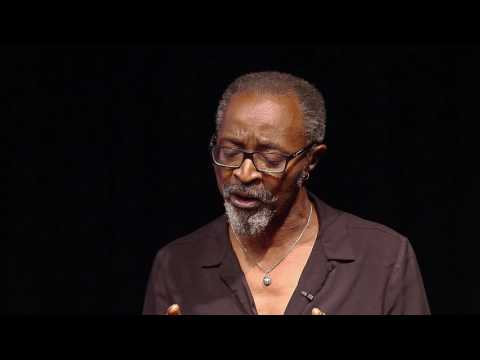
right hi guys thank you so much for a
very warm welcome well my name is Don
John and I have little tolerance for
racism I’ve spent much of my working
life
identifying it addressing it and
confronting it you could say it’s been
my life’s work I intend to share with
you why I think black history matters
not just to me but also to you yes I
know that black lives matter was
occupied the sense of ground in race
politics in recent times and it
certainly has got everyone’s attention
but it is an appreciation of our history
that helps us to understand its
relevance I’m going to break this
presentation up into three parts firstly
awareness then discovery and then
delivery okay
black black black black and even more
black how does that word make you feel
does it already invoke emotion so you’re
little unsure love some say the trouble
really started when colored people
turned into black people so what does
that tell us I think was water Benjamin
who said their history is written by the
victors so what does that mean to a
black boy who was raised in a culture
dominated by the myth of the
Commonwealth I went to grammar school
didn’t do me any harm and studied Latin
Greek ancient history and the victories
of the Empire so where was my black
history okay picture this
a world where black people up to 37
times more likely to be stopped and
searched than white people
a world where black people are three
times more likely to be arrested than
white people
a world where black people are
forty-four percent more likely to be
detained under the Mental Health Act
than white people
a world where black people are three
times more likely to be unemployed than
white people we seem to be somewhere
between the mad and the bad or perhaps
both now my father was one of those
proud Africans where status and position
was everything and he believed who
religiously yes religiously in education
education and education can’t believe on
quoting Tony Blair but what was I
thinking of school gave us a world where
the pink bits on the map on the world
map was the context that underpinned our
understanding of that world Africa was
the dark continent where they all lived
in mud huts and they traveled by
swinging from tree to tree and white
Tarzan was the king of the jungle in
black Africa and Christianity was a step
towards our salvation always remember
that iconic image of Stanley meeting
Livingstone remember that picture like
two great God’s a civilizing influence
in this dark dark world
I guess the context of my Sierra Leonean
background should have given me a
greater understanding but the heroes we
were reminded of were people like Sir
Walter Raleigh and Francis Drake
remember those guys the English hero who
coolly played bowls when the Spanish
Armada
a potion but casually said yet to finish
the game how very English and it was
only later that I learned that he was a
pilot and a slave and well invested in
the slave industry I was shocked and he
certainly was not my kind of hero
furthermore the history we learned was
the shame of slavery and we were
constantly reminded that our own black
people assisted in the process of our
historical enslavement and subjugation
so was this my black history well this
was the family plan my older sister was
to become a solicitor and she did my
younger brother was to go to Oxford and
he did and I was to become a doctor we
know what happened to that plan
however hallelujah I was saved and I
joined the place called Her Majesty’s
Treasury and ended up working in the
chancellor’s office and the charts at
that time was a guy called Dennis Healy
what an experience for a young black man
the only young black man in ER in a sea
of pinstripes and moral certitude a
world where those pink bits on the map
were ever so important and when I left
the Treasury I took that damn that with
me I still got in my room actually at
home one thing about the map was Great
Britain was disproportionately larger
than it really was strangely seen and it
actually was in the center of the world
and that line from the glorious hymn
Rule Britannia echoed in my head
remember that one Britons never never
never shall be slaves who’s wondered
what would that was all about and
started to suspect something was afoot
strange times however it was the civil
rights movement of the 60s and the 70s
that woke me from my slumber where I
fallaciously
consumed rich
children people like Alex Haley LG’s
cleaver
Bobby Seale Frantz Fanon Angela Davis
and as a young man I absolutely loved it
I was awake or so I thought however it
was the arrival of a remarkable young
man who doubled our numbers in the
church there were turfers in there now
it’s almost like a riot isn’t it and
focused that new state of awareness
his name was Linton quasi Johnson and
the history of his footprint is a matter
of public record at that time the quasi
they had not been born so what did we do
we go poetry we went to book shops that
more than anything else we supported
each other in that see what I call blind
in whiteness Linton left and went to
Goldsmith and I asked myself what on
earth was I doing there my life had been
enriched by this greater knowledge and
awareness and I also lived and decided
to go to the Caribbean for six months or
so and discovered a world where black
people had some say in their own destiny
and was seemingly more connected to
their black history mostly but as they
say the first step towards change is
awareness and the knowledge of our black
history was starting to make some kind
of sense ok discovery we’re getting
close to what black history means to me
my work in race relations in South
Hampton was a logical next step in my
desire to immerse myself in matters
relating to my black culture and this
city of South Hampton gave me the means
to explore that heritage and history at
a grassroots level and in an environment
where I felt that I could make a
difference fertile ground South anson at
that time was still confused about who
these black people were why they all
lived in Darby Road
and those who know Southampton know
exactly what I mean and why the area
they lived in was called the jungle I do
recall when I was making the film about
black unemployment in the early 80s with
a local ITV company the editing room was
labeled Coons cabin and that was the way
things were at that time this was a time
when there was a heightened level of
consciousness and black youth of flexing
their newfound pride and were more
sensitized to the experiences that their
parents had endured stoically however
these young people had no time for the
stiff upper lip and just wanted to kick
some ass and they did and I helped them
bad bad person black pride and a sense
of black history were the tools we
deployed and a deep desire to recognize
and confront the injustice is the world
way of life for black communities this
was becoming a crucial part of my black
history so why do these black people
keep going on about black this and black
that and why was this assertion of who
they were so disturbing for many the
assertion of that consciousness was
certainly a threat and black people
became more organized partly through the
supports of wage equality organizations
and empathetic local people and started
to challenge the accepted norms in the
major institutions likely the local
authorities the police services Health
and Social Services and others the
political climates at that time
nationally played its part in disavowing
racist opinion unlike the political
situation we have in the here and now
there was a time indeed when Black
Studies was an essential part of our
cultural education in the black
communities and we clenched our fists
and we world and protested and marched
and many of you white people marched
with us and this did make a difference
perhaps the assertion of our real black
delivery the black history movement was
formally celebrated in Southampton from
2005 even though there were random
acknowledgments prior to that however
the real confusion the real confusion
again was who was it for
and who was allowed to celebrate it some
white people felt that they should not
intrude in this private grief some
people of mixed race were unsure whether
they should get involved and would they
be betraying the white side of their
family and some black people were
embarrassed about us going on about this
black stuff all the time it just made
things bad for black people who’d
quietly found a place for themselves by
not making too much noise nonetheless
there were many black and white who
welcomed this and have contributed to
what we have now in the first couple of
years Black History Month kicked off
with yes is still banned with white
people and of course the slavery
exhibition it seems more embarrassing
now than it did at the time however it
gradually coaxed white South white South
Hampton citizens into accepting the idea
of loads of black people coming together
in a large group without being policed
and not singing and dancing the main
objective Black History Month words
there are to promote the knowledge of
black history you’d be surprised at what
people don’t know in fact many people
still believe that Egypt is not in
Africa they really don’t believe that
second thing to disseminate information
on positive black contributions because
you see the knowledge of what black
people have done must influence people’s
perceptions of what black people are
capable of and thirdly to heighten the
confidence and awareness of black people
in their cultural heritage an inevitable
consequence now the key thing that many
failed to guard initially was this was
just not our history but a history that
belonged to all of us and we in the
South played a crucial part and such
information is available if you choose
to look for it so let us just look at
relatively basic information that does
not fall so easily into our laps black
inventors for starters the freeway
traffic light and the gas masks invented
by Garrett Morgan a black man the three
musketeers a book a film a play
Alexander Dumas a black man the blood
bank that we depend on so much for our
health Charles drew a black man the
guitar Robert Fleming jr. a black man
the lawn mower J Tabor a black man and
many many more can go on and on about
black inventors Invensys that people
don’t know anything about of course
there will be many who will seek to
debunk all of these much in the same way
Napoleon soldiers thought that if they
smashed the noses from the Sphinx and
early Egyptian statues and we didn’t
notice they coulda raised the African
history of the Egyptian civilization and
dwell academically on the possibility of
alien intervention because of course
black people could never the technical
expertise to construct the Pyramids of
Giza always reminds me of them Muhammad
Ali’s classic answer to why as a child
your ways saw images of white angels and
never black angels and he suggests that
they were obviously in the kitchen
making the milk and honey as they do
nonetheless black as she does more than
ticking the boxes of accomplishments it
provides us with a sense of who we are
and therefore who we can be
unfortunately we still have an issue
about our identity and back in the day
if we were not white we were black and
it was much simpler complexion was the
less irrelevant Malcolm X being a
classic example light-skinned but at
that time one of the blackest men on the
planet yes I concede that it is now
fashionable to have several cultural
identities and people are quite rightly
proud of all aspects of these identities
however sometimes I wonder how far the
black aspects of these many identities
are relegated to the periphery of our
consciousness so where does that leave
us when our forebears came here they
came with a history a history that some
of them were not even aware of many also
brought with them a perception of
themselves and sometimes a twisted
perception of was a consequence of the
Western history that was fed to local
black people in the colonies which
systematically and purposefully
sadly some of this legacy has continued
in my view to infect some black people’s
perceptions of themselves and so it gets
handed down further and further down the
line but what compounded this even
further was Western societies capacity
to weave in the narrative of sort of
racial superiority and to convert that
into many aspects of the encounters
the knowledge of black history were not
completely eradicate the falsehood still
in play but it may be one small step in
helping all of us in more fully
appreciating the part the black people
have played and are still playing in the
development of the world as we know it
yes black history matters to you and to
you [Applause]