
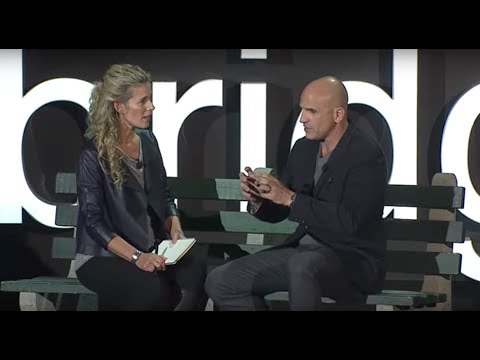
[Music]
[Applause]
yes the point of saying yes and is that
it moves action forward whereas saying
no just stops action from moving forward
that’s why saying yes and is a
fundamental tenant of performance yes
action is important and in order to take
action you have to know what it is
you’re in pursuit of you have to know
what it is you want absolutely so I love
the stage I love being on the stage I
think though that Shakespeare had it
right when he said all the world’s a
stage that is why more people need to
see themselves as performers but the
challenge is that most people have to
perform even if they don’t see
themselves as performers I don’t know if
they’re gonna buy it who the audience
yes no I mean I’m I’m pretty sure
they’ll be quick to agree that in our
personal and professional lives we’re
called upon to make toasts or give
eulogy or email a job interview yeah
when a negotiation yes and they’re all
high-stakes situations they’ll agree
with that and I’m sure they’ll agree
that if you cannot deliver during life’s
high-stakes moments good luck making
your dreams come true but I’m not sure
they’ll buy the concept that just as
actors use techniques on the stage to
create a believable reality non actors
can use the same techniques off the
stage to create a reality of their
choosing wait you just said that really
well say it again well actors use
techniques on the stage to create a
believable reality non actors can use
the same techniques off the stage to
create a reality of their choosing
yes why don’t you think they’ll buy that
because I think a lot of people think
performance is phony or fake you know I
think that’s one of the differences
between people who see themselves as
performers and people who don’t
because performers know that performance
isn’t fake behavior performances
authentic behavior in a manufactured
environment that’s good say that again
so performance isn’t fake behavior great
performance requires authentic behavior
in a manufactured environment now that’s
what we have to get them to see and do
something with because life is full of
manufactured environments
like this this is a very manufactured
environment yeah
2,500 people sitting in a theater whose
role is to sit and pay attention and not
interrupt the speakers and not talk to
their neighbors and the speakers are
supposed to stand on a red dot and say
something no more than 18 minutes that
is going to change the lives of every
person in this room and potentially
millions watching online high stakes
nice okay so let’s back this up the
concept that all the world’s a stage and
then knowing how to perform in life’s
high-stakes moments when the spotlight
is on us matters that we think they’ll
buy yes
this idea that non actors can take the
techniques that an actor uses and use
them in day-to-day life to create
reality let’s go back to that because
that’ll be a new idea for many of them
and it’s not a typical way of seeing the
world yeah I think many people are
terrified of being in the spotlight
yes and if I have to hear the old
studies show that people are more afraid
of public speaking than deaf thing I’m
cuddlers my mind okay that’s a myth the
idea that people are more afraid of
public speaking and then death is
ridiculous she’s right you know
there has never been a study that shows
proves people are more afraid of public
speaking than dying the study that is
often referenced was done in 1973 by a
guy named Bruskin and his team never
asked people to rank their fears or even
select their top fear what they
discovered was that public speaking is
people’s most common fear but it is not
their biggest fear if I put a gun to his
head and said hey Michael you have two
choices choice number one you speak
choice number two you die I mean really
how many people are gonna say yeah
please just pull the trigger just kill
me right now you would rather speak then
get shot in the head yeah you would
so if they’re willing to accept a little
bit of fear as part of the normal
experience of doing things that we care
about and they’re willing to change the
way they see performance is something
that they can be good at and use in
everyday life
then we just need an example of how to
use this in day to day life and not just
on a stage Oh like when you met my
parents I was legitimately nervous
yes well whatever you did it worked so
let’s use that as an example walk me
through how you prepared to meet them
for the first time okay
well um I just I just asked myself the
same questions that an actor would
initially ask when developing a
character so what questions did you ask
well first I asked what’s my super
objective you know what’s my big picture
end goal and you chose to have a
harmonious integrated family I mean it
was just the first time we were meeting
but I still thought seriously about what
I wanted for all of us in the long term
you see most people would have had a
short term objective like getting
approval getting my parents to like them
you however kind of fully thought out
end goal in mind and then you played
actions which is what actors do well I
played the action to make them feel safe
exactly so do you consciously chose what
you wanted them to feel and that helped
you achieve your objective of having a
harmoniously integrated family it’s so
true you know since playing actions is
what one does or says to achieve an
objective it gives you the ability to
change the action you play when the one
you’re playing doesn’t work because not
everything you say or do is going to
work and people don’t always respond
exactly the way you want them to but if
you can fluidly play one action after
another in pursuit of
objective it gives you this ability to
improvise in the moment and be flexible
so if for example I was playing the
action to make your parents feel safe
and it wasn’t working I could switch and
I could play to make them feel included
or and make them feel valued or make
them feel reassured wait if we shared
this example I’m a little bit concerned
that the audience might think I was
trying to manipulate their parents like
you weren’t you were trying to influence
them you were trying to affect them but
isn’t that what we do all day long all
day long we try to affect people and we
do affect people all day long we make
people feel things the difference is
that if we’re trying to get what we want
and we don’t consciously choose our
objectives then we’re still making
people feel things we’re just doing it
unconsciously or even thoughtlessly and
we might even hurt their feelings in the
process yes and then we’re a lot less
likely to get what we want
however if we choose our actions more
consciously more more responsibly then
not only are we more likely to get what
we want but we may actually treat people
better in the process that’s what
happens when you’re prepared so it seems
we have two choices either a get really
clear and what we want and how we want
other people to feel in the process yes
and then go get it
or b-wing our way through life and take
whatever we can get yes and if we’re
really clear about what we want then we
can be performers who adapt our behavior
to fit the manufactured environments
where there’s the rub the concept of
adapting our behavior moment by moment
to fit into various manufactured
environments that that worldview makes
people uncomfortable why well because
the idea of performing of changing the
way we behave
or the way we act that’s confronting to
a lot of people but why well maybe maybe
many folks feel that they are who they
are and that’s it
that they only have one authentic way of
being and that people who fluidly adapt
their behavior to fit into different
groups or play different roles in
different situations are somehow
inauthentic now even if they are open to
seeing the world this way then they’d
still be scared of coming across as
inauthentic okay so look let’s go back
to fear and see if we can address this
in a way that makes people feel more
comfortable I don’t want to talk about
I’m sick of talking about fear it just
perpetuates more fear plus being
comfortable with discomfort is a
principal characteristic of being a
performer we have to address it because
being comfortable with discomforts not
very comfortable for most people who’s
on first listen we have to address this
in two ways sit down yes ma’am
okay one is that fear is completely
human it’s normal fair enough and two
what is it we are so afraid of anyway
rejection that’s right
fear of rejection oh it’s the killer of
any great performance rejection no
that’s what we’re afraid of the killer
of any great performance is okay do not
take me literally just look for the
metaphor because I’m completely making
this up
now I imagine that back at the beginning
of Ted a crew member he sees that the
speakers are sort of wandering aimlessly
around the stage you know pacing back
and forth as speakers are want to do and
so he needs a way to keep them
stationary to capture video
so he goes backstage he gets a carpet
and a pair of scissors cuts out a big
circle and he throws it on the statement
says hey yo stay on that dot don’t get
off that dot ever
[Laughter]
and then it worked and from that moment
forward that red dot became a relatively
safe place to be now don’t get me wrong
great speeches are delivered from the
red dot but generally speaking what is
the killer of any great performance
playing it safe yes
see we understand the fear people have
of public speaking but why is it that we
so often play it safe in other aspects
of our lives it’s the same fear as
public speaking fear of rejection after
all the fear of being criticized or
being laughed at or of making a really
bad choice well they’re all real and
often they boil down to the fear of
rejection and the need for approval but
to be moment makers to be high level
performers both on and off the stage we
need to take great risks and not worry
that we’ll be criticized for doing so
because when we are not worried about
what other people think
then we are that much more free to
deliver the life-changing reality
creating performances and then so what
if we’re criticized you know someone in
here is not gonna like that we take down
and put up the fourth wall hey tell them
the Aesop’s fable the one about the
donkey oh okay there’s an old man and a
little boy and a donkey and they want to
go to town so the old man gets on the
donkey and the little boy walk connects
to the donkey but they passed some
people who shamed the old man saying old
man how can you make a little boy walk
like that that’s terrible so they
switched the little boy got on the
donkey and the old man walked next to
the daki now they pass some people who
scolded the little boy and said little
boy how can you make an old man walk
like that that’s terrible
so they decided to both walk there now
they pass some people who laughed at
them it’s safe
look those idiots they have a perfectly
good donkey and they are walking next to
it
what is wrong with them so they decided
they both ride the donkey but now they
pass some people who ridiculed them and
said how dare you put such a load on a
donkey that is inhumane so they decided
to carry the donkey now they’re about to
get to town and in order to get to town
they have to cross a bridge which is
over water and as they’re crossing this
bridge the donkey slips out of their
hands falls into the river and droughts
and the moral of the story if you try to
please everyone you might as well kiss
your ass good-bye
[Applause]
you see when you see yourself as a
performer you don’t care what other
people think but more importantly and
what inspires me most is how much people
change personally when they do see
themselves as performers and make big
choices in pursuit of their dreams
Joel cut off his mullet now that may
seem like a small thing but that was
actually transformational yeah uh Trev
told me that a barista wrote his name
correctly on a coffee cup for the first
time in his life because he was able to
say his name with confidence and command
until then they thought his name was
plaid he’d been played for four years it
was not ideal you know these seemingly
small transformations add up when you
see yourself as an everyday performer
you are the one who creates your reality
and that is why we’re talking about this
now not just so you can get better
speeches when you are a great everyday
performer you’re focused on what you
want to create rather than on what
people think let’s tell him about Laurie
the accountant yes so Laurie did not
possess does not possess a big
charismatic performers personality she
just wanted to in her own words find her
voice and when we asked her to present
to a group of strangers she she couldn’t
reject her voice more than what a few
feet and she had her whole speech
written on note cards and she was
gripping on to them like her life
depended on it
so naturally I took the cards away and
the words that she used to describe how
she felt about me at that moment
I probably shouldn’t repeat here but
without her cards to hide behind she
finally told the truth so she shared
that she’s been hiding for most of her
life she told us that she was petrified
not just of speaking in public but have
even sharing her ideas as a little girl
the one time she spoke up about
something she really believed in
her mother slapped her across the face
and said no one wants to hear from you
and that one moment shut her up for
almost 40 years when you think that you
have to protect yourself from getting
hurt it seems like all you’ve really
done is silenced your voice and maybe
even repressed your dreams you’ve wasted
your actions on self-protection rather
than on playing actions that are going
to get you what you want so consider
this to be more open when you’re
performing is actually where your true
strength lies as it turns out people do
want to hear from Laurie and we believe
they want to hear from you too that you
have something important to say
the question is do you believe it are
you willing to see yourself as a
performer and if you are are you willing
to develop the performance skills
necessary to deliver it during life’s
high-stakes moments we sure hope you are
because it’s pretty easy to see that the
reason some people seem captivating
while others might be easier to forget
lies in the creative history and unique
craft of acting it might also be worth
considering that the reason some people
have the lives they want while others
accept the lives they’re given may also
lie in the creative history and unique
craft of acting we believe it does and
we hope that you do too thank you very
much
[Music]
you
[Applause]
yes the point of saying yes and is that
it moves action forward whereas saying
no just stops action from moving forward
that’s why saying yes and is a
fundamental tenant of performance yes
action is important and in order to take
action you have to know what it is
you’re in pursuit of you have to know
what it is you want absolutely so I love
the stage I love being on the stage I
think though that Shakespeare had it
right when he said all the world’s a
stage that is why more people need to
see themselves as performers but the
challenge is that most people have to
perform even if they don’t see
themselves as performers I don’t know if
they’re gonna buy it who the audience
yes no I mean I’m I’m pretty sure
they’ll be quick to agree that in our
personal and professional lives we’re
called upon to make toasts or give
eulogy or email a job interview yeah
when a negotiation yes and they’re all
high-stakes situations they’ll agree
with that and I’m sure they’ll agree
that if you cannot deliver during life’s
high-stakes moments good luck making
your dreams come true but I’m not sure
they’ll buy the concept that just as
actors use techniques on the stage to
create a believable reality non actors
can use the same techniques off the
stage to create a reality of their
choosing wait you just said that really
well say it again well actors use
techniques on the stage to create a
believable reality non actors can use
the same techniques off the stage to
create a reality of their choosing
yes why don’t you think they’ll buy that
because I think a lot of people think
performance is phony or fake you know I
think that’s one of the differences
between people who see themselves as
performers and people who don’t
because performers know that performance
isn’t fake behavior performances
authentic behavior in a manufactured
environment that’s good say that again
so performance isn’t fake behavior great
performance requires authentic behavior
in a manufactured environment now that’s
what we have to get them to see and do
something with because life is full of
manufactured environments
like this this is a very manufactured
environment yeah
2,500 people sitting in a theater whose
role is to sit and pay attention and not
interrupt the speakers and not talk to
their neighbors and the speakers are
supposed to stand on a red dot and say
something no more than 18 minutes that
is going to change the lives of every
person in this room and potentially
millions watching online high stakes
nice okay so let’s back this up the
concept that all the world’s a stage and
then knowing how to perform in life’s
high-stakes moments when the spotlight
is on us matters that we think they’ll
buy yes
this idea that non actors can take the
techniques that an actor uses and use
them in day-to-day life to create
reality let’s go back to that because
that’ll be a new idea for many of them
and it’s not a typical way of seeing the
world yeah I think many people are
terrified of being in the spotlight
yes and if I have to hear the old
studies show that people are more afraid
of public speaking than deaf thing I’m
cuddlers my mind okay that’s a myth the
idea that people are more afraid of
public speaking and then death is
ridiculous she’s right you know
there has never been a study that shows
proves people are more afraid of public
speaking than dying the study that is
often referenced was done in 1973 by a
guy named Bruskin and his team never
asked people to rank their fears or even
select their top fear what they
discovered was that public speaking is
people’s most common fear but it is not
their biggest fear if I put a gun to his
head and said hey Michael you have two
choices choice number one you speak
choice number two you die I mean really
how many people are gonna say yeah
please just pull the trigger just kill
me right now you would rather speak then
get shot in the head yeah you would
so if they’re willing to accept a little
bit of fear as part of the normal
experience of doing things that we care
about and they’re willing to change the
way they see performance is something
that they can be good at and use in
everyday life
then we just need an example of how to
use this in day to day life and not just
on a stage Oh like when you met my
parents I was legitimately nervous
yes well whatever you did it worked so
let’s use that as an example walk me
through how you prepared to meet them
for the first time okay
well um I just I just asked myself the
same questions that an actor would
initially ask when developing a
character so what questions did you ask
well first I asked what’s my super
objective you know what’s my big picture
end goal and you chose to have a
harmonious integrated family I mean it
was just the first time we were meeting
but I still thought seriously about what
I wanted for all of us in the long term
you see most people would have had a
short term objective like getting
approval getting my parents to like them
you however kind of fully thought out
end goal in mind and then you played
actions which is what actors do well I
played the action to make them feel safe
exactly so do you consciously chose what
you wanted them to feel and that helped
you achieve your objective of having a
harmoniously integrated family it’s so
true you know since playing actions is
what one does or says to achieve an
objective it gives you the ability to
change the action you play when the one
you’re playing doesn’t work because not
everything you say or do is going to
work and people don’t always respond
exactly the way you want them to but if
you can fluidly play one action after
another in pursuit of
objective it gives you this ability to
improvise in the moment and be flexible
so if for example I was playing the
action to make your parents feel safe
and it wasn’t working I could switch and
I could play to make them feel included
or and make them feel valued or make
them feel reassured wait if we shared
this example I’m a little bit concerned
that the audience might think I was
trying to manipulate their parents like
you weren’t you were trying to influence
them you were trying to affect them but
isn’t that what we do all day long all
day long we try to affect people and we
do affect people all day long we make
people feel things the difference is
that if we’re trying to get what we want
and we don’t consciously choose our
objectives then we’re still making
people feel things we’re just doing it
unconsciously or even thoughtlessly and
we might even hurt their feelings in the
process yes and then we’re a lot less
likely to get what we want
however if we choose our actions more
consciously more more responsibly then
not only are we more likely to get what
we want but we may actually treat people
better in the process that’s what
happens when you’re prepared so it seems
we have two choices either a get really
clear and what we want and how we want
other people to feel in the process yes
and then go get it
or b-wing our way through life and take
whatever we can get yes and if we’re
really clear about what we want then we
can be performers who adapt our behavior
to fit the manufactured environments
where there’s the rub the concept of
adapting our behavior moment by moment
to fit into various manufactured
environments that that worldview makes
people uncomfortable why well because
the idea of performing of changing the
way we behave
or the way we act that’s confronting to
a lot of people but why well maybe maybe
many folks feel that they are who they
are and that’s it
that they only have one authentic way of
being and that people who fluidly adapt
their behavior to fit into different
groups or play different roles in
different situations are somehow
inauthentic now even if they are open to
seeing the world this way then they’d
still be scared of coming across as
inauthentic okay so look let’s go back
to fear and see if we can address this
in a way that makes people feel more
comfortable I don’t want to talk about
I’m sick of talking about fear it just
perpetuates more fear plus being
comfortable with discomfort is a
principal characteristic of being a
performer we have to address it because
being comfortable with discomforts not
very comfortable for most people who’s
on first listen we have to address this
in two ways sit down yes ma’am
okay one is that fear is completely
human it’s normal fair enough and two
what is it we are so afraid of anyway
rejection that’s right
fear of rejection oh it’s the killer of
any great performance rejection no
that’s what we’re afraid of the killer
of any great performance is okay do not
take me literally just look for the
metaphor because I’m completely making
this up
now I imagine that back at the beginning
of Ted a crew member he sees that the
speakers are sort of wandering aimlessly
around the stage you know pacing back
and forth as speakers are want to do and
so he needs a way to keep them
stationary to capture video
so he goes backstage he gets a carpet
and a pair of scissors cuts out a big
circle and he throws it on the statement
says hey yo stay on that dot don’t get
off that dot ever
[Laughter]
and then it worked and from that moment
forward that red dot became a relatively
safe place to be now don’t get me wrong
great speeches are delivered from the
red dot but generally speaking what is
the killer of any great performance
playing it safe yes
see we understand the fear people have
of public speaking but why is it that we
so often play it safe in other aspects
of our lives it’s the same fear as
public speaking fear of rejection after
all the fear of being criticized or
being laughed at or of making a really
bad choice well they’re all real and
often they boil down to the fear of
rejection and the need for approval but
to be moment makers to be high level
performers both on and off the stage we
need to take great risks and not worry
that we’ll be criticized for doing so
because when we are not worried about
what other people think
then we are that much more free to
deliver the life-changing reality
creating performances and then so what
if we’re criticized you know someone in
here is not gonna like that we take down
and put up the fourth wall hey tell them
the Aesop’s fable the one about the
donkey oh okay there’s an old man and a
little boy and a donkey and they want to
go to town so the old man gets on the
donkey and the little boy walk connects
to the donkey but they passed some
people who shamed the old man saying old
man how can you make a little boy walk
like that that’s terrible so they
switched the little boy got on the
donkey and the old man walked next to
the daki now they pass some people who
scolded the little boy and said little
boy how can you make an old man walk
like that that’s terrible
so they decided to both walk there now
they pass some people who laughed at
them it’s safe
look those idiots they have a perfectly
good donkey and they are walking next to
it
what is wrong with them so they decided
they both ride the donkey but now they
pass some people who ridiculed them and
said how dare you put such a load on a
donkey that is inhumane so they decided
to carry the donkey now they’re about to
get to town and in order to get to town
they have to cross a bridge which is
over water and as they’re crossing this
bridge the donkey slips out of their
hands falls into the river and droughts
and the moral of the story if you try to
please everyone you might as well kiss
your ass good-bye
[Applause]
you see when you see yourself as a
performer you don’t care what other
people think but more importantly and
what inspires me most is how much people
change personally when they do see
themselves as performers and make big
choices in pursuit of their dreams
Joel cut off his mullet now that may
seem like a small thing but that was
actually transformational yeah uh Trev
told me that a barista wrote his name
correctly on a coffee cup for the first
time in his life because he was able to
say his name with confidence and command
until then they thought his name was
plaid he’d been played for four years it
was not ideal you know these seemingly
small transformations add up when you
see yourself as an everyday performer
you are the one who creates your reality
and that is why we’re talking about this
now not just so you can get better
speeches when you are a great everyday
performer you’re focused on what you
want to create rather than on what
people think let’s tell him about Laurie
the accountant yes so Laurie did not
possess does not possess a big
charismatic performers personality she
just wanted to in her own words find her
voice and when we asked her to present
to a group of strangers she she couldn’t
reject her voice more than what a few
feet and she had her whole speech
written on note cards and she was
gripping on to them like her life
depended on it
so naturally I took the cards away and
the words that she used to describe how
she felt about me at that moment
I probably shouldn’t repeat here but
without her cards to hide behind she
finally told the truth so she shared
that she’s been hiding for most of her
life she told us that she was petrified
not just of speaking in public but have
even sharing her ideas as a little girl
the one time she spoke up about
something she really believed in
her mother slapped her across the face
and said no one wants to hear from you
and that one moment shut her up for
almost 40 years when you think that you
have to protect yourself from getting
hurt it seems like all you’ve really
done is silenced your voice and maybe
even repressed your dreams you’ve wasted
your actions on self-protection rather
than on playing actions that are going
to get you what you want so consider
this to be more open when you’re
performing is actually where your true
strength lies as it turns out people do
want to hear from Laurie and we believe
they want to hear from you too that you
have something important to say
the question is do you believe it are
you willing to see yourself as a
performer and if you are are you willing
to develop the performance skills
necessary to deliver it during life’s
high-stakes moments we sure hope you are
because it’s pretty easy to see that the
reason some people seem captivating
while others might be easier to forget
lies in the creative history and unique
craft of acting it might also be worth
considering that the reason some people
have the lives they want while others
accept the lives they’re given may also
lie in the creative history and unique
craft of acting we believe it does and
we hope that you do too thank you very
much
[Music]
you
Please follow and like us: