
[Music]
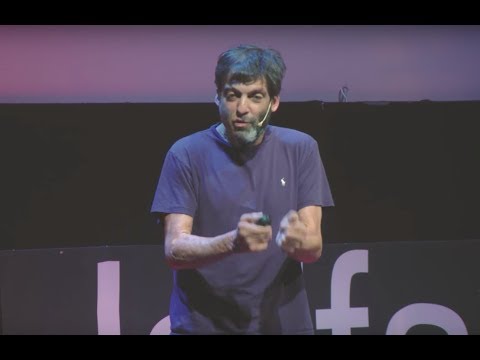
so first a word about my half beard so I
went on a month-long hike on the Israel
trail and decide not to shave that’s
half of the story and then I I was
burned many years ago I don’t have hair
on the right side of my face so that’s
the other half I’m not trying to make a
fashion statement okay so I want to talk
about trust I want to talk about the
importance of trust to society why is it
so important and how do we get more of
it now if you think historically we had
lots of ways to increase trust in
society we had things like a handshake a
handshake is actually showing somebody
you don’t have a weapon right if you
come to somebody and you hand is out
there in the open they know you not you
don’t have a weapon
they also clinging glasses saying the
hind is also a question of trust the the
story is that people use to mix the
liquid between the two glasses maybe
you’re trying to poison me let’s make
sure that the liquid is spread between
the two glasses
this way I’ll know there’s not trust now
that’s not real trust by the way but but
still trust now
trust I will try to argue this is a
common good it’s everywhere and it’s
incredible lubricant for society so
let’s think for a second about what
happens when we don’t have trust so I
was recently in a country in South
America and I went to buy a pen
and I went to the counter I saw a pen I
liked I pointed to it they person wrote
me a little note I took that note and I
went to a cashier I paid the cashier
that amount of money and I got another
note I went to a third person I gave him
the second note and he gave me the pen
now why do they need three people to
sell a $15 pen because they don’t trust
anybody right the person who runs this
Renda store did not want anybody to hold
the pen and the money at the same time
so they created this incredible
elaborate process because there was no
trust and if you think about your own
your own lives think about the role
trust plays what happens in society
without without trust you have to have a
contract for everything everything is
complex you don’t trust anybody
everything is incredibly difficult by
the way one of the most bizarre things
about trust have it ever happen to you
that you’re in the airport and you to go
to the bathroom and you say to somebody
would you watch my bag I’m going to this
we study that actually so first of all
it’s amazing if you think about it
because what you’re really telling that
person is if you’re thinking about
stealing my bag now is the right time
but we actually asked asked the question
and it turns out that the person who
said yes I’ll watch your bag actually
feels committed to their promise right
it’s just an empty promise to somebody
you’ll never meet again but people still
stick to it so try it out okay so Trust
is incredibly important now to think
about trust I want to tell you about a
game we call the public goods game the
public goods game and here’s how the
game works I’ll give you one version of
it okay
in this version we have ten people ten
people every morning that they wake up
they get $10 each every morning they
wake up to get $10 and they could decide
what to do with that money they could
put as much of it as they want in the
public pool and they can keep as much as
they want to themselves by the way this
is anonymous game nobody sees anybody
else people just put money into the
public pool now the money in the public
pool grows five times and then in the
evening it’s equally divided by
everybody right so what happens when you
play this game life looks good people
wake up they get $10 everybody puts
their money in ten people $10 $100 by
the evening the money is multiplied five
times
everybody gets $50 life is good this is
what it is to live in a good society
you’re contributing something to the
public good the public good increases in
value everybody benefits and people are
happy okay
and then one day this goes on for a
while then one day one person puts zero
and you probably all can think who who
that person would be in from the people
you know okay
so what happens what happens when one
person puts nothing nine people ninety
dollars multiply five times four hundred
fifty in the evening everybody gets
forty five dollars right so you notice
and one person has fifty five dollars
right the person who betrayed the public
good has their ten dollars but because
the money is equally divided they get
their x-default $45 plus their own ten
that person betrayed the public good and
benefited but here’s the question what
happens the next day nobody puts
anything now in economics we think about
this game as a game with two equilibria
okay what does it mean that it has two
equilibria
there’s one equilibria that everybody
participates and then there’s not really
where that nobody participates the
situation in which 50 percent of the
people participate in 50 not is not a
stable situation so that’s one everybody
contributes and nobody contribute these
are the only two equilibria but the
other thing to realize is that the good
equilibria where everybody participates
is incredibly weak it’s enough for one
person to betray the public good and the
whole thing deteriorates the solution in
which nobody participates it’s
incredibly strong equilibrium if two
people all of a sudden start
contributing nothing changes people
don’t move and that’s actually a good
analogy for society in general Trust is
an incredibly important public good when
we live in a society that we can trust
people life is really wonderful but when
some people betrayed the public good
things deteriorate and then it’s very
hard to change the situation so the
point is the trust is a public good
we’re all much much better off when we
have trust the problem is the trust can
deteriorate over
just imagine that you lived in the
country where some of your public
officials behave you the less than
perfect way right what does it what
happens to the public trust or just
imagine that you go somewhere and
somebody says do you want to pay v8 imam
or not right what happens to our
understanding of what’s acceptable in
society okay so now that we know the
trust is important it’s a public code we
can ask the question of how do we
increase trust what can we do to
increase trust and here’s a couple of
ways to think about it
the first game I’ll describe to you is a
game I’m sure you all know called the
prisoner’s dilemma game and just to
repeat here’s the game the police
catches you and one of your best friends
they catch you they suspect that you’ve
you’ve been a part of a criminal
activity and they put you in two
separate room and they start
interrogating you and basically your
question is in this in this case do you
cooperate in this case it means you’re
silent you cooperate with your friend
not with the police or do you defect do
you rat on your friends and give them up
right that’s your dilemma stay loyal to
your friend give them up and and there’s
a payoff matrix we’ll go at it if if
both people are silent right then each
of you will get one year in prison you
don’t say anything the other person
don’t say anything the police has very
weak evidence you’ll be a year in prison
but but imagine you’re the red person
and you ask yourself what what will the
other person do you ask yourself what
would the blue person do and you say
well right now if I remain silent and
the blue person is silent we each get
one year but the blue person could
benefit if they decide to rat and then I
will get twenty years so what should I
do
I should rat as well so basically you
have the dilemma if you trust the other
person you would both remain silent and
both of you would benefit justice of
course will not benefit but you know you
too would benefit
but the problem is if you don’t trust
the other person then you would both rat
and everything would be worse for the
two of you now you sit there and you
make a decision and you can’t talk to
your friend now here is the particular
game I want to describe to you in this
game some people play it in what is
called the stranger condition they
played with one person then another one
then another one that not every game was
a new game as if you met a new person
every time and in the second condition
you played with one person ten straight
games now if you play ten straight games
you have a chance to do what to build
reputation the other person sees you
they know you they know how to react the
next time you have an opportunity to
create reputation what happens well when
you look at what happened in terms of
what people choice in this stranger
condition most people rat what do you
think happened in the game where people
have a chance to create reputation most
people cooperated most people trusted
their friend it’s actually slightly more
interesting than that because if you
look what happened over time it looks as
if there are two periods in the first
period the people in the partner game
were much better this stranger because
there was still building reputation and
there was an opportunity to enjoy the
reputation but if you look at the end of
the game at the end of the game there’s
no more value for reputation the game is
ending and therefore people defected so
if you only look at the first part of
the game where there was real value for
reputation people behaved much nicer so
so what is the what is the lesson here
the lesson is that when we think long
term when we have some value from long
term social interaction we behave much
better of course you can think about
something like eBay what is eBay doing
with its reputational system it’s taking
people who are interacting with each
other in this stranger condition and say
let’s create reputation a reputation
system that will basically put all of
those together as if there’s some
residue to your interaction between one
person to another
okay so long-term relationship and
reputation
helps to increase
there’s another way to increase trust
and that I’ll describe with something
called the trust game and here’s how the
trust game works two people play a 1
player 2 both of them in separate rooms
they don’t know each other they’ll never
meet each other and you can’t to play a
1 and you say hey player 1 here’s $100
and now you can do two things with this
hundred dollars you could decide to give
it to the blue player and if you give it
to the blue player the money will
quadruple it will come from $100 it will
become four hundred dollars or you can
keep the money to yourself now ask
yourself what should I do how much would
you sell should you send anything should
you send nothing what should you do well
in this game what you should do is put
yourself in the shoes of the other
person and you ask yourself if I would
send them the money will dice send it
back and if you think the other person
will send you back the money of course
you’ll send it and if you think they’ll
take the money and go home
you’ll not send them the money right now
just to be clear the economic prediction
the standard rational economic
prediction is that the other person
would never send you money back why
would they they would be better off to
just take the money and go and go home
and if you believe in perfect
rationality you would think they will
take the money and go home so let me not
trust them in the beginning so and so
what happens what actually happens is
that people do send the money and people
do reciprocate okay so so good news we
are better than economic theory predicts
we’re more trusting and more
reciprocating as a side comment I should
say that we we often use the term
irrational in a negative sense that
people are bad in some in some way and
it’s true in many cases but in this
particular case in the case in which
were more trusting and more
reciprocating the stand economic theory
predicts it’s actually a good thing
right you would not want to eliminate
like if you could redesign you in beings
you would not eliminate trust in
reciprocation you might actually want to
increase it okay so people are trusting
people are reciprocating good news but
not always not always sometimes
the red player sends the money and the
blue player goes home and here’s how
things become slightly slightly more
interesting this is where punishment and
revenge come in so imagine that you’re
they a red player and you send your
hundred dollars to the blue player and
the money quadrupled and then the blue
player took all the money and went home
and then I came to you and I say listen
you just trusted that person you send
them a hundred dollars they decide to
take the money and go home but I’ll tell
you what if you will give me Dan money I
will go and I will hunt the blue player
for you and I will take some of their
money if you give me one dollar I’ll
hunt them down and take two dollars away
from them you’ll give me fifty I’ll hunt
them for 100 now just to be clear you’re
not making any money out of this deal
you just lost a hundred dollars now you
can lose more but with the benefit of
getting the other person to lose even
more now how many of you would go ahead
and spend that money put yourself in
that mindset you just spend a hundred
dollars that person got $400 they went
home I give you this offer to go into
your checking account spend more money
to make that other person suffer how
many of you would take revenge okay
about a third a little bit more and how
many of you ever got divorced
now now you can get the feeling right of
what people because because because the
truth is that it’s very hard to sit here
and feel how offended we would be when
somebody betrayed our trust but when
somebody betrays our trust
we would go to unbelievable extents to
get them to suffer now now the thing is
that revenge has kind of a social logic
to it and and here is how the logic
works so imagine that you and I were on
a desert island and I had the mango and
you wanted my mango
if you thought I was perfectly rational
you would say let me steal Dan’s mango
I’ll run away he would not find me he
would go and get a new mango but if you
thought that I was revengeful that I
would not sleep and I will not rest I
will not eat I will not drink until I
find you my mango and maybe take a
banana from you you would not take my
mango to start with now if you think
about it in that regard imagine one of
you would act negatively toward somebody
else in the audience but you knew that
if you do it
everybody will be offended by that and
everybody will jump on you that in a way
is the version of the police and the
justice system that is coded is part of
our moral code right the outrage that we
feel and our willingness to take revenge
is actually an old version of the police
and the judicial system at once we would
punish somebody for for offending us so
what happened yes do people take revenge
absolutely and even more interestingly
when people execute and plan revenge
their brain shows similar activity to
pleasure
I’m not recommending it but just so you
know there is something like project
click ok and and finally I would also
say something about revenge in some
sense if you think about revenge in this
game it’s altruism why altruism is
something that we do selfishly in this
case you would teach this bastard a
lesson like you would never get to
benefit from that again you’ll never
meet and you don’t know who they are but
you will go into your checking account
you would spend money to teach that
person a lesson so they interact better
with other people down the line so so
how can we increase trust long-term
relationship reputation and even revenge
I’ll end with two more tricks for trust
economists by the way I always puzzled
by why people leave tips especially in
restaurants and cities that people don’t
intend to go why would you ever leave a
tip but what we do and we leave tips in
very similar magnitude to restaurants we
intend to go back to but in this
particular study imagine a waiter comes
to you there are four people in the
table
they can’t wait to come to the first
person and the first person says I want
to fish and the person says now don’t
take the fish it’s too expensive and not
so good take the chicken and then what
happens to the waiters recommendation to
everybody else they accept all the
recommendations why because the way to
show that they’re willing to sacrifice
their personal utility I told take
something cheaper demonstrating that we
have aligned interest right now what
would happen if the waiter somebody says
I want the fish and the way that chemist
said ah don’t take the fish take the
lobster it’s twice as much and it’s a
little bit better how much would
everybody else would trust them not that
much the point is that basically showing
that we have the other person interest
in mind and we’re willing to sacrifice
some of our own utility for that is a
trust creating exercise
and they’ll tell you one last piece of
personal advice on increasing trust so I
told you I went hiking on the Israel
trail it was a great great month and
during that month I invited some people
I knew and some people I didn’t know to
join me me and Ron my friend for a day
or two along the road and we had three
rules for the trail no phones from 7:00
to 7:00 everything that he said on the
trail stays on the trail very important
rule and and then everybody introduces
themselves with an embarrassing story
and and I learned that telling
embarrassing stories is the wonderful
way to create trust so I’m going to
recommend that you try it this evening
and to get you started I’ll tell you one
of my embarrassing stories well I had
the month I it’s amazing you discover
you have so many stories like they just
keep on coming
so so this particular story this was
about about two years after I got
injured and there was a woman in
rehabilitation with me called CP and she
decided that I needed to go on a date
and she said that she had a friend that
might be willing to date me okay great
so and she took me to that date we met
me CP and her friend we met somewhere on
the beach to have ice cream we get ice
cream
we we set it around sunset and this
woman for some reason asked me a
question about hospital it’s it’s a good
topic but she asked me a question about
something about hospital I don’t know
exactly what she asked but I went into a
tirade about a nurse I hated and this
was this was a terrible nurse it was it
was just awful I hated everything about
I would I would try to organize my day
to avoid his shift I would try to get
operate on Fridays if I knew that he was
on shift on the week I hated that you
can hear I hated
that person with passion it was like my
day was organized around escaping how
evil he was anyway I didn’t talk about
him for two years in office and she
asked this pool and she asked me
something and I just go I just go and go
and go and I keep on this hate and anger
and terrible terrible term and I keep on
going I I think for 15 minutes 5th just
go and go and go and go and they finish
and I feel such relief like you know I
really I didn’t talk him for a long time
finally I get a chance just goes out and
and she says and what’s-his-name
so I say his name and she stands up as
you say it’s my father
and I’ve never seen her since so I’m not
recommending all embarrassing stories
but it’s a trust creating activity Trust
is important try tonight and thank you
very much
[Applause]
Please follow and like us: