
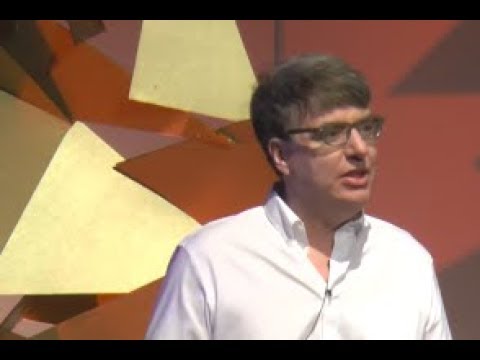
hello everyone I am teacher a professor
here at UMKC and I have a lab in which
we and an i and my graduate students
work on what we work on a lot of things
one of the things we work on is insulin
and trying to make it come up with new
ways of delivering insulin and so I’m
really a chemist chemist who works at
the interface of chemistry and biology
and that process started a long time ago
for me over 30 years ago this is when I
was young and naive freshman at MIT as a
chemistry major and in my they told me
to be patient and I had this sort of
blissful expression on my face this is a
my food service is a card I had this
blissful expression my face I think it’s
because I was becoming enamored with
experimental science so when I was in
high school I discovered this book
called the chemical rubber company
handbook of chemistry and physics and in
the CRC Handbook of chemistry and
physics I know there are few of you in
the audience have your very own they
have pages and pages of these chemical
structures and I used to look at these
and just wonder at them the beauty of
them the symmetry of them I had no idea
what they were I no idea who made them
how these things were made or what they
were used for but I knew they were
beautiful and I wanted to know something
about him so oh and that’s that’s the
cover of my book and so within about a
year of getting to college I got into a
lab and I would definitely recommend any
young budding scientist who’s interested
in science really should get into a lab
because it’s very different what I found
was all those things I had learned that
two-dimensional stuff in books the very
flat information really came alive in in
the lab why because all that stuff
that’s in the books is really describing
physical reality and when you get into
lab you’re interacting with physical
reality and turns out if you understand
those concepts you can you can interact
with it more
effectively and so at the end of those
three years in that lab I was kind of
successful I had a few patents under my
belt here’s my name and above me is
another named John Thompson and we all
have individuals in our lives who are
played critical roles and John Thompson
was my was my mentor he was an amazing
guy and this is much later in life but
back then he was in his late 20s he had
come from Australia he was a protein
biochemist and he was everything you
really want in a mentor it was just pure
dumb luck on my part to run into the guy
you know I say you should choose your
mentors like you carefully choose your
parents and it’s just pure dumb luck and
in his case he was skillful and he was
smart but he’s also a great teacher and
had a great sense of humor which he had
to have dealing with all these
undergrads running around the lab
breaking things and part of our process
was to sort of deconstruct what had
happened in the lab at the end of the
day usually in a pub over a picture of
Guinness and during one of these
philosophy sessions I asked John you
know why did you come to the United
States and you know it’s a long way to
go to get from Australia here and you’re
very successful there and he said well
Simon it’s because American science is
the best in the world and two it kind of
took me by surprise as 19 years old at
the time I never really thought about it
I think you know it’s like the water
that surrounds the fish it’s not really
aware of it but as I looked around I
realized that everybody
well not everybody but a large number of
the other postdocs besides John were
from all different countries and I just
for fun for this talk I pulled those old
papers from that time period and these
are names that I can see their faces and
hear their voices
Peter was from Switzerland John was from
Australia Mamoru wrote on his back of
his motorcycle to get food he’s from
Japan
Jonte was from India Daniel was from
Israel Lange was from China
Victor was from Russia and Andreas was
from Germany
so this is one small lab this
amazing range of people from all over
the world and you know I thought well
maybe that’s just our lab but it wasn’t
I looked at my dorm and this is an old
dorm photograph it’s on the roof the
place is called random Hall was the
smallest dorm was across from a
chocolate factory called the neckl
factory so if you’ve ever had an echo
wafer I lived within a few yards of that
there I am on the end next to me Joe
cherian from Malaysia next Tim Shanker
from India down there’s Ricky from Peru
Jillian from Trinidad
Issac from Ghana yen’s from Sweden and
you know when I just some of the names
but when I went through all the
countries just for this talk I realized
it’s a huge range is a small group of
people and an incredible variety of
people represented of countries
represented and you know I in thinking
about this was this was this you know mi
t–‘s sort of experiment to make a Model
UN of nerds
no no what MIT was doing on a small
scale u.s. science has been doing for
the better part of a century on a large
scale and that is identified the best
people wherever they are in the world
and bringing them into the environment
of American science where they get the
advantage of the environment and we get
the advantage of their their intellect
and it doesn’t just happen at MIT it
happens everywhere this is my own
division we have eight faculty it’s a
very small division we have six
countries represented this is a pretty
standard throughout academia so I would
say this is the u.s. formula for science
success you get the best people wherever
they are in the world where they’re from
you add money that’s the water and you
get the best science in the world and so
you know I keep saying the best science
in the world because that’s what my
mentor called it but does it actually
work do you get the best science in the
world how do we even assess that well
you know we can argue about that but one
one way in the way I’m gonna do it today
is by looking at Nobel Prizes by country
and and we can discuss you know whether
a Nobel Prize by country is the best way
of assessing science overall quality but
you know it’s not a bad proxy for the
highest achievement in science and when
we do that it’s pretty clear the United
States just blows the rest of the world
out of the water about three times as
much as the next country not only that
we’re probably more than the summation
of all the other countries combined
that’s about over 350 Nobel lists so
that’s great but let’s look a little bit
more closely at that impressive bar on
the bar graph if we ask the country from
the country they were in when they won
the prize when we asked the question of
those people how many of them were not
born in this country turns out over a
hundred of them a quarter to a third of
us noblest came from they were that
group they were immigrants they came to
this country to pursue science so and
that’s what made American sign so great
so you know why should I know I care
because I love science but why should an
average person or anyone care about
America having the best science well you
know you can have sort of a national
pride thing like in the same way that
you follow the Olympics how many gold
medals each country won and that’s fine
but there’s some really practical
reasons to care about achievement in
science it’s one is that science and
technology are an engine or you know I
would argue the engine of the economy
currently and the products of science
and technology can really improve life
now I’m I’m not a believer in in
technology being a universal panacea for
our problems there’s plenty of problems
with it as well but I think on average
that that is the case and so I thought I
would give as an example of this idea a
one sort of small slender chunk a wedge
of science and that’s the field of
biotechnology and biotechnology is a
really American
a branch of science it came out of
California came out of near Silicon
Valley essentially and it didn’t exist
until 50 years ago and it’s using the
tools of biology to make interesting
useful biological products that can for
example aid human health so if you’ve
ever taken protein based drug there you
made using the tools of biotechnology
and again it’s a field that didn’t exist
50 years ago now why should you care
about biotechnology well there’s a few
reasons to care about biotechnology the
first is if you’re you know really into
money biotechnology has created
trillions of dollars of economic
activity in this potential E growing and
you know that’s impressive
and it does spread out and affect more
than just the people who own these
companies the second reason to care is
that and part of the reason that
biotechnology has made that money or is
can had that economic activity is
because the products work so if you’ve
ever you know had a loved one who had
breast cancer they might have been
giving Herceptin if you know somebody
who takes insulin for for diabetes all
essentially all insulin is made using
biotechnology used to be made by
harvesting animal organs if you know
someone who has a stroke they probably
are they might have gotten TPA or
activase and that broke up the clot to
prevent it further tissue damage in the
brain so these are all products of
biotechnology and they’ve really touched
and affected positively the lives of
millions of people and again that came
out of that’s one piece of American
science and that truly is in a piece of
American science so we can ask the
question well where did biotechnology
itself come from what were the
contribute who invented biotechnology
and you know this is one of the great
problems in science there’s so many
tributaries that lead to to any
discovery that it’s hard to point to one
person but a reasonable case
can be made for these three individuals
this is Holly Khurana and nirenberg they
won the Nobel Prize in 1968 and what
they won for is what’s called the
genetic code for determining the genetic
code and if you’ve ever what the genetic
code is essentially is understanding how
your genes your DNA that’s in your
chromosomes codes for the proteins that
do all the all the actions or the
machines that do all the actions in the
body so if you move your arm there’s a
muscle protein that’s converting energy
into motion
if you see something there’s a protein
in your eye that’s gathering light and
creating a signal those proteins are
coded for by your DNA how that worked
was unknown until these three
principally determined and so this is
really an example and they’re all
American citizens so these three neatly
fit into that that night that impressive
column of American novelists three
Americans in that group of 350 but let’s
again complexify it to create a word
they if we look closely at Khurana his
pathway to to that contribution was more
complex Khurana actually started in
India in fact what in a region of India
which is now known which is now Pakistan
and he was educated first a bachelor’s
degree in India in India and then did
graduate work in England nurse and
Manchester Post doctor work in
Switzerland and then eventually did
further training at the University of
British Columbia and eventually made his
way to the University of Wisconsin in
Madison and so that was where he was on
that day when the Nobel Prize Committee
contacted him and said congratulations
he won the Nobel Prize and he was at
that point an American winner of the
Nobel Prize and of course eventually he
was recruited by MIT and and that’s
where he was where I bumped into him a
few times
and to me karana caranas contribution to
this was even more remarkable because he
was really one of the first people to
chemically synthesize genetic material
which is impressive and I think I want
to sort of end on the talking about
Khurana
because he’s really to me emblematic of
the of that group of a hundred plus
Nobel Prize winners who American Nobel
Prize winners who came from other
countries but even more so he’s
emblematic of the tens and hundreds of
thousands of young scientists and
engineers who’ve come from overseas to
to take advantage of the amazing
environment of American science but in
so doing contributing their own
prodigious talents to the endeavor and I
think I think it seems pretty
straightforward a straightforward idea
that we should not impede that process
that process because it lies at the root
of the success of the scientific
endeavor in the United States and of
science in general thank you very much
Please follow and like us: