
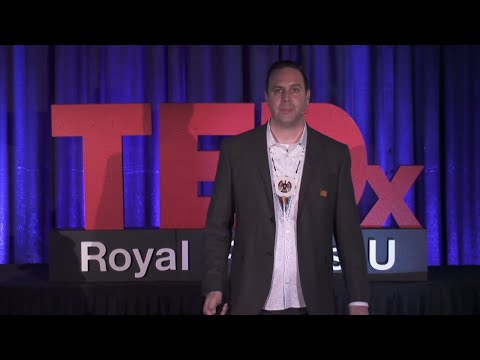
[Music]
Oh Joe anemic EQ is an industry cash and
oh damn mosquito Tim hello my name is
Jeff Ward and my ancestral name is
Thunderbird boy my clan is the bear clan
I’m a visitor I’m to these opponent
territories and I acknowledge the squaw
Mountain song he’s peoples for allowing
us to be here today I am originally from
Manitoba on my father’s side I’m a Jew
boy and matey and on my mother’s side my
settler heritage is Ukrainian and
English I’m here to talk to you about a
brand new and exciting way to think
about innovation the latest and the
greatest and it’s only been around for
10,000 years
indigenous peoples from coast to coast
to coast are the original innovators
inventors and entrepreneurs on these
lands and it’s why we start events like
this with a territory acknowledgement is
just a simple straightforward way to
acknowledge those that came before us
and to be mindful that people have been
living and thriving here for millennia
and what does it take for a people to
survive and thrive that long innovation
I think there’s still some that think of
indigenous people as a thing of the past
or maybe they don’t associate the word
invention or inventor with indigenous
peoples and that is just totally
preposterous and quite harmful I’m going
to show you just a few examples of some
indigenous innovations that I think you
may already know about or maybe you
might be interested in some parents in
the room might be familiar with some New
Age parenting concepts and techniques
such as attachment parenting or
babywearing closely being swaddling that
sort of thing well my ancestors have
been doing that for a long time so this
is a token organ so at Okanagan is used
to to carry babies baby goes in here and
is carried around and this area here is
lined with plant fibers mosses that sort
of thing and used as a disposable
vipir that’s right folks we invented the
disposable diaper too yeah and so the
plant fibers and the moss were
antiseptic antibacterial and nature and
were such that the baby would not would
prevent diaper rash keeping baby minty
fresh and clean oh look here’s a picture
of my son in his taco noggin this taco
noggin in fact and he wouldn’t come up
here today because he doesn’t spit it
he’s taller than his mother so yeah so
you can get em ICI they have their
version of the baby carrier today except
the disposable mas big diapers are not
included the kayak invented and named by
the Inuit was designed for
transportation and for hunting is a very
maneuverable very fast with its double
bladed paddle and today kayaking in
recent years has been one of the fastest
growing water sports in the world
lacrosse invented by First Nations
played by the Iroquois among others was
probably and it is oldest you know team
sport and it was played for frantic a
man for health for sport and many
nations actually use it as a diplomatic
tool to settle conflicts today of course
lacrosse is Canada’s national official
national summer sport and many believe
that it was the precursor to our beloved
hockey when it comes to medicines our
healers had things such as pain
relievers digestion aids and even things
that would help you get over the common
cold
in fact when I get sick I still make rat
Ruti
it tastes awful but it works but please
already had the trademark to that one
though
a willow bark tea was prepared and made
for pain relief and it has the same
active ingredient as what is now
synthesized in medicines like aspirin
our pine needle teas rich with vitamin C
actually helped cure scurvy in newcomers
to these lands the nature provided us
whatever we needed to heal ourselves and
our pharmacies were open 24/7 so those
are just a few examples of some
indigenous innovations and inventions
and millions of people are still
enjoying today and what does it take
these nations to create these and it is
through a unique world view so how did
indigenous people come up with these
particular ones when they could have
just as conceivably come up with any
other iteration and that is through
indigenous ways of knowing and being
that maybe are different than Western
worldview I mentioned at the beginning
that I’m mixed indigenous and European
ancestry so this is a sort of thing that
I think about a lot so I’m just gonna
share and even just reconciling sort of
like the two worlds so I’m gonna share
with you just a few and highlight maybe
just a few differences between world
beam indigenous people see the world
largely through spirituality
whereas in Western world we’re very you
know things need to be measured only
things that we can see and you know
explains your science and you know even
in recent years there’s been tons of
studies or science is validating
indigenous spiritual practices in
Western worldview time is is very linear
right so we have demonstrated to things
like the calendar so time is broken up
into days months years and time is
compartmentalize into you know hours
minutes seconds milliseconds sort of
thing
indigenous worldview we see time as very
cyclical and measured through things
like seasons or even moon phases one big
difference is how silence is valued in
communication
are we getting uncomfortable yet how
many of you just wondered if I’d
forgotten the rest of my speech well
when we have extended periods of silence
in Western communication we tend to want
to fill that space with with something
right or we wonder is something wrong
with this person
indigenous worldview in cultures and
communities silence is totally an OK way
to show respect and share space with
that person and indigenous people see
the natural world is more important
important than the human world or at
least see them interconnected so just
quick thought experiment here if all the
plants and animals just suddenly
disappeared humans we’re not around for
much longer we’re not doing too well you
remove people humans from this from the
world like that
plants and animals doing just fine and
in fact probably thriving without our
impact in mainstream world the more
wealth you accumulate the more status we
give people or more status you gain
indigenous world view totally opposite
the more you have the more you give away
and this was demonstrated through its
Giving ceremonies like giveaways or in
the potlatch now these ceremonies were
outright banned made illegal in this
country you would get thrown in jail for
practicing these traditions if you were
an indigenous person so you know imagine
being thrown in jail for giving gifts
away at Christmas well in fact a lot of
indigenous people would hold their
gift-giving ceremonies around
Christmastime as sort of a loophole but
still there were several recorded
arrests only to the strength and
resilience of those indigenous people
who kept these traditions alive that
they these now continue to happen today
for example the potlatch band was only
lifted in 1951 one indigenous
traditional values framework is the
seven teachings or the seven sacred
teachings seven grandfather teachings
and there are love respect courage
honesty wisdom humility and
and many indigenous people hold these as
a value these as six key to a successful
and well-balanced life the truth not
conciliation Commission and many
indigenous organizations adopt these
values pictured here is that as the
seven flames that represent each of
these seven teachings at anemic
indigenous technology we’ve adopted
these teachings into how we work and how
we work as a social enterprise
we literally adopted love in our company
and I’m not sure how many people can say
that and it’s something I’m really
really proud of when I was taught when
you’re trying to remember these
teachings the one or the two that you’re
sort of forgetting or having a hard time
to remember are these the ones that you
need to work on and as I was preparing
these slides for me courage was one that
and I just thought okay I have to
mention that and yeah so it’s taking a
lot of courage for me to even be here
because I I don’t see myself as an
expert on just everything indigenous and
even as I learn about my own culture so
my hope here is to just plant a seed in
your hearts that hopefully help you
think about indigenous people and in the
world of innovation just a little bit
differently and to help you share that
message we have a gift for you it is a
zipper tie it’s seven beads on each side
seven beads representing each of the
teachings and two strands of
representing to two groups coming
together in reconciliation and we’ll
give those to you at the break for those
of you who are here in the audience so
as the world moves from a resource-based
economy’s to a knowledge-based economy
in the innovation world so many
different frameworks are being created
and it’s why people just love frameworks
that heck I love frameworks it’s why
we’ve adopted a traditional indigenous
framework at our company but there are a
lot of really interesting frameworks out
there one I like to just briefly talk
about is B Corp so this is a framework
for social enterprises
and it’s guidelines and metrics for
organizations and businesses to sort of
good wholesome business practices to
help people businesses improve their
environmental and social impact so I was
told about this certification a friend
told me you know you’re an indigenous
entrepreneur you should check this out
there seems to be a lot of crossover so
I did and I went through the rigorous
assessment and the court was find us
this passing score on the first try was
sort of no changes to to our company and
it was sort of validating to think about
how like I never thought about why or
how it was you know I started my
business or why other indigenous
entrepreneurs or at the business so B
Corp gave me the language and to be able
to explain to others how we operate as a
social enterprise so after we got our B
Corp certification I was excitedly
talking to my family and like yeah we’re
certified B Corporation all stuff my dad
looked at me and said we had no choice
it was how you’re raised and so then we
went on to talk about how this country
was founded on entrepreneurship right
through the fur trade and that sort of
thing and you know as soon as our people
could recognize that we could sell
things to the settlers we were in
business and exporting our stuff
globally and then my dad said and all of
those entrepreneurs or B Corp as well
because they didn’t benefited our entire
community so indigenous people were not
a thing of the past we’re still the
original innovators inventors and
entrepreneurs on these traditional
territories and we have a lot to offer
the world of innovation it’s only
through the resilience of those that
came before us that many of us are still
here because let’s face it if the
government was successful and what it
had set out to do I would not be
standing here with you today we have a
young up-and-coming generation of
indigenous innovators and as I hope I’ve
shown you here today we have a lot to
offer
with the youngest and fastest-growing
demographic I can guarantee that in your
industry or in your area of expertise
that there are indigenous innovators
making a huge huge impact I know this
because in our work I get to work with
so many bright hearts and bright minds
either just making a huge impact in so
many areas so my challenge for all of
you here is to find these innovators
hear their voices amplify their voices
and find out what innovation can look
like from an indigenous perspective you
and our country will be more successful
for it Thank You Mitch
[Applause]
Please follow and like us: