
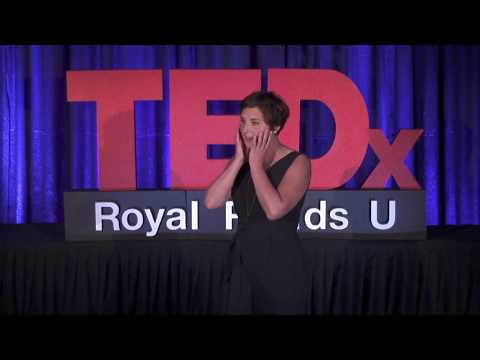
Oh
you
you
thank you it’s an absolute honor to be
here with you today on the ancestral
lands of the cassava and the Lacroix in
families my name is Cheryl and I work
here at railroads University and as a
participatory researcher I’d like to
start with an activity so here’s how
it’s going to work I’m gonna flash a
series of words up on the screen and
you’ll have about four to five seconds
to contemplate the associations you make
with each word ready first word ready
okay first word FedEx second word
Bunny’s third word and final word yes
sir now I would hazard a guess that
because you’re here in the room that you
generally have more positive
associations with TEDx the negative ones
yeah okay um the research also shows us
that we tend to have positive
associations with cute cuddly bunnies
and more negative associations with
cancer before I was diagnosed I had
negative associations with cancer too I
was 34 I just finished my doctorate here
and I was ready to launch into the world
you know I find that dream job to meet a
partner and to start a family and
instead I was diagnosed with
non-hodgkins follicular lymphoma it’s a
bit of a mouthful
it’s a type of cancer that generally
affects people who are approximately 60
years of age which I am NOT and a type
of cancer that is incurable and even
just saying that again it kind of
reminds me of that moment when the phone
rang and it was terrifying no it was
scary and then trying to navigate the
cancer system was really confusing now I
remember having a conversation with my
doctor and him saying like together we
can beat the enemy or talking with
friends and they told me to be brave or
to be
strong reading magazines I read about
the new war on cancer and cancer
fighting super foods and even in the
sympathy cards I received I was told to
be brave to be fierce
and that I could beat this and I really
appreciated all the words of support
from all the people in my life and there
was something about this dominant
negative even militaristic language that
we use to talk about cancer it didn’t
work no I have cancer and it’s not going
away it’s here it’s here it’s here and
it’s here so yeah I want it gone and
I’ll do anything I can to make that
happen but what would it mean to fight
with myself and my body in the cells of
my being for the rest of my life
frankly I don’t want to try I don’t want
to fight instead how can I learn to love
this body this body that is cancers home
how can I learn to take care and love
every cell cancer and all how can I
learn to love myself more living with
cancer so that’s what I’m trying and let
me tell you it is not always easy there
are moments where it’s almost impossible
all those moments when you’re curled up
over the toilet bowl after a chemo
treatment or emo brain hits and you
can’t find the keys that you’ve been
holding in your hand for the last 20
minutes or those days when you’re so
exhausted that you can’t get out of bed
and you can’t get out of bed and yet
you’re rid with guilt and you’re rid
with guilt or I am anyway because I’m
still here and others aren’t well I feel
like I should get out of bed I feel like
I have to and in those moments it’s
really hard to try and love myself
living with cancer
and yet you know with cancer I’m also
learning to love life the live in the
moment without regret you appreciate the
complexity and fragility and the beauty
of life and death and to not wait for
some day
and yes success is still something I
strive for I work here in an academic
institution so it’s important and yet
I’m no longer willing to compromise
living for it
and I would actually say that I’ve
redefined what success means for me
where success is living fully so I take
vacations and I sleep more and I’ve even
changed the trajectory of my career and
just last week I got on a plane and flew
five hours just to hold my new baby
nephew and that’s what living feels like
right now for me and it’s awesome you
know with cancer I’ve learned a lot and
while I would never wish it upon anyone
if I had a choice I wouldn’t go back to
the person I was before cancer answers
changed me it’s changed me for the
better actually
it’s helped me learn to love this body
and the person that I am even more and
for that I’m really grateful you know so
here I am up here talking about my story
but why is this important
well let me show you you’ll notice on
the floor or the chairs in front of you
there are some dots if you have a red
dot on the chair in front of you I
invite you to please stand up and if
that feels uncomfortable ask your
neighbor to stand up for you
50% almost 50% of this room is standing
nearly half of you that represents the
new statistic from the Canadian Cancer
Agency that one in two Canadians will be
diagnosed with cancer over the course of
their lives one and two would be you or
it could be your neighbor so that’s why
this conversation is important so I
invite you to ask yourself if that call
came tomorrow what would you say what
would you do how would you respond would
you tell that someone to whoop cancers
ass it’d be strong or to fight or
instead just maybe could you ask that
person what kind of care and support
they need how can we reinvent how we
talk about cancer and how we approach
cancer at home in health care and in our
life how can we not simply fight cancer
and the cells of our body how can we
also send a little love and care to our
bodies and ourselves answer and all what
can you can we do to make it happen
[Applause]
you
you
thank you it’s an absolute honor to be
here with you today on the ancestral
lands of the cassava and the Lacroix in
families my name is Cheryl and I work
here at railroads University and as a
participatory researcher I’d like to
start with an activity so here’s how
it’s going to work I’m gonna flash a
series of words up on the screen and
you’ll have about four to five seconds
to contemplate the associations you make
with each word ready first word ready
okay first word FedEx second word
Bunny’s third word and final word yes
sir now I would hazard a guess that
because you’re here in the room that you
generally have more positive
associations with TEDx the negative ones
yeah okay um the research also shows us
that we tend to have positive
associations with cute cuddly bunnies
and more negative associations with
cancer before I was diagnosed I had
negative associations with cancer too I
was 34 I just finished my doctorate here
and I was ready to launch into the world
you know I find that dream job to meet a
partner and to start a family and
instead I was diagnosed with
non-hodgkins follicular lymphoma it’s a
bit of a mouthful
it’s a type of cancer that generally
affects people who are approximately 60
years of age which I am NOT and a type
of cancer that is incurable and even
just saying that again it kind of
reminds me of that moment when the phone
rang and it was terrifying no it was
scary and then trying to navigate the
cancer system was really confusing now I
remember having a conversation with my
doctor and him saying like together we
can beat the enemy or talking with
friends and they told me to be brave or
to be
strong reading magazines I read about
the new war on cancer and cancer
fighting super foods and even in the
sympathy cards I received I was told to
be brave to be fierce
and that I could beat this and I really
appreciated all the words of support
from all the people in my life and there
was something about this dominant
negative even militaristic language that
we use to talk about cancer it didn’t
work no I have cancer and it’s not going
away it’s here it’s here it’s here and
it’s here so yeah I want it gone and
I’ll do anything I can to make that
happen but what would it mean to fight
with myself and my body in the cells of
my being for the rest of my life
frankly I don’t want to try I don’t want
to fight instead how can I learn to love
this body this body that is cancers home
how can I learn to take care and love
every cell cancer and all how can I
learn to love myself more living with
cancer so that’s what I’m trying and let
me tell you it is not always easy there
are moments where it’s almost impossible
all those moments when you’re curled up
over the toilet bowl after a chemo
treatment or emo brain hits and you
can’t find the keys that you’ve been
holding in your hand for the last 20
minutes or those days when you’re so
exhausted that you can’t get out of bed
and you can’t get out of bed and yet
you’re rid with guilt and you’re rid
with guilt or I am anyway because I’m
still here and others aren’t well I feel
like I should get out of bed I feel like
I have to and in those moments it’s
really hard to try and love myself
living with cancer
and yet you know with cancer I’m also
learning to love life the live in the
moment without regret you appreciate the
complexity and fragility and the beauty
of life and death and to not wait for
some day
and yes success is still something I
strive for I work here in an academic
institution so it’s important and yet
I’m no longer willing to compromise
living for it
and I would actually say that I’ve
redefined what success means for me
where success is living fully so I take
vacations and I sleep more and I’ve even
changed the trajectory of my career and
just last week I got on a plane and flew
five hours just to hold my new baby
nephew and that’s what living feels like
right now for me and it’s awesome you
know with cancer I’ve learned a lot and
while I would never wish it upon anyone
if I had a choice I wouldn’t go back to
the person I was before cancer answers
changed me it’s changed me for the
better actually
it’s helped me learn to love this body
and the person that I am even more and
for that I’m really grateful you know so
here I am up here talking about my story
but why is this important
well let me show you you’ll notice on
the floor or the chairs in front of you
there are some dots if you have a red
dot on the chair in front of you I
invite you to please stand up and if
that feels uncomfortable ask your
neighbor to stand up for you
50% almost 50% of this room is standing
nearly half of you that represents the
new statistic from the Canadian Cancer
Agency that one in two Canadians will be
diagnosed with cancer over the course of
their lives one and two would be you or
it could be your neighbor so that’s why
this conversation is important so I
invite you to ask yourself if that call
came tomorrow what would you say what
would you do how would you respond would
you tell that someone to whoop cancers
ass it’d be strong or to fight or
instead just maybe could you ask that
person what kind of care and support
they need how can we reinvent how we
talk about cancer and how we approach
cancer at home in health care and in our
life how can we not simply fight cancer
and the cells of our body how can we
also send a little love and care to our
bodies and ourselves answer and all what
can you can we do to make it happen
[Applause]
Please follow and like us: