
[Music]
I started drawing like all children do
drawn to it like candy to a baby there
were no limits to my canvases allowed to
dream and think out of the box coloring
books never kept much of my attention
coloring in the lines just seemed so
limiting my head was in the clouds
dreaming of a bigger space in the world
where pre-drawn lines didn’t define my
world I did in school the Lions and
boxes just got bigger and more
constricting and my pencil became a ray
of hope when I took my learning to the
space in the margins a whole new world
opened up for me so as an educator I
wondered what it would be like to remove
the boxes and give people space its face
to dream imagine play so why do I draw
because I believe that really important
thinking and learning often gets trapped
in a box I want to bust open that box
and leave space for the hopes and dreams
of the learners themselves dreamers
dream learners learn but innovative
thinkers leave a mark on the world
[Music]
innovation
[Music]
I can’t talk about mistakes or fear
without doing something I’m very afraid
of ready for some fun
[Music]
so you’re wondering what in the world is
a cello have to do with a speech on
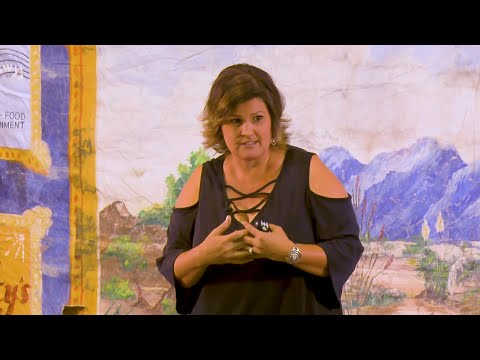
visual my name is Terrell Hanson and I
am a board certified educator I’m a wife
eylem mother I am a daughter but first
and foremost I’m a learner I’m a learner
mastering the art of communication now
what that means is that I as a learner
and definitely an auditory learner an
auditory learner who is moved by music
loves the sound of Puccini however I
drift off in long conversations and I
often don’t pay attention I am also a
visual learner I have been dubbed the
poster queen of my high school for
mastering classes not because of my
academic prowess but because of my extra
credit visual aids I am a kinesthetic
learner that means I learn by doing by
making creating however despite my
father being a junior high physical
education coach I never did Master the
mile in under 12 minutes
I don’t believe there’s one learning
style that is superior enough to rule
the world
we need them all which is why as a
teacher and as a communicator of
learning I believe that I set out to
master the art of communication or the
heart of communication if you will and
so I have to begin with a story about a
cello about nine months ago I was
challenged to bring out my cello after
25 years of not touching the instrument
I was kind of lured into it by a
pentatonic
song for those of you who know and if
you’ve ever watched the cellist in that
particular video that’s who I wanted to
be and so I said yes before I had a
chance to even think about it
I had no idea that it would take me on a
journey of learning about what it meant
to learn again it was like learning to
read again it was not like riding a
bicycle and so as I brought this cello
out what I really began to do through
all the tears in the fifth and what the
heck was I thinking I started to realize
that as I learned as a young cellist I
learned through highly mechanistic means
I learned through rote memorization I
learned through repetition I did not
however learn what it meant to have the
musicality of an instrument the kind
that fuels your desire for learning and
now here at my age I was starting all
over again
and so when I was young I really didn’t
pay attention to how I learned never
really was told how I learned just kind
of figured it out but today I make it my
business to study how people learn best
I’m the founder and creator of frame the
message Inc I draw live at presentations
creating visuals for the audience to
connect with in a process called graphic
recording and so now I’m amongst a
community of graphic recorders all over
the world I have to tell you the first
time that I ever saw this in action at a
conference I was captivated i sat there
in awe and Wonder not even knowing that
these people out there existed because
what they were doing was sharing my
learning style with a crowd of people I
tell you I feel like I found my tribe
that day and it’s because of them that
they brought me out of my own learning
funk because you see I was that kid in
school I was the kid who hoarded away
all of the scissor
and filled my desk with things that the
teacher did not deem important and
amongst that stash of scissors and
markers and glue where there was a
secret and it was a secret that I didn’t
even know until today and that is I
didn’t just like to draw I needed to
draw it was a learning style that when
information was coming at me so quickly
if I didn’t draw it I’ll hold on to
information I would have no success in
traditional education I believe that
today that you know scholars like Ken
Robinson’s day that we might likely be
educating kids out of being creative in
our traditional schools luckily I was
not one of them I didn’t outgrow it I
didn’t out learn it and I never lost my
love for magic markers okay I found
myself because I am still today and
incessant doodler a consumer of pens
anything that you can give me to touch
create and do that’s how I learn and so
when my pen is moving I know my mind is
more engaged so I started out just like
this truth is we all started out like
this stick people squiggly hair in
congruent limbs however how many of you
know or have heard somebody say to you
recently I can’t draw many of you I
can’t draw we it’s only as adults that
we start convincing ourselves that were
unable to draw which I find really
surprising that so many of you know
visual learners because 65 to 70% of the
whole of the population are actually
visual learners so why aren’t we using
visuals all the time the workplace
they know the power of visuals they use
it in meetings they use it in marketing
they use it in presentations all the
time and guess what very few of them
have any artistic training at all when’s
the last time you grabbed a post-it note
the last one you were trying to
communicate a message and they weren’t
you weren’t getting across you grabbed a
post-it note you grab a pen and you draw
every line swoop and arrow you can to
communicate your message for billion
videos are viewed on YouTube every day
100 million active users on Pinterest do
you know that the brain actually
processes information 60,000 times
faster than text why aren’t we using
visuals all the time so I’m going to
give you three reasons why you should
one visuals portray an image or a
message that sometimes words cannot this
is a this is a which one took you longer
which one displays the message faster to
visuals portray and communicate a
message this is a person this is a
person you know sometimes I think we
think that we cannot draw thereby we
can’t use it as a communicative tool yet
when people see what you scratch on that
post-it note they know your message far
before they ever have a chance to judge
it so why are we beating them to the
punch three visuals actually build the
brain’s capacity when we teach kids to
outline we teach them to create a header
and a sub header and we teach them in
linear ways to record the salient points
of what they hear that’s no different
than visual learning
however I’ve got it better because I
have a whole canvas and I can put those
ideas anywhere on that camp
and I can circle back to any detail I
want to be able to create connections
with what I hear that I could never do
with the linear note-taking so that’s
not reason enough you note that visuals
actually date back some back to symbolic
communication back to the ancient days
with those cave edgings with petroglyphs
and petra graphs what were those people
trying to communicate and they’re
simplistic art forms so if we wonder
about our own art I wonder if they step
back and we’re self-critical of their
own and what would happen if they never
put those pieces of art or communication
tools out for us to discover what would
we know about the world today so that
inspired me if they can do it I can do
it and so that’s that kid who hid all
the drawings under her desk for fear
they’d be judged who hid them away
because she felt like it was a
compensation and not an additional piece
of her learning and suddenly I was
inspired by so many graphic recorders
out there who taught me you know if you
don’t put it out there then others can’t
learn and stretch and grow and so I took
my little drawings in my desk and in my
notebook two larger-than-life panels
that were three foot by sometimes 15
feet long and I stepped back and said I
refuse to be self-critical I refuse to
acknowledge that I don’t have any
artistic training past sixth grade I
refuse to acknowledge that they’re not
going to see the communication before
they see the mistakes and so I started
realizing that art is not just for the
creative types and there isn’t a
creative type
an intellectual type that the two of
them actually merge and are important
together and so I mastered the heart of
communication which is really just my
creativity was my intellect having fun
and so I started to realize that
mistakes are all in my own perspective
that mistakes are things that we use to
judge ourselves and they get in the way
of us being willing to sit up here and
play the cello after 25 years refusing
to not to acknowledge that mistakes are
part of learning at the heart of it my
third and fourth graders taught me this
when they told me you know if you’ve
ever worked with children you know they
are the most self-critical population of
people so what they do is you know that
teachers pay for all of their own
materials and classrooms right and so
imagine the heart ache when you see a
child draw something paint it crumple it
up throw it away get another piece of
paper draw hate it crumple it up throw
it away get another piece of paper no
matter how many trees you tell them
they’re killing they never happy with
their work and so imagine my surprise
when a student said to me well mistakes
are only opportunities and I said who
taught you that
and they said you did and so what I
didn’t even realize was amongst my
classroom with the life-sized bulletin
boards the three-dimensional habitats
that was not teaching it was when I was
willing to stand at the board and hash
out three or four different ways that
they could see something through a
visual way that I started to realize
that’s what teaching is I was modeling
visual learning for all my students to
stretch the way they learned and so I
live by the mantra still today there is
nothing on those boards that I draw on
that can’t be fixed with a little sticky
nametag and a pair of scissors and no
one ever has to know and I stopped
comparing the images I had in my head
with the images than my sixth-grade
training put on the
boards and I said Terrell it’s about
communicating the heart of learning for
people and so I challenge you for all
you visual learners who say I cannot
drill up for all of you
auditory learners that say I cannot sing
and for all you can aesthetic learners
who are dying to move and shape the
world know that your contributions have
value and nothing is worse than not
sharing those with the world
that’s when communicating communities
awaken
that’s when innovation is sparked that’s
when emotions are touched and that’s
when learning truly happens so take that
sharpie marker that you should have
received at the door and start a heart
work revolution it’s not about the
artwork it’s about the heart work and so
I leave you with be prepared to see and
learn things you haven’t before
you
Please follow and like us: