
I don’t know how many health
practitioners or health professionals we
have in the public great so you
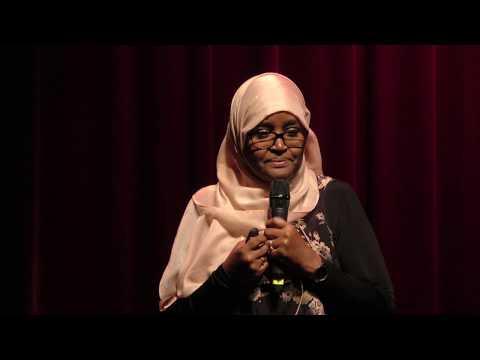
recognize this photo I’m in this diagram
so what I do as a public health
practitioner is work with social
determinants of health we know that
health is a resource for everyday living
and not less so if you if you’re ill it
does not necessarily mean that you
you’re sick that you do not have health
so within the social determinants of
health you can address at different
levels at the individual levels of
family level community level or even at
the policy level so we look at the
general socio-economic cultural
determinants of health what is it that
makes us healthy what gives us health
and well-being and we create environment
for that environment that is conducive
to that so but why is that important
and today I’m going to talk about a
supportive environment for health and
why and how we could create supportive
environment for health but most
importantly why is it important and I
came to Sweden some twenty two years ago
as an immigrant and coming in to Sweden
as a young person I really faced a lot
of challenges because once you come in
and you’re labeled in boundary or an
immigrant then you in essence you’re
stripped of everything that you were
before you become nameless experience
less in in essence unable and therefore
unwanted and that was really hard for me
to work with because I came from I was
quite okay in my family and coming to a
new country with new language new
culture new food new everything was so
new
and nobody seemed to be willing to learn
to get to learn who I was so in many
ways I gave up I gave up when my my
teacher told me that I could not be a
language an English language teacher
that I should look for other kind of
jobs I could be a care worker or I could
help the kids that was a job that every
in wondering who do I give up when I
started the University in learned as the
only and the first Muslim female
students wearing a hijab and I was told
and into the third semester that
actually I should think about dropping
out because my hijab was breaching the
hygiene rules and of course that was not
an argument I was willing to entertain I
argued against that then I was told you
know our insurance does not cover if you
get strangled by patients and after that
was it’s okay I will not hold against
you and the most interesting one when
they saw that I was not giving up they
told me you would scare the kids and all
the elderly people who have never seen a
person in in a headscarf and I thought
I’m a black woman that should be scary
enough with or without the stuff so I
gave up many many times I gave up when
they looked at my mother you know this
woman that I had always held as a role
model who has established a business a
multi-million business before coming to
Sweden who has raised me single-handedly
in a chaotic country and has raised many
other kids but nobody was interested
in what she had for experiences nobody
was interested in her life story
she was just an immigrant and a daily
trip app for that matter and most
recently I gave up when my daughter came
to camp from school devastated because
Hannah language teacher told her that in
what she she only wanted to have to
retake the Swedish exam because he
didn’t believe that she could perform
that well he didn’t care to see that she
was actually born and raised in learning
she had never lived anywhere else so I
gave up so many times but I got up in my
frustration anger and bounced back
stronger than before I not only became a
teacher I actually got an opportunity to
do a PhD and become a lecturer I wanted
to go back without paper to my teacher
but I don’t know where to find her so I
I just fast or i transposed the
opportunity or expectation that people
had on me and I did not do that on my
own I did that thanks to the people
around me who provided who provided me
with opportunities who give me an
environment that I could find
it was my English language my Swedish
language teacher Manuela who herself on
immigrants who helped me navigate the
education system in Sweden it was the
nurse at my mother’s hospital who took
it upon herself to learn the language
the Somali language so she could
communicate with my mother
so there were institutions people who
knowingly or unknowingly actually
created supportive environments around
me so that I could be Who I am today so
that is something that I took with me to
my professional one and my personal work
as well when I got the opportunity to do
my PhD I decided I’m going to do
something that to provide supportive
environments for non-traditional
researchers so I’m glad when the
previous speakers talked about IT and
Technology I involved the elderly people
the pensioners high school students in
creating IT systems for primary
healthcare I have worked in different
projects either looking into challenges
for people with different backgrounds
into the health and social systems and
one of them is the Somalia information
and business center where we provide
services in different languages in
entrepreneurship health and social
information and even seminars and
inspiration talks for the youth right
now I work in Somalia and one during my
days off which is Thursdays and Fridays
I teach this is my master’s class at
Mogadishu niversity there are only eight
students and one of the things that I
discovered you know these are doctors
there are managers the annunciation and
dentists but when they come to Stewart
to class they are just students nobody
asks them nobody looks into nobody talks
to them and finds out what is it that
they really know so I have introduced an
interactive learning seminars where I
sit back and they actually presents
their work and we did well and we
discussed that
and this is the latest project that I’m
working with and it’s the national it’s
the national humanitarian coordination
center in Somalia in Mogadishu as you
know Somalia right now is is
experiencing the worst droughts in in
centuries
they’re about 6.2 million people who I
need of shelter food and medication
there’s a wide spread of diseases such
as cholera and measles so what has
happened and this is something that
comes back but the difference this time
is that the Somali community both the an
especially the youth all over the world
and not only in Somalia had mobilized
they mobilized to provide funds that
mobilized to volunteer and they are out
in the fields but the thing is there are
so many different actors we have the
international communities that are doing
a great job but when they are going out
somewhere they do risk analysis and then
in those risk analysis then it they kind
of hold back because they can venture
into areas that are deemed dangerous but
those areas for these young kids or the
youth are areas where their aunts and
uncles and grandfathers and grandmothers
leave so we have had groups such as our
role on those two boys you see they’re
actually sit down and they have a call
center it doesn’t look much compared to
the UN or chap centre but they get in
calls local calls from the ground and
they map leads with actors on the ground
so the response is faster more
appropriate so the ministry the ministry
for humanitarian affairs and disaster
management we’ve had to negotiate and
tell them okay we need to
provide these people with with a room
where they can actually sit down and
work where we can support them so that
they better support whatever the people
on the ground in the different country
in the different countries sites so so
they sit down there every day it’s very
good we use we don’t have resources but
they actually write and they’ve been
able to help thousands and thousands of
people and that is another way of
creating supportive environments for
people to do what they do best so in
conclusion what is it that I do I create
supportive environments for people for
processes for policy and I look at what
is it that determines health what is it
that determines well-being and how can
we support that and I want to leave you
with a challenge each and every one of
us sitting here today as a professional
or a non-professional as individuals you
can be part and you can be you can
contribute to supportive environments if
nothing else
advocates towards supportive
environments for people to write for
people to be healthy you can mediate and
make sure that we don’t get up the
information or coordinates the actions
or you can enable people so that they
become the best that they can be thank
you very much
Please follow and like us: