
when people go to the polls history is
made
welcome to watchmojo.com and today we’re
counting down our picks for the top 10
world-changing votes in history before
we begin we publish new videos every day
so be sure to subscribe for more great
content for this list we’re looking at
the decisions that changed world
attitudes sparked massive conflict or
shaped entire nations number 10 the
United States declaration of war on
Japan
one day after Japan’s surprise attack on
Hawaii’s Pearl Harbor President Franklin
Delano Roosevelt delivered what’s now
known as the infamy speech before
Congress and the nation in the
seven-minute address he called December
7th a date which will live in infamy and
officially requested that Congress
declare war on Japan in retaliation I
asked the Congress declare a state of
war as a result it was brought to a vote
and less than an hour after Roosevelt’s
speech ended that vote had passed 82 to
nothing in the Senate and 388 to 1 in
the house that vote officially brought
the United States into World War 2
shaping the events to come and perhaps
shifting the tides of war number 9 the
Indian provincial elections of 1946
although this was simply a vote by
British India to elect representatives
to the Legislative Council it ended up
sparking enormous changes in the Indian
subcontinent the effects of which were
felt for generations the indian famous
rights leaders like mahatma gandhi and
prime minister Jawaharlal Nehru has long
been proponent of an independent and
united India but the 1946 elections
effectively killed that dream while they
only finished second with 1/3 of the
overall vote the Muslim League succeeded
in unifying the country’s Muslims this
destabilized India ultimately leading to
the partitioning of the country and the
creation of the Muslim state of Pakistan
in 1947
number eight the South Sudanese
independence referendum bloody civil
wars raged through Sudan from 1955 to
1972 and again from 1983 to 2005 between
the government of Central Sudan and
guerilla forces representing South Sudan
with the non-islamic self-seeking
increased representation and sovereignty
from the Islamic state of Sudan although
they were granted relative autonomy a
referendum was eventually held in
January 2011 to decide whether South
Sudan would separate from Sudan ninety
eight point eight three percent voted
for independence and at midnight on July
9th 2011 the Republic of South Sudan was
formed
unfortunately 2013 saw the beginning of
another civil war in South Sudan this
time between the government and its
opposition with hundreds of thousands of
people killed and millions displaced as
a result number seven the United Kingdom
European Union membership referendum
also known as breakfast a 1975
referendum saw over 67 percent of UK
voters choosing to join what would
eventually become the European Union but
as decades progressed political figures
of all stripes began publicly promoting
withdrawal from the EU and in June 2016
citizens went to the polls ultimately
almost 52 percent of the thirty three
and a half million voters chose to leave
with most people in England and Wales
voting to go and Scotland and Northern
Ireland primarily opting to stay the
British people have voted to leave the
European Union and the will must be
respected although the long-term effects
of this decision remain to be seen
financial markets took an immediate and
significant hit in addition the brexit
vote inspired countries like France the
Netherlands Austria Finland and Hungary
to consider withdrawing from the EU as
well number six the United States
presidential election of 1860 although
Barack Obama’s 2008 election as the
United States first African American
president was significant we
and always will be the United States of
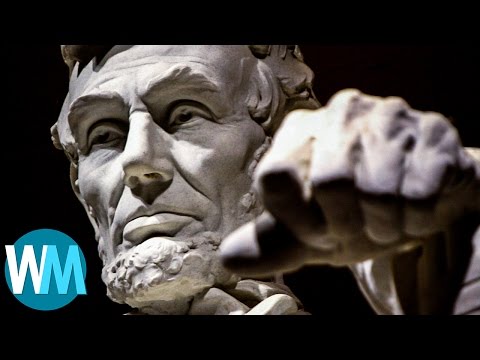
America the presidential election of
1860 could be considered even more
earth-shaking the years leading to that
both sava nations split on the issue of
slavery and the election of the
anti-slavery Republican candidate
Abraham Lincoln deepen the rift in fact
before Lincoln was even inaugurated
seven slave states seceded from the
Union declaring independence and
eventually forming the Confederate
States of America with four additional
states this in turn led to the American
Civil War the bloodiest war in the
history of the US and a conflict to
change the country’s course forever
shall we stop this bleeding number 5 the
ratification of the 19th amendment to
the US Constitution the United States
was founded in 1776 but it wasn’t until
1920 that the country allowed women to
vote the suffrage movement surfaced in
the 1840s but really gathered steam
during the Reconstruction era fighting
for women’s rights at both the state and
national levels
although the 19th amendment was
introduced in 1878 and some individual
states had already granted suffrage to
women the battle was finally won
nationwide in 1920 when the amendment
was ratified by the number of states
necessary and added to the Constitution
this not only prevented citizens from
being blocked from voting based on their
sex it also contributed to a shift in
attitude towards women’s rights
worldwide number 4 the United Nations
vote on the Partition Plan for Palestine
Palestinian Arabs and Jews have been
fighting for centuries with each group
laying claim to the area by the 1940s
the conflict had become increasingly
violent in the British controlled region
so the United Nations were brought in to
broker a solution on November 29th 1947
the UN voted to partition Palestine
meaning separate Arab and Jewish states
would be formed and Jerusalem would be
treated separately
due to its shared religious significance
the plan was accepted by the Jews but
rejected by the Arabs who asserted it
was in violation of the UN charters
principle of self-determination violence
and eventually civil war ensued and the
partition was never put into practice
number three the German federal election
of March 1933 President Paul von
Hindenburg had already appointed Adolf
Hitler Chancellor of Germany in January
1933 effectively allowing the Nazi Party
to seize control of the country but the
March 1933 election more firmly
established
Hitler’s leadership allowing the Nazis
to pick up 92 feet more than they had in
the previous election even so they did
not have a majority government but they
did have enough power to see that the
enabling act was passed
this was the piece of legislation that
essentially awarded dictatorial powers
to Adolf Hitler allowing him to pass
laws without the approval of Parliament
before long Hitler outlawed other
political parties dissolved parliament
and started world war ii number two the
South African apartheid referendum when
state president of South Africa FW de
Klerk first addressed Parliament he
proposed some startling changes the
prohibition of certain political parties
would be repealed Nelson Mandela would
be discharged from prison capital
punishment would be stopped and the
country’s state of emergency would end
what’s more he also planned to end the
system of established racial segregation
and discrimination that had existed in
South Africa since 1948 however many of
these changes hinged on a 1992
referendum in which only white voters
could decide whether the apartheid
system should be abolished the yes side
won decisively with almost 69 percent of
the vote leading to multiracial
elections that ultimately saw Mandela
elected at South Africa’s first black
president before we unveil our number
one pick here are some honorable
mentions each nation will set
non-binding targets for cutting
emissions of car
and dioxide and other gases by 2025 CB
Stevens’s and s calling for a no victory
numerically tonight
number one the Soviet Union referendum
of 1991 mr. Gorbachev tear down this
wall
do you consider necessary the
preservation of the Union of Soviet
Socialist Republics as a renewed
Federation of equal sovereign Republic’s
in which the rights and freedoms of an
individual of any nationality will be
fully guaranteed this was the question
posed to hundreds of millions of Soviet
citizens in an attempt to avert the
collapse of the Soviet Union
almost 150 million voted in favor of the
USSR’s reorganization into a
confederation known as the union of
sovereign states however before the
country could be restructured an
attempted communist coup destabilized
the country’s government while that coup
failed it contributes to the dissolution
of the Soviet Union on December 26 1991
do you agree with our kicks check out
these other great clips from WatchMojo
and subscribe for new videos every day
Please follow and like us: