
[Applause]
I’m gonna talk to you today about my
journey away from home to the South Pole
which took me ten and a half months of
time that I spent there that sounds like
a lot long time but my journey was a lot
easier than the journey of the early
Antarctic explorers this is a photo from
the endurance expedition which was run
by Sir Ernest Shackleton and he put out
an advertisement in a London newspaper
wanting 27 men to experience bitter cold
low wages harsh conditions total
darkness and uncertain return these men
responded to that advertisement and
indeed it was a very difficult
expedition they sailed to Antarctica in
1914 and their ship got stuck in the ice
and then later crushed by the ice in the
spring and they had to pile into
lifeboats and split up their party to
search for rescue 17 months later they
were back in the UK in London my journey
was a lot easier even with the minus 100
degrees this is a photo of the plane
that I got to take to Antarctica
nowadays the US operates three Antarctic
faces two on the coast of Antarctica
McMurdo Station and Palmer Station and
one in the very center of this vast
continent the South Pole Station to give
you a sense of scale Antarctica is
bigger than Australia it’s about the
size of the US and Mexico combined it’s
a huge continent and it’s all ice the
center of the continent is about 800
miles from any civilization
if by civilization you mean of a town of
about a thousand people on the coast
database I got to travel there not for
fundamental exploration but for science
I work as a physicist at Caltech and
astrophysicist and you might have heard
of Caltech on the TV show The Big Bang
Theory on that show that show is
actually based upon life at Caltech
now I’m no Sheldon scientists come in
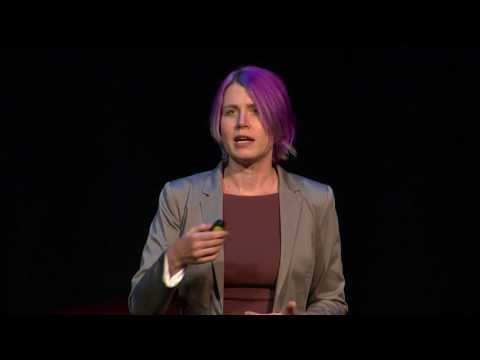
all shapes and sizes even purple hair
it’s natural I swear but I got to work
on a telescope called the South Pole
telescope located at the South Pole
because of the conditions there high dry
remote from civilization were very
conducive to doing science and not just
astrophysics which I work on but also
climate science a lot of the data from
climate science is coming from this
pristine conditions we study at the
South Pole the Aurora Australis the
southern version of the aurora borealis
and a variety of other Sciences because
of the pioneering work of these
Antarctic Explorers I got to travel to
Antarctica as a scientist this is me in
the dish of the South Pole telescope and
this is just to give you a sense of
scale it’s about 30 feet this entire
dish and myself and another winter over
it’s called we’re tasked with being part
of a skeleton crew of 46 people the two
of us were the only people responsible
for this telescope making sure it was
operational fixing it when it went down
telescope doctors essentially and also
doing a lot of the data analysis and
making sure that the scientific data
that we were collecting was useful to
the entire scientific community the rest
of the crew weren’t all scientists
there’s a fantastic station at the South
Pole that houses up to 150 people during
the three months of summer in which
planes can come in and out the station
can be refueled and scientists can do
fundamental upgrades to their
experiments just a few people stay for
the rest of the nine months to keep
those experiments running and I had the
privilege of being one of those people
the telescope I worked on was about a
kilometer 2/3 of a mile from the South
Pole Station this comfortable building
which is a bit like a college dorm room
or maybe like a prison depending on your
perspective
in that you’re essentially trapped
inside the majority of the time and you
have small beds that you’re often having
to do communal work to get cooking done
everyone did communal cleaning etc at
the South Pole Station I did get the
chance to get out of the house it wasn’t
like a prison in that respect the
weather was more keeping us inside the
house to travel to my telescope every
single day during the summer time the
South Pole has six months of total light
where it doesn’t get dark at all and
during those six months you can travel
to the sites outside of the station via
a variety of mechanisms here’s me on a
snowmobile during the winter months
however we have to just bundle up and
walk it would usually take me about 20
minutes to walk and the conditions could
be anywhere from minus 20 if it was warm
to minus a hundred or even lower if it
was cold and no matter what in
Antarctica you can bundle up and you can
survive those temperatures in fact
sometimes I even got hot you can be
happy outside as well here I don’t know
if you can tell but I’m smiling in this
photo so you can enjoy the temperatures
as well and what you also enjoy is the
beautiful views during the six months of
total darkness in which the station is
cut off from any rescue or planes any
supports the walks that you take outside
are almost always starry and often with
this beautiful Aurora Australis in the
sky to keep you company along the cold
walk so as I mentioned we are at the
South Pole to do this science because it
was an ideal location very close to
space and the science that we are doing
at the South Pole is looking at the baby
photo of the you know
here you have a plot of all of the
history of the universe from left to
right we have the Big Bang on the left
in the present day on the right if
you’re looking at the photo and after
the Big Bang the universe was expanding
and cooling and eventually it became
transparent as if on a foggy day
suddenly it clears up and from that
point on light has been traveling to us
and we can view it today with very very
sensitive telescopes and electronics
such as the South Pole telescope Here I
am indoors in the plumbing section of
the South Pole Station and it’s minus 50
degrees inside even that wasn’t cold
enough to run this outpull telescope
because of the very faint nature of the
radiation we are trying to observe this
baby photo from the Big Bang which can
tell us about the history of the
universe it can help us observe galaxies
clusters and tell us about the future of
the universe will it continue expanding
forever or will it collapse to another
Big Bang called the Big Crunch the data
at the South Pole telescope helps us
understand the answers to that but
because the radiation is so faint we
actually need to use properties of
superconductivity to sense it and to do
that to use properties of
superconductivity you have to have
extremely cold temperatures and minus
100 isn’t even cold enough you have to
be just a fraction of a degree above
absolute zero
so one of my tasks at the South Pole one
of the coldest places on earth was to
maintain and operate a refrigerator so I
I enjoyed the irony of that operating a
refrigerator on one of the coldest
places on earth this is my beautiful
telescope operating and scanning the sky
because again the radiation is so faint
just like if you try to take a photo
when in very very dark light you want a
very long exposure our photos would take
three months six months years to take
where the telescope would scan the sky
and only later would scientist such as
myself and an entire team of people go
and analyze the data and come up with
our conclusions so I helped collect that
data throughout an entire season and
finally I had been there since January
finally in September this is September
13th the Sun began to rise and sunrise
at the South Pole is in an hour long
process or 2 hour long process it’s a
month long process and when that Sun
first rises you have an immediate mood
boost when you first see that that
flicker of hope that flicker of home on
the horizon that the Sun will rise again
finally planes came for the first time
this is me with my first fresh fruit in
many many months I’m extremely excited
there to have fresh fruit it’s amazing
what you miss I miss certain smells you
miss fruit I had a friend who was
engaged and they asked him at the end of
the season who did you miss what did you
miss most
and he said fruit and he said no wait
don’t print that say my fiancee so it
really is amazing how much you missed
these super simple things that we take
for granted in our everyday lives like
fiancees and fruit I was very happy to
see people again and to have been a part
of this modern day scientific
achievement that was really enabled by
the early explorers who went to
Antarctica and paved the way for modern
scientists to help us understand the
future of the planet to help us
understand the future of the universe in
my case Antarctica has this mythic
weight it resides in the collective
unconscious of so many people and it
makes this huge impact
just like outer space it’s like going to
the moon
this quote is by the author of into the
wild an author and also a mountaineer
and I chose this quote because I wanted
to emphasize that I do believe that
Antarctica is like outer space
in that today we are in space research
in space exploration in that heroic age
of space exploration with companies like
SpaceX and Boeing Lockheed Martin Blue
Origin etc and with governmental
agencies like NASA and the European
Space Agency’s the advertisements
they’re putting out for jobs are much
like the jobs of the early days of
Antarctic exploration uncertain return
hazardous conditions but the science
they’re doing today will really enable
the science tomorrow and here’s me a
photo of me training in a zero-gravity
simulator at the NASA Johnson Space
Center I had the chance to interview to
be a NASA astronaut unfortunately I
wasn’t selected I’m gonna apply again in
the future but I got to meet a lot of
astronauts and a lot of people involved
in the space program and I’m convinced
that the heroic work that they are all
doing today will enable a future where
just like we have a base in Antarctica
where scientists can travel and do
fundamental research we will have a
future where we have bases on the moon
on Mars maybe even elsewhere in the
solar system I believe that will happen
in our lifetime if we value the work
that these explorers are doing today and
I’m very excited for a future in which
our sons and daughters can travel and do
science on the moon or science on Mars
and I’m hoping to be in the audience and
listen to their TED talk TEDx talk one
day thank you very much
[Applause]
you
Please follow and like us: