
so this is Glasgow my hometown about 150
years ago and as you can see most of the
economy was driven by heavy
manufacturing it was shipbuilding is I
think eight or nine ports you can see
they’re building these massive
ocean-going ships and at one point in
Glasgow sashtri we produced or in the
quarter the world’s ships and the term
clay boat was known around the world for
quality in high manufacturing and really
sort of helped out the empire and its
day in that time there was a trade
unionist called Jamie reeds and Jimmy
Leeds had a quote which resonated with
me and it was basically that grad school
shoot position itself as a place to boat
ships not for the 19th in 20th century
but as a place to build ships for the
21st and 22nd century that seemed to
make a lot of sense obviously and I
think everyone is aware of glad school
day is very different and you know this
is a snapshot of a very similar part of
the clade and this there’s only a few
cranes left and a lot of them are are
just for sure
unfortunately this is a lot of office
spaces housing museums expression
centers but there’s no real heavy
industry like they used to be so where
are these ships of 21st and 22nd century
well actually turns out the Glasgow post
more space ships than in our satellite
and any other car any other setting that
what I would just know so I saw of best
year we’ve ever taken some Cisco as a
place that produces more of very small
satellites so first of all why space so
I mean space is kill obviously that’s
like you know the first thing people
think of space so like you know that’s
you know human human canes great
achievements were in space you know we
went to the moon and that was great and
everyone can agree you know that was a
great thing for it for me you know I
wanted to you know work in an industry
but she was interesting obviously I left
University in 2013 and 2011 rather and
you know I drew up a list of industries
I wanted to work in and when I’ve taught
once in the last was space and I felt
great you know it’s broken the space
industry and for the first time it
seemed that it was possible due to a
whole bunch of different factors but
mainly the fact that most athletes were
becoming a thing and people could get
involved so I applied to a bunch of
places to try and get a job first and
foremost that seems like an easy easy
way to go you know stand off your CV and
you know hopefully people get back and
you know you got a job but unfortunately
that didn’t work out
because I’ve done the wrong degree I’ve
done business studies which it turns out
is not the best choice to become a
professional in the space industry so
really the only option I had to do it
was to start my own company
so I started company called alb orbital
which I’ll talk about more so I had to
basically start a company what’s the
pocket Cape soup or cubes are very small
satellite basically it’s a 5 by 5 by 5
centimeter cube this is Alex Salmond
Holden one this is this is one so this
is the size it’s the internal
electronics is very small so basically
small effects near pocket and the more
cost aspect of it is because it’s very
small it costs more than gold per
kilogram to launch a satellite into
space so the beggar the satellite the
more expensive but until recently the
electronics wasn’t a point where you can
miniaturize it but because of
breakthroughs and things like
smartphones if you can use those same
supply chains and apply it to small
satellites then you can do really
interesting things so that’s the end of
science of our satellite unicorn one so
coffee mug for scale obviously very
small so my company Alba which I got
going three four years ago the things
imposed to feel satellite and we’re the
world leader ness sort of technology so
we did Power Systems the electronics so
four antennas that sort of thing and
this is unicorn one so unicrone ones our
first-ever satellite that we designed
ourselves and we’ve got funding for the
European Space Agency to do that so as
their smallest ever satellite
they only weighs 500 grams so this aim
is a bottle of coke and has solar panels
deploys and it’s why some interesting
payloads to talk to other satellites and
there’s no finished in our clean room so
we’re really excited and hopefully it’s
gonna launch early next year this board
as this is a GPS board services we
basically one of the things the problems
to get into space and challenges for the
North standards for the electronics on
our class of satellite so basically have
to kind of invent a standard so this is
called PQ 60 and I started the emo chain
that got let’s go in and this was a
Czech company taking that idea the
standards and made a GPS boards and I
saw of last month that flew in space for
the first thing on a Atlas 5 rocket from
Cape Canaveral so having gone from an
email chain to something on our rocket
keep connect without really kill as of
actually yesterday it was deployed from
the International Space Station on a
Greek satellite so it’s no orbiting
earth be flying so that’s really
exciting and from what I hear it works
which is good big milestone for we’re
trying to with the poker chips and now
all these on to this is unicorn to this
is the follow-on to Unicron why not
naturally the main thing we’re unicorn
to compare to unicorn one is there’s got
big wings so the wings are mainly for
generating power so that their solar
sails solar panels and that sort of
satellite that we’re designing has the
same power as athletes might be eight
times its size so typically that mental
power that we can generate on this would
be in a 5 kilogram satellite and this is
well under a kilogram so it’s really
could be transformational and really
that’s helping us sort of open up a lot
more use cases which are come on a
second
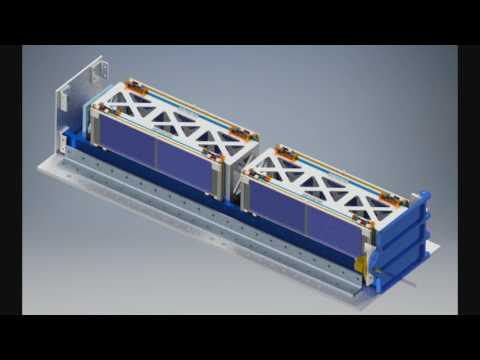
for these the two athletes because
obviously you know what’s the point that
there’s no use cases and normally the
platforms are done now so we’re also
working on the pods so basically this is
a
a highly advanced jack-in-the-box
essentially so it’s what’s taken off it
and actually but you can affect multiple
satellites and say that’s a standard
pods we can borrow some to any launch
vehicle and essentially spring a spring
loaded so you pick them and you order
the spring and then the door opens and
satellites go to space so that’s the
learners to do more of the value chain 4
space which is really important so we
know we did just you know satellites and
wuntch infrastructure and what she’s
really saying and sort of hopefully
opens more doors and helps to more
precise access to space so what are the
use cases of pocket chips so it’s great
you know cheap access to space but can
we do anything and so we’re trying to
fly to unicorn to platform so barely
next year and this is a sort of
everything we think we may be able to
get back from it so it’s 22 meter
resolution and from that you can make
out things like airports being the first
one roads
SETI’s and industry and in the future we
think we can actually get much better
resolution we think we can get down to
or in five meter resolution which would
be you know much much cleaner than – you
see objects there are you know sort of
trucks and things like that which would
be really really useful and as of today
the best data say in the world the
world’s largest imagined fleet of
satellites can only image the earth once
per day so basically in event happens
within a day period you know it’s almost
invisible to the Dimitri community so we
think that in the future if we can
improve the technology and then deploy
them at scale then you could essentially
get almost a real-time vehicle earth
with like early updates of everywhere on
earth which should be really really
amazing I think is the holy grail of the
pocket keep technology and where the
bike companies might be built and beyond
just Emory they are out other
applications such as weather forecasting
tracking ships so for instance they’re
Malaysia and think have been avoided
with the unicorn one yeah
connect an Internet of Things
another key okay so there’s a lot of
potential and you know there really is a
long long list of you sees yeah so this
is the team at Alba so we we’ve grown
from just me so I started the company
myself from a bedroom sort of 2013 so
the first office was a parameter from my
bed which is quite nice minute but
unfortunately it cabin fever and you
need to grow and things like that so so
we’re now up to new 11 people in the
next few months so we’ve really grown a
lot and we haven’t taken on any basement
it’s all been organic in support of
European Space Agency a few other
organizations we’ve really really done a
lot
so yes it’s not just our boy who boasts
athletes in Glasgow they are other
companies which is great because you
know we went about the cluster and the
first company was go in was quite space
and there’s any boats slightly big
satellites compared to what we’re doing
so that’s better five kilogram
satellites would be names of science and
this is quite a stood exactly for
Scotland because it was the first
satellite to ever be designed Bo and
eventually launched under the UK flag
that was born skaaland so it’s called
year cube one so you could with the
flagship missions the UK Space Agency in
one 2014 it was called as far satellite
and since then we produced I think
nearly a hundred satellites and in
Glasgow so it’s really been you know a
big exponential curve and only that
that’s gonna help his boat a lot of the
clear solution they’re up to 400 people
and I think so they’re really really
gone good guns there so and having Alba
and clay space in Glasgow building
spaceships
helping other people who wanted
spaceships so aspire are a u.s.
venture-backed company who raised a lot
of money in Sulkin valley to design in
to basically do data sets so they want
to help protect better forecasting in
whether they want to try shapes one
track planes want to do a few other
things so really they need to base
themselves where the the ships were
being belt so that
you know make sure that they would show
up on on time and quality control and
all those sort of things they’ve moved
to Glasgow and now create I think 50 to
60 jobs there maybe more just now but
you know we started to make this cluster
happen in Glasgow which is really
exciting and helped them to place the
old industries of heavy shipbuilding so
yeah so just to concludes this is where
we are today
this is pictures taken by commander
Hadfield from the International Space
Station so you know some guy out there
with a camera taking a picture so you
know we are quite closed you know places
the space but we’re quite close close to
that and you know I just sort of say
that you know just get out and talking
to people and there’s always people can
be involved obviously what can industry
know that we have you know companies
need talented people and you know we’re
always looking for great people you can
start company obviously and there’s a
lot of examples know people going from
you know idea through to fully
functional company and even just spread
in the word you know because people
think you know of Scotland space Glasgow
space you kind of maybe doesn’t quite
you know ring true think like Cape
Canaveral or somewhere with that but
actually you know glass goes bosal more
satellites in Cape Canaveral you
wouldn’t necessarily think that going
ends so yeah I think you know
shipbuilding in Glasgow you know we’re
we start in the machine but it’s a whole
new machine it’s you know shopping for
the 24th and 22nd century and yeah thank
you thank you for you
Please follow and like us: