
[Music]
[Applause]
so how did you get here today did you
come on your own or did you come with
someone else did you walk or did you
drive when you think about how you got
here today you might have looked at
street signs or checked your sat-nav or
you might know the area really well so
you got here easily for most of us our
world is largely defined by what we see
we rely on our eyes to give us vital
information street signs maps Sat Navs
and when you go home tonight you’ll see
the faces of your loved ones and all of
those visual images will frame your
world but for me no such luck why well I
simply don’t see what you see
I can’t navigate my world in pictures I
can’t even go home tonight and see the
faces of my loved ones well I can but
the difference is I might not recognize
them because I’m face blind I have a
condition called prosopagnosia or face
blindness and that means I often ignore
friends and family and people I was just
speaking to a few minutes ago and they
all think I’m a stuck-up cow
well of course I am but actually right
now you could be sitting next to someone
who also struggles to recognize faces
even faces of people that they know
really well and that’s because one in 50
of us has some form of prosopagnosia now
the form that I’ve got means that I can
recognize myself in the mirror but I
can’t always recognize myself in a
photograph because it’s the wrong way
around I recognize my family most of
them and some of my friends some of the
time but if I’m out and about and I’m
not expecting to see someone I know they
can walk right past me and I don’t see
them at all when I’m with someone I
who they are when we’re together but if
they leave the room and then come back
in I may not know it’s them and if they
change their appearance in any way like
putting their hair up wearing glasses or
sometimes if they even turn their face
sideways onto me like this my brain
screams stranger even though it’s
obvious it must be the same person now
face blindness or prosopagnosia is on a
spectrum at one end you don’t recognize
anyone at all and at the other end it’s
tricky but you can get most people so
this is me trying to identify you are
you ready I have to stare at you just
long enough to make you feel really
uncomfortable like I’m being very rude
or have simply gone insane so do you
want to know what it might feel like to
be face blind okay
I’m going to show you it’s really easy
all you have to do is to hang yourself
upside down like this
let me explain the brain is processed to
recognize faces the right way up so when
we’re presented with a face that’s the
wrong way round
that’s upside-down we struggle to
process it properly and in fact we may
find it difficult to identify so here
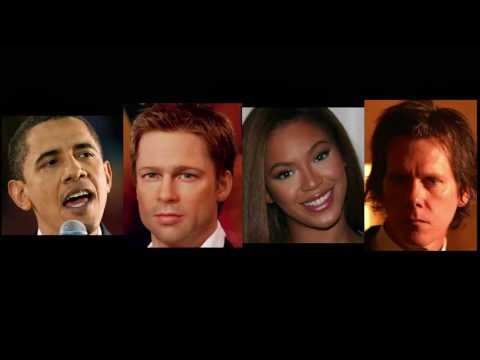
are some upside down faces for you now
I’ve chosen some really famous faces so
you should be able to work out who they
are but it takes your brain a bit longer
doesn’t it right let’s see them the
right way up okay well I can recognize
Beyonce but as for the others derp face
blind so for me looking at faces every
single day is a bit like you seeing a
face upside down I know it’s a face I
can see everything that you see but it
just doesn’t mean anything to me at all
all around me instead of me seeing faces
that I recognise all around me are
beautiful strangers now I’ve even run
workshops where I’ve insisted that
someone leave because I thought they
were a Gatecrasher and they said to me
Henry I’ve been here all morning but
actually I’m in really good company Brad
Pitt Duncan Bannatyne and Stevenson
Stephen Fry they’re all face blind as
well so what are the best jobs for
somebody with prosopagnosia hermit
Shepard I’ve got it
celebrity because acting like a diva and
ignoring everybody or calling everyone
darling seems completely normal
well actually my job is working very
closely with people and it’s the best
job in the world
once I know who they are and why is it
the best job in the world well in the
same way that a blind person has
developed their other senses I’ve
developed my hearing and sensing skills
to compensate not only do I listen very
carefully to voice tones breathing and
key words I also read the subtle changes
in expression and body language when
people’s emotions move from one state to
the other and I can also tell when
someone’s lying now a few years ago I
was asked to sit in on an interview
panel and we interviewed four candidates
for a CEO role and I really preferred
the more understated quieter individual
but the rest of the panel wanted the
more talkative sociable chap and he
actually got the job much for my
surprise I’m gonna call him Mike so then
what happened was that I was asked to
coach Mike as this new CEO and from the
very first session I knew something was
wrong my heart started racing my palms
were sweaty and my gut felt really
uncomfortable so I went to Mike’s boss
and I said I can’t coach this man it’s
like his body’s telling me one thing and
his words are telling me something else
did something dreadful happen and the
boss said I can’t possibly tell you
you’ll have to ask Mike so I went back
to Mike for a second session and I said
Mike did something dreadful happen
recently
and he said oh yeah and he said it in a
really conversational way oh yeah my
wife was really depressed and she was in
and out of hospital and then she rang me
one day at work and she was threatening
to kill herself and I was so fed up with
her I said go on then do it and she shot
herself then and there on the telephone
and he told me just like that
like it was nothing so how did I know
that something was wrong well in the
same way that you take on board
information you can respond to it in a
different way for example let’s say
somebody tells you something you just
take it at face value but what you can
do is notice the difference between body
and words or face and body let me give
you an example let’s imagine you know
Johnny and johnny is a little boy and
he’s really active and he moves around a
lot when he’s very happy and he’s very
comfortable and then you say Johnny did
you tidy your room and he says yes and
stops moving
we know johnny is lying so what I do is
I calibrate or measure the difference
between what is normal and what changes
so I recognise what’s normal comfortable
and happy in a person and then I can
notice any disconnect between body and
words or face and body now let me tell
you about a very different client
charlie from the first moment I met
charlie had a really positive vibe about
him now I met charlie again at another
interview panel for another CEO role and
from the first interview I thought gosh
he’s amazing we’ve got to have him but
the rest of the panel were unconvinced
they thought that he was rubbish
because he’d left school at 14 he had no
qualifications and he was a barrel boy
made good and I thought he was fantastic
and I fought for him to get a second
interview and he did get a second
interview and he finally got the job and
within two years he turned that company
around added 50 million to the turnover
and doubled the profits and Charlie’s
gone on to some really great things too
often as human beings we judge a book by
its cover we see someone who’s
good-looking and we think that they must
be clever or nice and we see someone who
looks less than perfect as less valuable
and less significant
let me give you an example of why we
should not judge a person on the way
that they look in 2016 a media storm was
unleashed when Jenny Beavan the costume
designer for the latest Mad Max movie
received her award take a look at this
picture what most of the media picked up
on and what most of the world saw was a
bag lady on one side and a film star on
the other what I see are two beautiful
women apparently what most of the world
saw was an Oscar winner who was
completely inappropriately dressed so
much of the time we’re bombarded with
visual images and we take so much at
face value but I can’t do that so I have
to pay attention to what people say and
how they say it how they walk how they
move how they hold themselves so in
future try ignoring the face and whether
or not a person is perfectly turned out
and instead focus your attention on
everything else and see if that gives
you a different impression of the
individual take time to calibrate or
measure what’s happy and normal and
comfortable in the individual and then
you’ll notice when things change then
you’ll notice any disconnect between
body and words or face and body so I’m
face blind is it a positive is it a
negative well we find it incredibly
fulfilling when we’re able to help other
people don’t we and actually being face
blind has allowed me to do just that I
get real happiness out of being able to
raise people’s awareness of their own
abilities and getting them to raise
their awareness of how they relate to
other people and so on balance and
because I don’t know any different
I’m glad I’m face blind oh and by the
way if you’ve met me before please come
up and say hello and please say your
name and remember I’ll know if you’re
lying
thank you
[Applause]
[Music]
you
Please follow and like us: