
a common phrase that we use is to catch
yourself doing something well why is it
important to be able to catch yourself
well the implication is we don’t always
operate with complete mindfulness and in
moments when we catch ourselves we are
being more intentional and possibly more
choice driven well I mean what are some
of the things you can catch yourself
doing you could catch yourself grinding
your teeth or catch yourself ruminating
over a recent conflict perhaps you could
catch yourself wasting time on social
media or catch yourself before saying
something that you’ll regret would you
like to know an important thing that you
can catch yourself doing that will help
you personally and professionally and
might even strengthen your relationships
this talk is about how to catch yourself
being yourself what do we mean by that
well we all have ways of being in the
world and sometimes those work for us
but sometimes they work to our detriment
by keeping us from new insights and
allowing us to repeat unwanted behaviors
in our relationships as a business and
professional coach I help my clients to
identify those those patterns those
mental and behavioral patterns that are
not helpful and then to catch themselves
when those patterns reappear in other
words to catch themselves being
themselves and then hopefully to act
with more mindfulness and to act by
choice rather than by unexamined habit
so today we will talk about how you can
catch yourself being yourself but first
I’d like to tell you a story about one
of my clients I’ve changed the details
to protect identity so several years ago
I was called in to coach a manager in a
large corporation and she was in charge
of the purchasing department and the
managers boss was concerned because more
than one vendor had indicated that they
wanted to work with anyone else in the
department other than my client well so
wanting to help her he called me in
and I was expecting when I talked to him
that I was going to meet a very
difficult and combative and brash person
and I was really surprised when I met
this very soft-spoken dutiful and
earnest person and really even after a
couple of coaching sessions I was
wondering where and when is this
difficult person going to enter the
picture well I found out that she
communicated with vendors primarily
through email so I read a representative
sample of her emails and discovered the
problem see her email communication
represented someone who was an extremely
hard bargainer someone who would squeeze
the last quarter of a cent out of the
vendors someone whose sentences often
put the other person in a one down or an
inferior position someone who reminded
the vendors of the size of the account
and the likelihood they’d take their
business elsewhere if the price demands
were not met well no wonder they didn’t
want to work with her see my client saw
herself as the protector of the finances
of the company she was the one who kept
Outsiders from taking advantage of the
company and she thought she would be
praised and patted on the back for her
hard bargaining style despite the fact
that she had several direct and indirect
messages from her boss to the contrary
so when I was able to help her
understand her boss was not happy then
we began to try to understand why it was
that her default assumptions about her
role included acting as a protector well
interestingly she began her career in
retail and she recalled that in her
former impose
here eceived the message multiple times
that her number-one job was to protect
the merchandise from shoplifters and
then secondly to provide good customer
service right and so she was unaware of
how her experiences and therefore her
assumptions had carried over into a new
company and and really a completely
different job and so we were able to
work with
that and try to help her think of a new
way to think about this situation and so
we came up with the idea of a
partnership and I encouraged her to work
with the clients and to work together
with them and to help meet the needs of
the company and to help the company
fulfill its mission and I reminded her
she could not be successful in her job
without the vendors and so she agreed to
okay I will watch my emails and she
looked back through her emails before
sending them and looked for language of
a partner rather than language of a
protector in other words she agreed to
catch herself being herself well do you
think the simple reframe had a positive
effect I know it sounds like a fairy
tale into the story but yes it did I
mean she reported better interactions
with the vendors or boss called me said
he had noticed some changes and most
surprisingly said that the vendor who
had been most upset had called and said
I don’t know what you did but she’s
great to work with now the reason that
this reframe worked was because my
client could understand how her frame
her assumptions about her role were
leading to negative behaviors and so
when she had a different frame than she
could change her behavior and I believe
in this case had she not changed her
behavior she would have lost her job and
she exhibited something that we call
cognitive agility which is the ability
to question your thoughts the ability to
think of new ways of framing situations
to reframe and in fact people with
cognitive agility they can see things
the same situation with multiple frames
George Hallenbeck of the center for
creative leadership says that people who
have cognitive agility they carry enough
frames and lenses around with them that
they could open an optometrist shop they
frame and they reframe the nature of
problems and the outcomes that they’re
seeking and the
searches that may or may not work the
the problem is that it’s difficult to
develop cognitive agility it’s because
our taken-for-granted assumptions our
ways of thinking they’re so natural to
us that it’s sometimes hard to even
identify those mental behavioral
patterns that are not working for us
in fact adult development theorist dr.
Robert Keegan and his associates that
are from Harvard they say that this
ability to examine are taken for granted
assumptions is the hallmark of the adult
development process so in other words
learning to be more self-aware and
learning how to reframe your thoughts is
an important step in your evolution as a
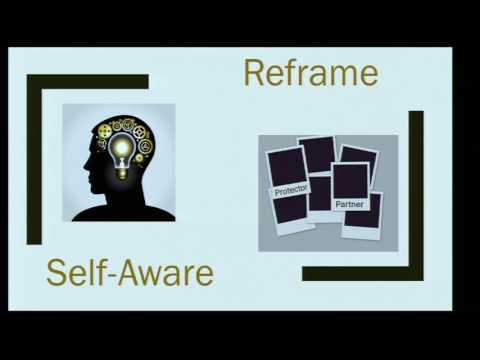
person so how can you learn to catch
yourself being yourself well the first
step is to become more self-aware and
I’ll share three ways of becoming more
self-aware that have worked for my
clients the first is to possibly take
one of the personality assessments that
are available from coaches and career
counselors people in organizational
development and sometimes those
assessment results can really help you
understand what some of the patterned
ways of thinking and behaving are wait I
know I know I know some people are wary
of these types of assessments you know
for lots of reasons because human
behavior is complex and the self-report
assessments are just that self-report
and they don’t measure all the variables
I know nevertheless as a coach I have
found them to be very helpful in helping
clients increase their self-awareness
and their insight about their patterned
ways of thinking and behaving another
thing that you could do would be to ask
for authentic assessment or excuse me
authentic feedback from others in your
life I assure you that the others in
your life can identify those ways you
have of being yourself that sometimes
get in your way and after all isn’t
being more self-aware
not only understanding our internal
workings but also understanding how we
come across to other people
a third way the
you can increase your self-awareness is
for you to examine the metaphors that
you use when you’re making sense or
framing situations I mean my client used
the the frame of a protector but it
could also be a victim a caregiver a
judge rescuer a warrior just to name a
few so what are some of those metaphors
that you use when you are trying to make
sense of your role in situations well
one way you can know the answer to that
question would be to listen to how you
describe your circumstances because our
language is full of metaphors so for
example if you say he shot down my
argument or if you say I’m going to have
to go to battle for our department in
that next meeting or if you say hey
let’s gather around and figure out our
next maneuver you could pretty much
assume that you’re using a military
frame in that particular situation but
the important thing is what does that
frame say about your role and your
behaviors and what you expect of others
behaviors see the reason that these
sense-making metaphors are important is
because they have implications for
behavior so in my clients situation as a
protector she was determined to keep
anyone who might lay claim to the assets
of the department or of her company you
know at a distance as somebody to be
watched over somebody to be suspicious
of so she needed to be able to we need
to be able to question our thoughts and
to look for what we call discrepant
evidence which is any evidence that
might cast a shadow of a doubt on our
assumptions and she had plenty of
instances of discrepant evidence I mean
your boss told her he wasn’t happy with
her relationship with the vendors and he
gave her a big clue one day when he said
hey you know everybody’s got to eat
meaning that he thought the vendors were
worthy of a profit but see she was so
busy being herself that she could not
pick up on that discrepant evidence that
challenged her protect her frame but
with the new frame
new ways of behaving opened up for her I
mean not only did she check her email
she figured out you know that partners
are more likely to talk in person and on
the phone when issues arise so she began
talking more to the vendors which was a
nice step in developing a better
relationship I mean my point is with the
new frame it was not difficult for her
to make those small behavioral shifts
that both the vendors and her boss
noticed and appreciated so when you have
been able to increase your
self-awareness and you catch yourself
being yourself then the next step that
you take is to ask yourself is there an
alternative frame is there another way
of looking another metaphor another way
of making sense of what’s going on here
and then what does that mean for my
behavior in my experience as a coach
this ability to reframe is one of the
most important abilities that you can
have I mean with this client and
countless others I have seen significant
behavior shifts great emotional relief
reduced anger even reduce suffering as a
result of the ability to challenge the
current frame and be able to think of
things a different way so I ask you
when’s the next time that you will catch
yourself being yourself
[Applause]
Please follow and like us: