
[Music]
so what is it that causes any human
system a team a family a community and
audience to come alive to be at their
very best this question is that’s why I
go to work every day it’s why my best
buddy Hal makes fun of me he’s the what
kind of nerd would say human system
right the same kind of nerd that will
start with a graph and where’s the time
X but this graph is important because
it’s it’s why the question matters and
many of you know this we live in a time
of radical exponential change right now
right the speed of computing the number
of devices and internet connections it’s
all rising at an exponential rate I had
a personal experience a few weeks ago to
remind me of this fascinating time is my
daughter Sierra she’s 5 and I’m making
breakfast in the kitchen and she’s over
on the couch with an iPad and I get this
notification all the sudden on my phone
that pops up your parent you’ve seen
this thank you for purchasing Sophia the
first season too right I look at her
she’s like peeking out behind the iPad
but that moment reminds me like this is
a fascinating time in history where that
can happen my 7 year old I can’t get
them excited about Santa because we have
Amazon right what makes it even more
interesting is when Astro teller the
head of Google X says that we may have
just approached the first time in human
history where the rate of technological
change has surpassed our ability as
humans to adapt to change and if that’s
true what I’m here to suggest today is
that it’s not more answers or more
knowledge that we need I agree with John
Kelly from IBM who says that in the
future they might measure our
intelligence not by what we know or by
more answers but by our ability to ask
better more beautiful questions today
I’m going to introduce you to an
approach to asking questions that we’ve
been using in human systems of all types
and I’m going to take you back to the
origin of this approach which is called
appreciative inquiry it started in 1982
and David Cooper Rider was a young PhD
student at Case Western Reserve
University in Cleveland and he was
consulting with the Cleveland Clinic and
David looked around and he noticed that
the way that most consulting was done is
people come in and they look for
problems they ask questions like what’s
wrong or what’s broken or what’s missing
but David had this like intuitive
curiosity because he believed that human
systems move in the direction of the
conversations they have which are guided
by the questions that they ask and so he
thought maybe there’s another way maybe
there’s another way he thought what if
instead of asking about what’s wrong or
what’s broken what if we asked about
moments when we’ve been at our very best
what if we ask questions like what are
my highest human strengths or when if we
excelled in why was that and how do we
bring more of that into our future so
that was the essence of how appreciative
inquiry all started in the fewest words
possible I would tell you it is a search
using questions for the best of what was
what is or what could be within any
human system when you leave here today
with your families in your communities
the dinner table to the boardroom I’m
going to share with you a few of the
questions that we’ve discovered that can
cause us to really come alive and I
think we need it in this world right now
if you agree I think we need it we need
a positive tipping point and I think
this might be able to do it the first
kind of question I want to share with
you is what I would call a question that
connects us to a greater sense of
purpose a deeper meaning the fundamental
why question why am I here why does this
matter last September I was kicking off
our annual 8th annual sustainability
summit using appreciative inquiry the
city of Cleveland brings in hundreds of
citizens it’s not top-down or bottom-up
it’s everyone at once creating designs
to create a sustainable future for our
city and at the start of the day I
presented a question and the question
was why are you here what’s calling you
to be here and there was a young woman a
high school student who stands up to
answer that question but before I share
her answer consider that there were a
few other students in the room who I’m
sure they could have answered it by
thinking well I’m here because my
teacher said I need to be here I’m here
because this might be interesting and
let’s not forget that when we asked a
question why are we here what is my
purpose why does this matter that we
have total control over the meaning that
we give in that moment and what she said
is she said I’m here because when I
walked to school every day she said I
walked by abandoned properties and she
said on these properties things happen
that are scary and she said I just hope
that one day maybe these properties
could be turned into playgrounds in
Gardens well what ended up happening you
might guess within a few hours there’s a
team using design thinking and
prototyping that came together around
this idea and I’m going to show you the
moment that she presented this vision to
the whole room just a few hours later
know that they can affect climate change
in their own neighborhood that later but
now but the story doesn’t end right
there because a few minutes later a
volunteer grabs me by the shirt she’s
holding back tears she says John she
says you wouldn’t believe it she said
after that presentation one of the
participants had walked over to the girl
handed her a post-it note with an
address must have been a real-estate
investor and said I’m gifting you this
property to see this dream come alive I
share that with you because when the why
our purpose when the Y is strong enough
I believe in we see that the how reveals
itself and when our purpose becomes
shared what happens is impossible can
become probable one of the most exciting
projects that I’m working on along with
a team at Case Western Reserve we’re so
excited to support this is called aim to
flourish and our goal is to change the
purpose of business around the world
that’s a big goal and I’ll explain what
we’re trying to do is we’re partnering
with business schools who are teaching
their students how to use appreciative
inquiry positive questions to go into
their communities and to find
innovations that are solving any one of
the 17 global goals and so they’re
finding innovators and CEOs and business
leaders and entrepreneurs who have
purposed themselves and we believe this
could be the future of business what is
flourishing mean the future purpose of
business could be not just economic
prosperity but when every entrepreneur
is also asking how do we create
ecological prosperity and social
prosperity so we want to find those
stories and I’ll share just a few that
our students and professors are
uncovering in this village right here is
turning tapioca into plastic bags this
was discovered by a business school in
Indonesia the business is called green
hope these are not ordinary plastic bags
like what we see at the grocery store
those bags take 500 years to decompose
these bags that they’ve found a way to
create years of R&D they decompose in
two weeks
imagine what that does for our planet
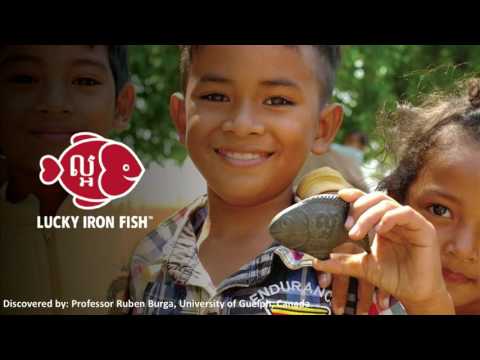
when that scales up or the story of
lucky Iron Fist which was discovered by
some students at Guelph University
Guelph University in Canada
and it was to resolve a major issue in
the country of Cambodia where they have
a big deficiency in iron well here’s the
school you take that little fish and you
drop it into a pot of boiling water
while they’re cooking their food and it
gets them all the iron they need in a
day and it started there and it’s on
almost every continent now there’s like
80,000 of these fish that have gone out
around the world these are the stories
that the world needs to hear but it’s
also in our own country our own backyard
Casey Crawford started a mortgage
company in 2008 and he was driven by
this idea of we need to do this based on
loving and valuing people and you can
get caught up in the headlines they’ve
grown from a few employees to like 5,000
they’re one of the fastest growing epic
stories in their industry but what I
want you to hear about is how they’ve
done it based on their purpose
last year alone they granted over a
million dollars to their own employees
who are facing times of hardship last
year they invested I think it was north
of 10 million dollars into community
projects to create jobs and offices for
local nonprofits to do outreach these
are the stories we need to share about
business as a force for good in the
world one of my favorite restaurants
Cafe gratitude out in the West Coast
never forget the first time I’m there
it’s it’s vegan and I’m excited to try
this out and I’m sitting down eating my
first meal and I realized somebody’s
pulling a prank on me because a few
bites in I’m eating it’s bacon somebody
had like stuck bacon into the vegan
place and it was really good bacon and I
didn’t mind but I called somebody over
I’m like look I don’t have a problem
with this but you might want to know you
know your vegan restaurant I’m eating
bacon and I’ll never forget the woman
leans in with this big smile on her face
she goes oh no sir that bacon is made
out of coconut coconut bacon who’d have
thought that was the moment I almost
became a vegan huh okay what I really
want you to hear is is is there
philosophy which was put in their book
by their founders sacred commerce one of
the many games that they play is after
they take your order they present a
question to the table like what are you
grateful for or what are you proud of or
what are your unique strengths so that
when they walk away there’s an uplifting
dialogue we need these stories in the
world and I’m so proud to tell you that
this initiative that we’re supporting we
just finished our pilot phase and right
now we have 210 professors 91 business
schools in 59 countries in the future
nobody will say business as a force for
good because they’ll
just understand that’s why you start a
business the second type of question I
want to share with you today is what we
call questions that connect us to our
strengths our highest human strengths
when have you been at your best when are
you at your best it doesn’t matter what
stage or season we’re at in life once we
connect to strengths we don’t just
perform things can transform we had a
one of our team members mo McKenna was
teaching some educators in Canada how to
use a pre shoot of inquiry and one of
the teachers came back a few weeks later
and said mo you’d never guess what we’re
doing we’ve stopped just finding
everything that’s wrong with the red pen
and we’ve started circling what they’re
doing right with the blue pen and all
the sudden the students are not only
able to improve faster because they see
where to go but they’re motivated and
they’re inspired because when we connect
to strengths it lifts us up emotionally
or this story less than an hour from
here 10 years ago our team member Jackie
Stavros was invited to a manufacturing
plant in Cadillac Michigan and this
plant invited her in to help them to put
together a plan to help shut down the
plant because they weren’t performing
they were slated to be shut down well
Jackie walks in the door and you can
imagine the tensions are high
morale is low and Jackie she says what
if instead of a plan to shut it down
what if a we had a plan to revitalize
and they say you can’t do that and how
would you do it anyways well there’s
something they didn’t know about Jackie
Jackie is a 20-plus year pioneer and
appreciative inquiry and what they
didn’t know is that Jackie had her own
strategic planning approach that had
already been proven in hundreds of
companies as an alternative to what they
teach in schools they call it SWAT where
businesses look at their strengths and
their weaknesses their opportunities and
their threats but Jackie’s approach is
called soar where you look at your
strengths and then your opportunities
and then your aspirations your visions
when you use those things and then the
results that you want to create and when
we tap into our strengths things happen
that we didn’t think it happened that
plant is flourishing ten years later
today or the story of Birmingham
Children’s Hospital our colleagues in
the UK Suzanne Quinny and Tim Clark
introduced them to appreciative inquiry
and now instead of asking how do we make
fewer errors they’re saying how do we
learn from excellence here’s the
beautiful thing about tapping into
strengths we know this we know that when
we’re in a positive state of mind which
our strengths will bring this there
now have the data the undeniable
empirical data the wonderful field of
positive psychology the great work of
leaders like dr. Barbara Fredrickson and
her theory on broadening and building is
now proven hundreds of studies have
proven it out that when we’re in a good
state of mind
were smarter were more creative were
innovative and were more resilient so I
invite you when you leave here to ask
yourselves on the break what are my
strengths how do I play them into my
lives even more the third question I
want to share with you what are the
kinds of questions that connect us to
new and exciting images of the future
for just a moment right now I want you
to think ahead a year five years ten
years a hundred years whatever you want
to do and ask yourself what kind of
images dreams give me the greatest sense
of purpose fulfillment meaning and
passion and don’t stop asking that
question when you leave because we end
up where we ask about I got a phone call
last year from a wish organization
called the front row foundation and what
they wanted to do is invite instead of a
six person board meeting they wanted to
invite all of their community 35 people
to come in to create a shared vision and
so we hosted an appreciative inquiry
summit and during the day many of their
supporters are entrepreneurs and these
entrepreneurs came up with an
interesting idea because the question
that was given to them is what kind of
innovative ways could we do fundraising
that are less expensive but actually
work better write better questions
create better results and one of the
teams came up with this idea of as
entrepreneurs what if we just offer up
each other’s strengths like a
marketplace like hey I can do this and
you’re interested in that and we can
funnel the money to the front row it was
a cool idea everybody loved it that
night we’re sitting around the fire pit
on my back deck of my home reminiscing
about one day if this vision comes to
life when somebody leans over taps me on
the shoulder and whispers hey John don’t
you have a training event coming up that
that that woman right over there is
probably going to buy a ticket too so
what are you acting off right now around
the fire pit at that great idea I became
the auctioneer right I sold a ticket we
raised a few thousand bucks in a few
minutes but it didn’t stop there what
ended up happening is somebody else
stood up and said well I’ve got an idea
and I’ve got an idea and I’ve got a
strength to offer a value to create
someone said well I’d be into that and
we kept going the wine and beer didn’t
hurt we kept going and and and after
about an hour somebody says how much
money have we raised 20 30 40 50
we start counting 60 we’re at
eighty-three thousand dollars because
we’re connecting our strengths but it
didn’t stop there there’s one guy our
friend John Kane you always need one guy
like this he goes if we get to a hundred
grand as we thought we were done he says
I’m gonna tattoo the front row logo
right here on my arm right and as the
auctioneer eyelid the only thing I can
think of which was who else will get a
tattoo if we get to a hundred grand and
you already know what happened when
tattoos are on the line people find a
way to raise money we did it and what’s
really cool is we had Nick Kahn Adara
our filmmaker was there to capture the
final moment when we got the last one
two grand we did call our friend Steven
Christopher woke him up out of his sleep
I think he was naked you could see we
FaceTime him and and he got us over the
line by the end of the day we had far
exceeded anything ever sound if you seal
the deal by donating three thousand
dollars of the front row to put us over
a hundred thousand dollars he’s had done
[Applause]
and the reason that happened is not
because the board said here’s our vision
the reason it happened is because the
board said we want our community to
co-create the vision because when vision
is created together people want to see
it come alive and in this case it came
alive faster and more naturally and far
more inexpensively than it ever had
before one of the reasons we love to
bring communities into nature is because
I believe there’s some sort of deep
wisdom that nature brings to us I can’t
always explain it but one of the things
I feel like it’s always reminding me of
is how connected we all really are but
yet at the same time I wonder in today’s
world are we really that connected as
this photographer helps us to see by
removing the devices from the hands of
the subjects where are we more
disconnected than we’ve ever been think
about that for a minute so my invitation
to you Myra much better-looking audience
than that one
my invitation is that when you leave
here don’t keep these questions for
yourselves bring them to your lunch
bring them to the break ask each other
what is your purpose what are your
strengths what are your visions and as
Mary Parker Follett the great community
organizer born in the late 1800s and
Boston used to say it’s not uniformity
but unity that makes us strong embrace
the diversity of your answers because
together that’s what makes the future
even brighter and more possible I have
one more story to share and actually I
want to invite up brother James to play
a little tune to help us out with the
stories that sound good
all right this question 17 years ago we
got a phone call at the time it was un
secretary-general Kofi Annan in his
office had asked us to facilitate an
appreciative inquiry summit for the
largest convening in history of 500 CEOs
of the largest corporations in the world
and at that summit we presented this
question what is happening a generation
from now in your image of the future
that you most want to create
and we captured the data we’ve repeated
this experiment three times since then
at our global forum for business as an
agent of world benefit that we host
every three years in Cleveland our next
one is in a month where we going to do
this again we’ve taken all the data from
all their answers we’ve summarized it
synthesized it into themes they’re words
that I’m now going to share with you
because I want you to know there’s hope
and we can all do this together with new
questions their answers start with this
we see a bright green restorative
economy that purifies the air that we
breathe it has eliminated the very
concept of waste and toxic byproducts
extreme poverty has been eradicated from
the planet the economy’s
industry-leading stars are celebrated as
creators of sustainable value what we
see when we look around our resilient
bright green and walkable cities
regenerative agriculture astonishing
exponential technologies in all of this
is built on an economy of institutions
that are widely trusted workplaces that
elevate magnify and lift up our highest
human strengths we built the bridge from
an unsustainable industrial age to a
future that embraces the idea of
flourishing for all we have redesigned
the entire material basis of our
civilization successfully thank you
Traverse City thank you very much have a
great day thank you thank you
Please follow and like us: