
[Music]
[Applause]
I’m John Isaac I come from India in
southern India and I came to America in
1968 and I was 25 years old and I was
very adventurous and I wanted to try my
luck living in America and becoming a
folk singer or a blues singer so when I
arrived in New York City
the Indian government gave me $7 for my
one-month
visitors stay so between my travel from
New Delhi to London and London to New
York I spent most of the money with the
few whiskey’s and I ended up landing at
Kennedy Airport with my 12 string guitar
and 75 cents in my pocket and a friend
said I could stay a couple of days with
them so the very next day I went to the
streets and that was the time when all
the flower children with long hair and I
fitted in fine with the hippies I joined
I saying
and people would throw some money in my
guitar case and I’ll go back with a
change I literally sang for my supper
and I got to worry about my visa and how
I’ll stay in New York because it was
going to expire in a week so one day a
very kind lady I was in the Greenwich
Village and after I sang she said you
know I work for the United Nations and
we have a choral group choir called the
UN singers and we are actually looking
for a
baritone voice like yours will you come
an audition so I told her I will
definitely come but will you be able to
get me a job or something and and she
said yes I will try my best to get you
an entry-level job so that’s what
happened and that I ended up working for
the UN for 30 years so while I joined
the UN from a messenger job I entered a
photo contest and I won a grand prize
and the photo department said would you
like to try your luck in the photo
department that we a darkroom technician
and that’s what happened I joined there
then I was a darkroom technician and I
became a photojournalist and then I was
a photo editor and I retired as the
chief of the photo unit my very second
assignment was to go to Vietnam and
Southeast Asia and cover the plight of
the Vietnamese people who were living in
little boats in 1979 and they were
leaving the country to be free in a free
country which will accept them and I saw
a young girl staring at the ocean so
when I went there somebody told me do
you know what happened to her while she
was traveling during her Odyssey that
the Pirates had killed her father and a
mother and looted all the money and they
raped this girl so I just don’t want to
take a picture let me try and see if I
can find a home for her so I had met
three Catholic nuns from California and
the day before so I went and woke them
out and I brought them to the seashore
where this girl was and then I had
brought some chocolates some music and
then she smiled and she looked at us
others and the three danced took her and
she lived somewhere in California I
didn’t take a picture I didn’t even take
a name all I wanted to do was save her
from the agony that she was going
through
and to find somebody that will relieve
her quickly but when I came back to New
York when we had a symposium the next
year I was talking about this girl and
what I did many people criticize him
they said that wasn’t my job my job was
to take my picture and there are other
people who are doing this kind of job
but I felt I was a human being first and
they don’t leave whatever I did and this
is what my mother used to tell me when I
was young she said when you get a job
you have to think about you know who you
are
a human being and then only your job
comes in so I am happy now that I did
not take a picture so in 1984 I was sent
to Ethiopia Ethiopia had one of the
worst droughts in history famine and
they had a dictator who ruled so they
were struggling I was one of the first
journalists to go there and for the
first time I saw people die of
starvation so I saw a lady who had
delivered a baby before she could reach
the clinic and her um little cord was
still attached to the baby and she was
fully naked
so my first reaction was to cover her so
we did but just before we had come there
a TV crew had seen this so they ran up
to that car to get the gear to fill this
lady so when they saw that she was
clothed they asked who did this and they
sent me so the video cameraman was
really upset with me he came and he
cursed me with all kinds of names and he
said I didn’t have the right to do that
and I ruined his Pulitzer Prize picture
this is how I started to develop my
photojournalism in a different way and
many times I never took a picture and
I’ve just give
a few examples had in 94 I got a call
from New York and they said all hell
broke loose in Rwanda and we want you to
go to Rwanda now so I was not prepared I
didn’t even know what was going on I
just heard on the BBC what was going on
there I went to Rwanda and I landed in
the middle of ethnic cleansing between
two tribes the Hutus and the Tutsis they
were hacking each other with machetes
and people were fleeing refugee with
refugees were all over the place and and
the I didn’t even know where to focus
what to do
UNICEF called and they said will you
please do a story about the children who
are displaced and they call them
unaccompanied children so here I was in
a children’s camp and this little boy
was telling me all the stories his
neighbors in a song and he witness the
other tribe come and hack his mother and
his father with machetes after he’s
saying I’m almost in tears and then he
looked up to me and he said do you know
something you look just like my father
he said so I hugged him and I said you
know something I wish I had a son like
you
so the next thing he said will you take
me back with you so I’m trying to
explain my helicopters waiting and it’s
not that easy for me to take you I have
to go to Kigali and cover some more
coverage but all of that didn’t make any
sense to him but I was really bothered
and I was about to get to the helicopter
and he came running and he said if you
ever come back to Africa come and visit
your son he said so when I came back and
I filed my story I really didn’t know
what happened to me one day I went to
work there was just a blank everything
was gray I didn’t even know who I was I
mean I
lost all my esteem and my wife said
every night I’m screaming and screaming
in my dreams and damn man so I told her
that I’m having violent dreams and I try
to explain it a little bit but when this
happened to me and I’m telling you what
I’m going to say is even shameful
because I came this close to killing
myself I was struggling with this and
the UN gave me generously sickly when I
went to some psychiatrist I was taking
some medication and I was moping around
in the house one day I looked out one
morning and I was having a beer on a
Saturday morning and in my neighbor’s
backyard I saw this beautiful sunflower
it was almost smiling at me you know and
I shot 36 frames and I came home and my
wife was so thrilled and I told my wife
tomorrow I’ve got back to work and I’m
fine then 23 years later I’m telling you
my story so I’m really grateful to
somebody up there who guided me all
through and life is really beautiful so
I also had some good moments
I’m only talk to you about the bad
moments I met people like Audrey Hepburn
when she became the ambassador to UNICEF
she asked the UNICEF head
mr. grant she said can you ask for John
Isaak to go with me to Ethiopia in 1988
because she had seen the coverage had
done before so that was a big thrill I
enjoyed her company I traveled with her
on many of her travels and one time we
were in Bangladesh and she was pouring a
heart out to the orphaned children and
she was saying how tough it was for her
during World War two one little girl a
Bangladeshi go it got to the heart
she jumped up broke off from the crowd
and she came and she had her and they
both cried Audrey was crying she was
crying I was right next to them at that
moment I didn’t want to take my camera
and photograph because I felt it’s a
personal encounter let her enjoy later
on some of the UNICEF people asked me
how come you didn’t take that picture
Audrey Hepburn immediately corrected
them and she said I’m so glad he didn’t
take that picture few years later no few
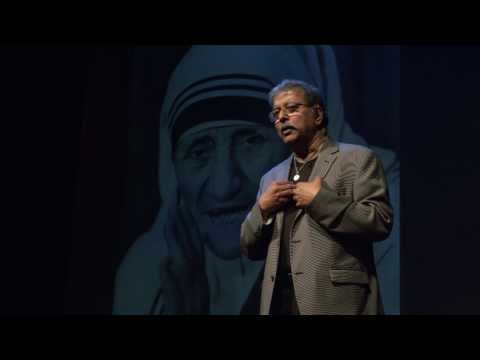
years before I met Mother Teresa and
this was an amazing encounter she’s just
a little lady amazing these two ladies
were bigger than life and I’m always
indebted to them because they taught me
something about human dignity because my
mother also was a wise lady she always
told me you have to protect your dignity
only then you will know how to protect
other people’s dignity so three ladies
played a big role and Mother Teresa the
whole day I spent she was talking about
how she wants to give dignity to the
unwanted dying with AIDS she said John
my lap was always for there they could
sleep lie there and peacefully die we’re
all the same I mean we we have to
respect each other and and that’s what
life is all about and and I want to say
something also here which is not related
to my photography story my mother always
told me John happiness is the most
important thing for you and happiness is
something that comes from within and
it’ll come sporadically you cannot catch
it and keep it it’s almost like a
rainbow she said you will see it when
you go there it’s not there learn to
recognize when
comes and then you let it go and
recognize it when it comes back now I’m
turning myself into another chapter and
I’m going to talk about I switched from
photojournalism to wildlife because I
always was very fond of wildlife
especially the Tigers in India because I
come from India and they’re endangered
they are saying that in 20 years there
won’t be any Tigers so while I’m
switching over one day I had a strange
phone call and the voice said hi he says
John and I said yes who’s this this is
Michael Michael Jackson and I didn’t
know what to say I thought one of my
crazy friends is pulling my leg
so I said get out of here and I hung out
front so then I was thinking and I
called my wife and I said I got a call
from my Oh somebody’s pulling your leg
you know you have some crazy friends you
know they’re different few minutes later
the phone rang and this time it was a
deep voice and he said I’m the manager
of Michael Jackson are you John Isaak so
I said yes why did you hang up the phone
on him because he’s sulking here he’s
saying nobody has hung up the phone
he decided to come to New York three
days later to do his video with Spike
Lee and then he invited me to be his
photographer and travel the history tour
the first thing he told me John all I
want from you be my eyes and show me
what I cannot see because I love what
you see and what you show so what I want
to share is there’s a whole another side
of him every city we went he would tell
the public relations person find me
where the hospitals are especially where
the children who are terminally ill and
I went to several hospitals and I flew
in his private jet we went to so many
different places
I was the concept photographer but he
went to every town he was there he
always talked about love he said I love
humanity so my mother when I was 18
years old she said John you have to love
humanity and when you say I love you you
should say it from here it’s not just I
love you you know so she she coded
rabindranath tagore who was the greatest
poet from India Nobel Prize winner for
literature Tagore wrote our national
anthem and he said may my loving you not
be a burden on you for I freely chose to
love you you think about that may my
loving you not be a burden on you for I
freely chose to love you and that is
true thank
so so I want to end my little life story
I want to share and only three
thousand-year-old Sanskrit problem it’s
anonymous look to this day for it is
life the very life of life in its brief
course lie all the realities and
principles of existence the bliss of
growth the splendor of action the power
of glory yesterday was just a dream
tomorrow is only a vision but today
well-lived makes every yesterday a dream
of happiness and every tomorrow a vision
of Hope look well therefore to this day
thank you thank you
you
Please follow and like us: