
stupid worthless no-good freeloading son
of a bigmouth know-it-all ugly lazy
disrespectful it’s always a little
intense when I say those things an
imaginary teenager like our old school
friend here from The Breakfast Club and
you’ll hear these words day in and day
out as an adolescent therapist I do know
that these terms are still being used to
describe teens and I also hear things
like teens they’re so selfish they don’t
care about anything they’re so bad and
well difficult difficult is damaging
when it causes our children to define
themselves as problems it strips away
their self-esteem show of hands how many
of you at some point of your life have
been called difficult whether it’s been
at home work school maybe a variation of
it challenging demanding or my personal
favorite high maintenance yeah I think
we’ve all been there right well I was
that difficult team least that’s what I
was called because I was seen as the
wastoid that dropout and the lost cause
and yes I was those things and I was a
rebel but I was also someone that was
desperate to be seen as something more
than the problem child but difficult got
in the way and difficult was damaging
and as adults we’re more equipped to
shield ourselves in these terms in these
phrases when people say it the teens
they take them as truth and when they
hear it often enough becomes a core
belief and it affects them not just
today but their entire
lives the good news though is that we
can disrupt this damage and we start by
first understanding what the work
difficult even means so American
Heritage Dictionary defines difficult as
something that is hard to endure hard to
solve so let’s say I came out here
tonight and I said oh man you guys are
difficult I’ve just implied that you’re
hard to endure and quite frankly you
probably tune me out now imagine you’re
a teenager and somebody says ah you’re
so difficult you hear that you’re a
problem but not just any problem one
that is too hard to solve
and as adults we’re not saying these
things because we want to hurt kids it’s
just the opposite we care so much we
want to see them grow into themselves to
be all that they can be to see them
succeed but what happens is that we get
really busy and we go into auto mode
that autopilot and autopilot is great
when we’re chugging along we’re busy
we’re knocking things out but when we’re
an autopilot were not aware because
autopilot and awareness don’t reside in
the same house and we miss the signs of
what kids are feeling things like
sadness anger confusion worry self-doubt
even despair and we end up calling the
kids calling teens difficult rather than
their feelings and these really are
difficult feelings
according to stage of life an adolescent
research think-tank 95 percent of teens
take that in 95 percent of teens feel
inferior to others and on top of just
feeling inferior anxiety and depression
are on the rise with over 25 percent of
kids being diagnosed every single year
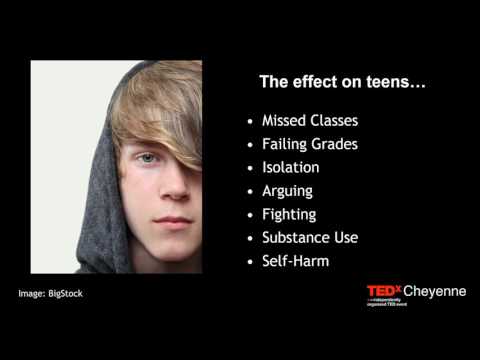
and the effect of that missed classes
failing grades anger isolation withdraw
substance use even self-harm there’s
also an effect on you
you might be missing more schools sort
of days of school or work maybe there’s
increased tension in the home or your
even narrower community it could even
bring up your own feelings of shame
guilt or self-doubt
and often people say that Julie these
are kids someplace else I know these
kids here and you’re right you do know
them because it’s Evan who plays
baseball for high school it’s Sarah go
babysit your kids it’s Jane the girl the
neighborhood girl who seems so bubbly
and I could even be your own child
the other question people will say well
then if I know them so well why aren’t
they coming to me and asking me for help
I’m here I care well I would love to say
it’s that easy but if you have spent
time with teenagers if you have lived
with them if you work with them in my
case both but you don’t do anything we
expect they don’t really listen a lot to
what we want them to do and there’s a
reason for that and it’s in their head
it’s literally in their head it’s the
way their brain is wired and there’s a
lot going on up there but there’s two
things in particular that we want to pay
attention to and that’s their prefrontal
cortex and the amygdala the prefrontal
cortex is a portion of the brain that
manages emotions impulse control and
reasoning in teens this is not fully
developed in fact it doesn’t even
develop until they’re 25 years old but
the other piece is the amygdala and
that’s how we respond to a threat
it’s our fight-or-flight response and
for teens this is fully developed and
it’s kicking into high gear so the
translation is we are seen as a threat
kids see us as a threat and they fear us
because they’re worried that we’re going
to judge them to label them so they
won’t come to us for help and I want to
give you an example of how this plays
out so I mentioned Jane and the bugling
neighborhood girl she’s everybody’s
friend nobody ever thinks anything’s
going on with her but you see Jane’s
she’s struggling she’s overwhelmed in
school she’s feeling anxious worried but
she doesn’t want to tell anybody she
doesn’t want to tell her teachers or her
parents not even her friends she’s
worried that they’re going to label her
so she takes matters into her own own
hands and she says I’m on a ditch class
that seems like a great idea I’m not
there I’m not worried it’s all good
anxiety goes away but her teacher
doesn’t see that Jane’s got these
difficult feelings just sees at Jane’s
ditching calls with the guidance
counselor and says Anna Jane she’s
difficult can you deal with that
talk to the
parents guidance counselor calls a
parent and says we need to have a talk
James difficult and our parents sit Jane
down and they say Jane why are you so
you guessed it difficult and everybody
is so busy labeling Jane as difficult
that they don’t see her difficult
feelings and now Jane and she looks in
the mirror doesn’t see herself as a
person with a problem but she’s the
problem and I’d love to say that this is
an extreme example but this happens
every single day however we can change
that you me we we can change it we’re
going to start right now tonight and the
first thing we have to do is we have to
remember how to empathize with kids we
have to remember what it’s like for us
to be a team so I don’t have you play a
little play along with me here take a
breath and close your eyes
and I want you to think of a time when
you were 12 13 maybe or 15 16 what do
you remember seeing hearing you remember
touching or their tastes smells every
time I do this the thing that comes up
for me is Mountain doink or nuts go
figure
I still haven’t figured that one out but
apparently that was my food group now
that you have that picture I want you to
go just a little bit deeper what do you
remember feeling you scared excited
worried did you feel like people
listened or saw you saw the real you or
did they see something else now hold on
to that feeling and you can open your
eyes now
that’s the place where we have to meet
teens is where we were when we were that
age for us to truly understand teenagers
we have to go back and remember what it
was like to be one ourselves because
when we are in that place we see them as
a person and not a problem which takes
us to the second thing a person is a
person and a problem is a problem they
are two separate things
the first time I heard this I was in
college and I remember thinking clearly
this person has never met my calculus
teacher that person is the problem and
it has been for three semesters in a row
but she wasn’t the problem because
people cannot be problems people cannot
be solved or fixed changed sure but only
by their own doing so we have to
remember that teenagers are not problems
they are people and again people are
people people have problems
and now takes us to our last last piece
that we can do we start now is we know
teams aren’t going to come to us so
we’ve got to go to them and we’ve got to
listen and we listen first with our ears
and we can say what’s going on are you
okay what do you need is there something
I can do it’d be great if we could just
stop right there but we we can’t because
of what you’re going to be met with is I
don’t need you I’m okay whatever I’m
fine so we also have to listen with our
eyes
he knows that their shoulders are
slumped their eyes are down they’re
pulling away but holding your hand and
yes these are symptoms of being teen but
let’s get real there’s also symptoms of
being as a teenager so we have to listen
with something else we have to also
listen with our gut if you have that gut
feeling that something is going on
chances are there are something going on
that there the teens in your life are
dealing with a difficult feeling and
when you listen with your ears your eyes
and your gut you are sending the message
that I see you and I hear you you’re not
a problem you are a person and I see all
the pieces of you I see that you are
caring and quirky a little angsty wild
even reckless
and that’s how teens do see themselves
before they feel they are the problem
and bringing it back to the breakfast
club I think there is a line in it
summed it up so well how teens do see
themselves when they don’t feel they are
difficult but they’re not the problem
you see us in the most simplest terms in
the most convenient definitions but what
we have found is that in each one of us
is a brain and athlete a basket case a
princess and a criminal
together we can disrupt the damage of
difficult and it doesn’t have to get in
the way for our teens our communities
for you and yeah still for me thank
you
Please follow and like us: