
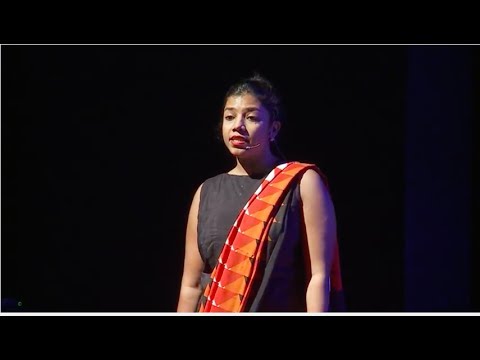
I’m a designer
and I believe that design can change the
world these are very exciting times for
designers there’s a paradigm shift in
the way we are imagining and building
things the last time a shift of this
scale happened was about 150 years ago
at the Industrial Revolution the
jacquard loom the spinning jenny and
other marvelous machines completely
disrupted the way the world worked it
disrupted the world the way the world
worked with the way they created objects
and disseminated them basically it was
the age of mass production and
repetition it all these machines also
displaced the artists and the craftsmen
a small group of thinkers of a
short-lived movement called the Arts and
Crafts movement were very suspicious of
these machines and thought the products
of machines were like soulless and
repetitive they wanted to put the
craftsmen back in the core of production
this was when designers as you and I
know it were came into being a role was
created for design design facilitates an
idea a machine and a product today
computers are changing our world the
same way and I say us I’m talking about
designers we draw intelligently we draw
using simple rules these days
interestingly enough it’s also changed
the way manufacturing works we’ve
finally broken out of the curse of
boring repetition traditionally
designers use drawings like the one
you’re seeing over here to instruct and
represent what has to be made today our
drawings are more file to Factory the
lines between the drawing the prototype
and the final product are blurring we
can switch from drawings that are dying
make back into a prototype test go back
to the drawing and then finally build I
can quickly change what I am building
sometimes in the matter of 45 minutes
designers are dreaming in the many we
draw in several we create several unique
objects at the same time so now the role
of the craftsman has cropped up again
how can computing help a craftsman a
super way is that if I have computers
and computational drawing I can create
very quick iterations and if I’m working
with a traditional craft without trying
to completely change the game for them I
could use a template or a mold that
could be arranged in different ways to
create very very different
configurations so here you can see a
simple rectangle it’s the easiest thing
to cut and the edges are knocked off a
little bit and we have a diamond shape
when arranging them you can get
surprisingly very different arrangements
and almost completely different beasts
as the final product the real surprise
comes in when I use natural material the
imperfections of natural material the
textures completely put a new spin on
the final product the spontaneity or the
intuition of using your hand breaks out
of cold plastic robotic or productions
drawings can also be a way in which we
extend our imagination here you can see
a small play back in the studio of using
paper and folding it once we took it
into the computer we can extend
manipulate or rotate in fact completely
defy gravity to produce completely new
or libraries of geometry here the wall
falls into the ceiling back into the
wall into the table
option des that flies off the table in
impossible angles computing
computational drawing and handcraft has
it’s sets of problems how do I convey an
acute angle in the middle of the air
like this to somebody who’s working on
that with their hands on sight several
ideas have been coming up from working
on sites like these and some of them
might be creating small digital tools
that will help you help the craftsmen
set and/or keep these angles we used a
simple or very simple algorithm to
create an optical illusion in this
narrow shop it’s a clothing boutique or
to create like an extended feeling of
space traditionally you might have drawn
this as a static drawing of lines but
with using computers we could quickly
vary these lines quickly vary distances
and more powerful was the quick
adaptation onto site conditions again
combining local material like Kadapa and
marble brings in the warmth to the space
details are added with brass and wooden
blocks customized silkscreen prints to
bring in richness computing and
handcraft
definitely are not easy friends there
are a lot of contradictions in the way
the two work um the key for me would be
how does this move from purely cosmetic
applications whose handcraft especially
in India is applied on surfaces or to
decorate structure as a designer I would
like to push to see if these
technologies can be more performative in
structure or climate that requires far
more research into material and possibly
developing computer control machines
that can
our crafts reimagine them reinvent them
a 3d printer that uses mud as a material
perhaps a weaving machine that uses
haptic inputs
however uncomfortable and challenging
marrying these two very different realms
might be its opening up a world of very
very exciting possibilities mostly the
most exciting possibility is that it’s
opening up a possibility of us creating
a world that would be crafted in a very
human way thank you
[Applause]
Please follow and like us: