
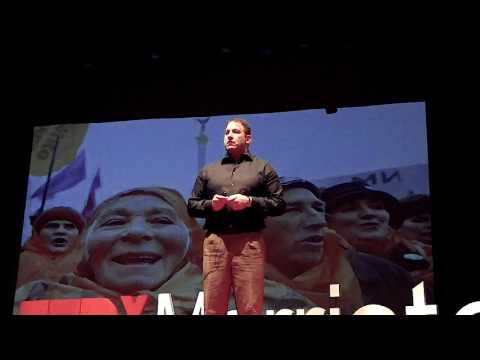
[Music]
why is that some movements succeed and
others fail let’s think about Occupy
Wall Street a group of young students
and activists who with their message of
the 99% versus the 1% inspired people
across the country and throughout the
world
and then poof they were gone
achieving little if anything at all now
let’s look at a similar group of
students and activist the serbian
resistance movement called outpour they
began with the nearly impossible dream
of bringing down the government of
slobodan milosevic who ruled their
country with an iron hand but two years
later Milosevic was gone and awkward
still stood and they didn’t stop there
they created an organization called the
Center for Applied nonviolent action and
strategies otherwise known as canvas and
they began to Train activists in other
countries and the tyrannical regimes
began to fall Georgia Ukraine Lebanon
Maldives
Egypt the list goes on to date canvas
has been active in over 50 countries so
why why does one group fail so
completely and another seemingly so
similar succeed with almost metronomic
regularity to get some insight I want to
take you back to the events that
happened in the fall of 2013 in Kiev
Ukraine at the time Ukraine was ruled by
this man Viktor Yanukovych a leader who
even by Ukrainian standards was one of
uncommon corruption and incompetence but
in November of that year
he did something that became the straw
that broke the camel’s back and that was
to pull out of a trade agreement with
the European Union now that might not
seem like such a big deal to us but for
Ukrainians who had become used to
corruption and incompetence in their
leaders it represented their last hope
of ever becoming a normal country with
some semblance of governance so a guy
named Mustafa and I am he went to
Facebook and he posted this which I’ve
translated from the Russian but
basically he called his fellow citizens
down to the my dom the central square
the Independence Square in the centre of
Kiev and they came first just in
hundreds
but their numbers quickly grew and that
made the regime nervous and before long
the police showed up but they were not
met with hurled rocks and insults rather
they were met with flowers and piano
concertos and that inspired the people
of Ukraine and even more came out the
demonstrations became truly enormous
tens of thousands of people flooded the
streets and that made the regime nervous
so they decided to escalate one night at
about 3 o’clock in the morning when
there was only a few hundred protesters
on the Maidan a special unit of police
called the bear coupe brutally beat the
protesters that were there but even in
the middle of the night word got out and
people from all over Kiev rushed to the
Madonn to defend it and the movement
became even stronger so the regime they
decided to escalate it again and that’s
when the shooting started before it was
done nearly 100 people were shot dead
and many more were wounded but by this
point the movement had gone far beyond
Ukraine the eyes of the world were on
Kiev diplomats from the United States
the European Union and even Russia came
to mediate the crisis and eventually
they negotiated an agreement with the
Yanukovych regime and the opposition
politicians
and I remember this point very well
because the night before the agreement
was to be signed I was chatting with a
good friend of mine who’s a very
well-connected Ukrainian journalist and
I asked him you think the agreements
going to go through do you think it’ll
hold and he said you know what the truth
is it’s all being decided tonight they
have a secret meeting down at the
Parliament and it looks like Yanukovych
his own party has had enough of them I
think they’re going to dump him the next
morning the Yanukovych regime met with
the opposition politicians and the
diplomats from us EU and Russia and the
agreement was sought but as Yanukovych
left the room something strange happened
his security detail too seemed to melt
into the ether and the next time we saw
Viktor Yanukovych it was on
closed-circuit TV camera and he was
scurrying out of his ridiculously
ostentatious mansion carrying bags of
money and other belongings he got onto a
helicopter and that was the last time
anybody saw Viktor Yanukovych in Ukraine
today he lives in hiding somewhere in
Russia so it’s an incredible story made
even more incredible by the fact it
wasn’t the first time in 2004 very
similar events happened in Ukraine that
time it was called the Orange Revolution
and the issue was a falsified election
so what the world saw was the major
opposition politicians Viktor Yushchenko
and Yulia Tymoshenko
but to people in Ukraine it was clear
that the real power emanated from the
tent cities this is the main tent city
on kro szostak street in central Kiev
and I know all this because I was there
that’s me in the tent city on kasha tech
and what I saw there was order people
moved with purpose it was probably the
only orderly place in Kiev at the time
work day details were set up to keep
everything clean to keep people fed and
clothed and warm outside the tent city
protesters handed out flowers to the
police at night there were massive
demonstrations where you could see
people of all ages and all walks of life
the Maidan was a place where people
wanted to be it was a place people would
take their kids even pensioners who most
fondly remembered the old order and the
glory of the Soviet Union they came as
well many of them brought food and
clothes and blankets for the protesters
and that’s how you create
transformational change real change
change that sticks change that won’t be
reversed during the next election cycle
you bring everybody in and you make it
their movement to
so in the few minutes I have left I just
I want to talk a little bit about the
science behind two of the most important
aspects of transformational change and
movements the first is best illustrated
by this series of Conformity experiments
conducted by Solomon Asch back in the
1950s and basically the idea is this if
I were to ask you which line on the
right best matches the line on the left
how many of you would say a well how
many would say B and how many would say
C so it seems that everybody thinks it’s
C what if I were to tell you that the
correct answer was a and what if
everybody else in this auditorium agreed
that the correct answer was a would you
still be so sure and that’s essentially
what they did they put together groups
of eight people seven of whom were
Confederates who all gave the same wrong
answer and by the time they got to the
eighth person who was the real subject
of the experiment the vast majority of
the time they conform to the majority
opinion even if it was obviously wrong
you see majorities don’t just rule they
also influence even if it’s only a local
majority sometimes especially if it’s a
local majority that’s what brings us to
the first aspect small groups loosely
connected but united by a shared purpose
because all groups are connected to
other groups which are connected to more
groups still so you can get this
cascading effect like a way that a
stadium and as we all know you don’t
need to be anybody special to create a
wave of the stadium you just need a
couple of guys in a crowded section
because it’s the structure of networks
that best determines their behavior and
this cascading effect is something that
we see in both successful and
unsuccessful movements occupy certainly
had it but that cascading effect is an
opportunity and a danger to movements
it’s an opportunity because it creates
passion and coherence within the
movement but it’s a danger because that
passionate cohesion makes it very hard
to relate to people outside the movement
and that’s what brings us to the second
aspect and this is best illustrated by
this diffusion of ideas model developed
by Everett Rogers ideas tend to start in
a small group of innovators spread to a
slightly larger group of early adopters
and then on to the early majority late
majority and finally even the laggards
and the skeptics chewing in and that’s
what we saw in Ukraine right in the end
it was Yanukovych his own guys who did a
men unfortunately all too often
movements get stuck in this early
adopter stage because we can’t see these
categories just as separate groups of
people they also represent higher and
higher thresholds of resistance so if
those early adopters don’t really work
hard to bring in the mainstream to bring
everybody else in the movement will die
and that’s exactly what we saw happen
with Occupy Wall Street
so that brings us to the second aspect
planning organization and discipline
that’s what sets the successful
movements apart from the unsuccessful
ones you gotta control the rock throwers
and those who believe only the most pure
belong because students and activists
can protest but it’s only when the
marketing managers and accountants start
hitting the streets that a true
revolution can begin and that’s why
successful movements work to attract
everybody else to bring in people who
weren’t standing with them from the
beginning now I ask you that look
attractive to you does that look like
something you would want to join what
about that does that look like a place
where you would feel like you belonged
would you bring your kids they’re
successful movements inspire they bring
people in because power will not fall
simply because you oppose it but it will
crumble if you bring those who support
it over to your side thank you very much
you
[Applause]
[Music]
Please follow and like us: