
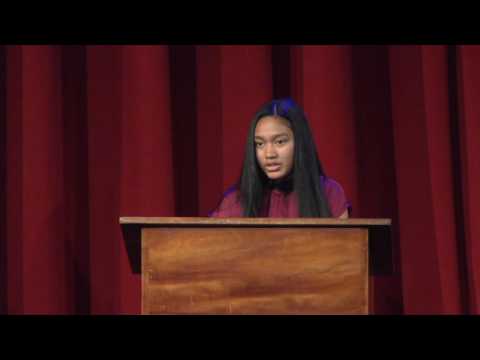
my name is cat cheongha my race is
Pacific Islander my ethnicity is
marshalese and I’m a citizen of the
United States of America for my entire
life
I have lived in a small country in the
Pacific called the Marshall Islands but
from now on I will most likely reside in
the United States and I’ll explain why
the u.s. is commonly seen as the ideal
country with overflowing riches and
offers of golden opportunities the
idolization of the United States and the
globalization of Western culture affects
the entire world and this is proven
daily in the Pacific many islanders
migrate to the US or more specifically
Hawaii due to proximity and other
factors such as the preconception the
America is a country on perfection and
this has a lot to do with the history
between the u.s. and the Pacific in the
18th and 19th centuries many Pacific
Islands fell under Japanese controls
including the Marshall Islands the
Japanese rule was harsh middle
marshalese as it was for other Pacific
Islanders the marshalese that actually
feared that they would be targeted by
the Japanese soldiers daily so when the
US Army frees the Marshall Islands from
Japanese rule in 1944 the marshalese saw
the master heroes the former territories
of Japan were then economically
supported by the u.s. in order to
rebuild their economies according to the
International Monetary Fund much of the
economy in the Pacific focuses on
agriculture and fishing while leases on
US military bases and assistance from
the US government in Selma for the
majority of outside capital after
liberation from Japan many Pacific
Islands fell under American control and
became economically and technologically
depend on the u.s. to the point where
their overwhelming reliance on the US
has become detrimental to the Pacific
nations become clear and that Pacific
Islands are unable to survive without
four and eight because they lack skilled
workers money resources and land Pacific
Islands are typically quite small the
largest country Fiji is only seven
thousand 56 square miles which is only
half the size of the state of Hawaii
Pacific Islands are subject to many
natural disasters such as storms
typhoons earthquakes and king tides
rising sea levels ruined drinking water
and the soil fertility of the islands
which prevents agriculture without a
rainbow soil the large populations can’t
and do small countries are unable to
support are unable to eat without the
support of US imports the tides also
cause erosion and decrease the size of
the already tiny islands many islands
also suffer through floods that tear
apart our homes how is this in schools
will be flooded with sewage once every
month in the Marshall Islands only three
miles away from my house a graveyard was
recently washed away by the rising tides
ten rows of grades and washed away
now this horriffic event has made me and
the rest of the pacific island
population realized that we
not consider anything safe or permanent
in the Pacific we realize that it can
all be taken away within just one hour
because of those many are forced to flee
to us in order to ensure the future that
their family
besides environmental push factors
Islanders move to the US due to economic
pull factors such as higher education
and jobs in many Pacific Island
countries there are high rates of
unemployment in Marshall Islands 36% of
the population is unemployed the severe
lack of economic opportunities and these
high unemployment rates in the Pacific
and Facebook overpopulation further
pushes Pacific nations into poverty
now due to the lack of jobs many Pacific
Islanders migrate to other countries
including the US the 2000 census
recorded over 900,000 Pacific Islanders
in the u.s. in 2010 there are 1.2
million Pacific Islanders the Pacific
Islander population is running the
fastest growing population groups in the
u.s. in the last decade this is referred
to as brain drain brain drain results in
a negative outcome for the Pacific
Islands leaving them underdeveloped
because they can no longer support
themselves without skilled workers but
the problems don’t stop there but
marshalese come to the u.s. many
experienced culture shock back home we
are taught that eye contact is a sign of
disrespect in the u.s. eye contact is
expected during a conversation in the
Marshall Islands children and students
are told silence is respectful in the US
we are told to participate in class
discussions there is a preconception
that marshalese students do not value
education but really we just show
respect differently we show respect with
silence we show respect with little nods
we show respect with downcast eyes but
because of the differences between
American and marshalese culture
marshalese students are thought to be
disrespect
many young marshalese students received
bad grades and American schools which
factors into the low graduation rates
another cultural difference is how
important we see education is many
marshalese have never received any
formal education throughout their entire
lives many marshalese adults have never
gone to high school much less college
the lack of formal education makes it
increasingly difficult for Pacific
Pacific nations to have a skilled
workforce and with the rapidly
increasing populations the need for
improved our education and the Pacific
has become evident
so when marshal is adult without high
school diplomas or college degrees come
to the u.s. in search of jobs they can
only receive low wage jobs their lack of
formal education also causes them to be
unable to see the necessity of education
for example if a student’s family needed
help then the student would drop out of
school and go find a job because a
marshalese culture the group is more
important than the individual Pacific
Islanders have the highest high school
dropout rates at 27% they also have the
lowest graduation rates the four-year
graduation rate for Pacific Islanders is
only fifty one point four percent that’s
the lowest graduation rate any
population group in the US has ever
received
you see culture is a big part of who we
are it makes up our identity the
American culture is very diverse as is
its population but many people of
different ethnicities and cultures come
to the u.s. only to adopt the American
lifestyle rather than preserve their own
culture due to the popularity of Western
culture many cultures of the Pacific are
dying out including the marshalese
culture less and less children are
taught their native language less and
less children know our word of greeting
Yahweh we means which means you are a
rainbow less and less children are
taught that we don’t have a word for
goodbye because we’re always
was together in attempt to reserve the
dying culture in a foreign country such
as the US Marshal ease honor family and
community I mentioned before that the
group takes precedence over the
individual
and this shows by how every event and
holiday is spent with entire communities
of marshalese instead of just within one
family we celebrate the first birthday
of an infant as a community we dance on
Christmas as a community we sing our
national anthem on Constitution Day as a
community in face of the overhanging
American culture and society marshalese
and other Pacific Islanders and other
minorities as well how to fight daily to
preserve their culture Pacific Islanders
face problems wherever we go in the US
we face being that minority cultural
loss low wage low wages and prejudice
and the Pacific we face overpopulation
poverty unemployment and meager
education I am NOT arguing that Pacific
Islanders should choose the US I am
saying the Pacific Islanders need to
establish their place in this world
our countries are disappearing but if we
come to the u.s. our lands our
traditions our culture’s our languages
may very well be forgotten as we
assimilate into American culture many
have chosen to put all their hope and
their perception of America’s perfection
without thought of their past or culture
others have chosen to stay in the
Pacific without thought of the future we
the people of the Pacific must choose
the best course of action that would
sustain not only our futures but also
our past thank you
[Applause]
Please follow and like us: