
yeah no way
and 1258 the Mongol army invaded the
city of Baghdad and after killing
everybody in the city which included
philosophers and scientists they
realized that this just wasn’t enough
they wanted to make sure that they
committed something that would ensure
that these people that they had invaded
would even struggle with the thought of
recovery so they went after their
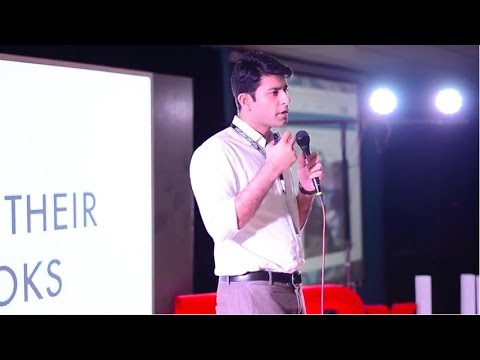
libraries they went after their books
they went after their source of
knowledge it is said that on that day
either all the books were burned or
thrown into the river so much so that
the river tigress turned black because
of the ink from these books and when I
heard the story for the first time it
made me immensely sad but not in a
remote intellectual manner it made me
sad because I suddenly began thinking
about us we don’t need an army to come
in and invade us
I will libraries are already abandoned
the books within them are collecting
dust and we have already forgotten the
knowledge that was passed down to us but
you know the important question to ask
over here is that why does any of this
actually matter you know why should we
care about any of this and to answer
that I’m going to share as soon as this
works the next slide please thank you
yes something a person’s to worry over
here so this is almost six years ago I’d
recently graduated and you know when you
have recently graduated you’ve just
finished your bachelor’s you very
energetic you’re very optimistic you you
really think that you can solve all the
problems in the world and you often
wonder you know the problem to the world
is so simple why isn’t anybody solving
them
so you can call that stupidity of being
naive or whatever but I was definitely
like that but what was interesting was
that every time I went up to somebody
with an idea with a thought with a
question I got some phenomenal responses
which included the light serve but uh
you know things just don’t change over
here without the system is really bad
but are you stupid why why are you even
thinking along these lines and and
perhaps my favorite this place has no
future
and this is from you know uncles and
auntie’s we all know of course and to be
perfectly honest I I didn’t know what to
say to them and I don’t know much but
from what I do understand one of the
most important things for a young mind
is encouragement but what was even
sadder was that these people I was
talking to they it just seemed like they
had completely given up hope and I just
didn’t know what to say to them to be
quite honest I I believe them this
picture of our past that they were
painting also made me think that the
future was bleak but slowly things began
to change I work in publishing at this
publishing house called Sangha Mele
publications and I didn’t realize it at
that time but now I consider it’s a
blessing that part of my job is to read
a lot and so I was just working and in
that process I started reading a lot of
the local books that had been published
over here and by God I was genuinely
genuinely impressed because I found
myself engrossed in fantastic stories
from our region and you know I came
across questions of ethics philosophy
politics things that our society deals
with on a daily basis these questions
included the issues that for example a
family faces when it wants to move up
the socio-economic change and as Jane in
our society or what are the challenges
that a son faces when he needs to move
out of his home either for better
livelihood or for better education or
what are the questions that he has to
answer when on one side is a better
future and on
other side is his family waiting were
the issues of the women of this country
who have built this country with the men
and at the same time they are not
acknowledged what are the issues that
daughters face with in this country who
want a voice who want to go forward and
yet our society is not conducive for
that we have books like Adonis Lane
which is written by Balazs and a
fantastic normal about the experiences
that families had during partition and
these aren’t just experiences in terms
of practical or a financial says
wha-what was the impact of that
experience on them psychologically and
then you have writers like Mustafa him
of used to be or Shafiq Rahman who have
written brilliant brilliant satire and
then they’re people like Habib jolly and
Fez empathize who stood for something
who stood for ideologies who moved
people who gave people a vision and in
their classic tales like the listen for
Sheba which is known as one of the best
pieces of literature in or do language
and then their women writers like
Carruth Elaine Heather bono kuzia Kichwa
Naheed who have been writing about the
women and the daughters of this country
for the last three or four decades and
that list goes on and on and on so I had
come across a treasure trove and one
thing was very clear to me that this
picture of our past that had been
painted for me was incorrect and I’m not
trying to say that our society does not
have issues it certainly does but my
question to all of you is which society
doesn’t have issues every society does
but what is different is while societies
acknowledge their failures they also
celebrate their successes something that
I feel we have forgotten to do so now
more than ever we need to go back to our
books but we’re facing different
challenges well we’ve also begun to
forget our language so if you were to
think of language as a vessel of ideas
then books are where you store these
ideas but if I were to take away that
language from you then those ideas are
as
good as lost and when you lose your
language you lose an understanding of
your intellectual depth and history you
don’t quite know where you are anymore
and then you look towards others for
guidance and for a sense of direction
and this has been happening a lot so
we’ve started doing this in almost every
scenario for business we constantly look
towards Europe or the US or most
recently the Silicon Valley so much so
that we’ve actually even started taking
recommendations from them about what we
should read from our culture and this is
a fantastic example of this this is book
called macadam ah by this man called
apon cul d’une now this book is
important because it is one of the
foundational texts of what we today call
social sciences it was the first book of
its kind that actually focused on the
history of the world and try to
understand patterns across time and
space the interesting thing is that this
book is easily available in Lahore at
any bookstore but most people don’t know
about this two years ago there’s this
man called the Mark Zuckerberg who is
the CEO of a very small social media
company he recommended it as part of his
book club it’s fantastic but still you
know it’s just ironic that we had to
learn about this book from him and it is
roomy it is I think on some level
fantastic that Rumi had to travel all
the way to the west get translated over
there and then come back over here so
that we could take pieces of his poetry
and post it on Facebook to sound
inspirational and that I think in in
some ways is at least ironic if not sad
but don’t get me wrong
I’m not trying to say and I can’t
emphasize this enough I’m not trying to
say that this is about East versus West
this isn’t about English versus or do in
fact I think it’s absolutely brilliant
that the works of these people that such
languages and such books are being
acknowledged all over the world and we
should absolutely
learn from where every weekend in the
world but my question to you is that the
world is comfortable and acknowledging
what is good about our history then why
do we continue to ignore it because
ignoring it leads to a much deeper
problem when you forget your own
intellectual history and you don’t
acknowledge the depth of your own
culture you end up with intellectual
slavery when you’re constantly learning
what the world is telling you without
really contributing something on your
own you might be great at it
you might be at the top of your table
but you’re still an intellectual slave
you might be the best slave but that
doesn’t change the fact that you’re
still a slave and at the end of the day
when you go out into the world without
an understanding of who you are the
world constantly asks you ok what are
you bringing to the table and my
understanding of my belief is that if we
were to actually understand who we are
then we can actually take a lot to that
table while I was working on the stock
this particular verse from Iqbal you
know kept resonating with me and it
translates something along the lines of
free your mind from slavery make the
young mentors of the old and this was
said a few decades ago and this is still
the struggle that we have unless you can
free yourself from these shackles unless
we can understand who we are unless we
can recognize our own potential it would
be very very difficult for us to even
think of building a future that future
will always always be alien to us if we
don’t understand where we’re coming from
lastly I would just like to say that our
libraries are still standing they merely
collecting dust
our books haven’t been burned they
haven’t been thrown into a river yet so
we still have time so my request to you
today is just go pick up a book go read
about who you are recognize your own
potential understand where you’re coming
from and maybe maybe just go and talk to
the people who are in charge of these
institutions these libraries and ask
them demand that I want to understand
what is good about us because maybe then
we can reach a point where we can start
building again because all these people
that I mentioned today they’re gone
they’re in the past yes absolutely we
should read and understand what they
have written but at the same time it is
you and I who have to build the future
and unless we understand where we are
and what our capability is it will be
very very difficult to do that so my
hope is that in 10 or 20 years when all
of us are uncles and auntie’s and a kid
comes up to us with an idea or a thought
or a question at least we can say the
future is yours thank you very much
[Applause]
Please follow and like us: