
today we want to talk about the clear
eyes and full hearts of pop culture my
name is Jamie golden and my name is Knox
McCoy and for the last three years
Knotts and I have hosted a pop culture
podcast called the pop cast but not sin
Jamie and much like Bane from The Dark
Knight Rises
we both arose from the darkness of
liberal arts education and now for about
a year we’ve been fortunate enough to
make a living talking about pop culture
and our approach is less VIP highbrow
critic and more of a commoner enthusiast
our shoe is a deep dive into the shallow
end of the pop cultural poll so for
context our show covers the spectrum of
pop culture we talk books movies
celebrities TV music film the whole
thing and our mission statement is very
clear we say the pop cast is a show
dedicated to delightful idiocy and that
we’re committed to educating the
listener on the things that entertain
but do not matter so why do we say that
why do we say that in every episode
right that’s a weird thing to say well
largely we recognize that the active
consumption of popular culture it’s not
an admirable thing right the vibe pop
culture gives off is that it’s largely
superfluous like cotton candy or one of
Zac Efron’s asks yeah
or Scarlett Johansson but as an Avenger
now where most of the chrissa’s in
Hollywood
all of these examples they’re great and
they’re fine but they feel a little
unnecessary right if you took any of
them off the face of the earth nothing
would really change that much even if
you took all the chrissa’s out of
Hollywood you made them into like an
uber Chris or Frank and Chris nothing
would really change that much and that’s
the foundation of our show our
expectation is we’re going to talk about
pop culture not geopolitics our intent
is kind of to be like a self-aware
elevator music like James Blunt I don’t
know I think we could do better than
James Blunt um Michael Bolton I don’t
know he’s two sexes like we can’t be oh
yeah I came a lot off at Kenny G that’s
better Kenny G I think that’s good our
goal is to be the conversational Kenny G
of our listeners hearts so why do we
frame our show like Kenny G well the
root of this self deprecation comes from
the tone that’s normally associated with
pop culture just it’s like we said like
it’s like cotton candy it doesn’t matter
and so we try to lean in to that
presumption so much so that we recently
put a scientific study highly scientific
study into the field Instagram and we
asked our listeners when they play word
association with the term cup culture
what do they think that and so they
thought of terms we’ll show you the
results embarrassed
Cheetos couch potato the Kardashians as
weekly binge and of course Daryl Dixon
from The Walking Dead right yeah so if
you’re looking for a thematic
consistency from these answers they’re
not great right except for Daryl from
The Walking Dead
that dudes great he’s supposedly in a
zombie apocalypse like he’d be really
great but for the non zombie apocalypse
these are not good answers right if your
LinkedIn profile said that you were a
couch potato and a cheese it’s
enthusiasts who majored in Netflix
binging and minored in the Kardashian
dynasty I love those answers but you’re
not getting a job with those answers now
and so how are these answers on theme
think about it this way when people who
disengage from pop culture they’re
always thought of as enlightened you
know they’re the noble Bohemian who
doesn’t own it
and they don’t know if rihanna is a
singer or a liturgical term and so um
people who reject pop culture
unilaterally they are seen like they got
it all together right especially if Knox
and Jamie tell you every week in their
show that it doesn’t matter and this is
actually where we need to reveal that we
actually have a confession get your
Scooby Doo noise or your record scratch
noise because plot twists we actually
think pop culture matters like a bunch
ah it matters so much it really does
even though we recognize the association
can be that it doesn’t we actually think
pop culture is uniquely capable of
breaking down walls so that truths can
enter it might be something really
unexpectedly beautiful like a hobbit
Shire or maybe it’s something
universally hilarious like crying
Michael Jordan right or maybe it’s even
something divine like The Passion of the
Christ pop culture can provoke questions
that normally would be inaccessible
along that point we think pop culture
allows for a chance for a nuanced
conversation about what you are reading
what you’re watching what you’re
listening to and you can converge that
with the things you’re experiencing in
your everyday lives let’s think about it
in some different terms one of my
favorite quotes one of my favorite
authors is here is the world beautiful
and terrible things will happen don’t be
afraid right and I think we think that
gets at the essence of what pop culture
can be right the same apparatus that is
responsible for the bachelor or the Real
Housewives franchise it’s also
responsible for CS Lewis or To Kill a
Mockingbird right the same thing can be
beautiful or terrible depending on how
you leverage it okay so let’s consider
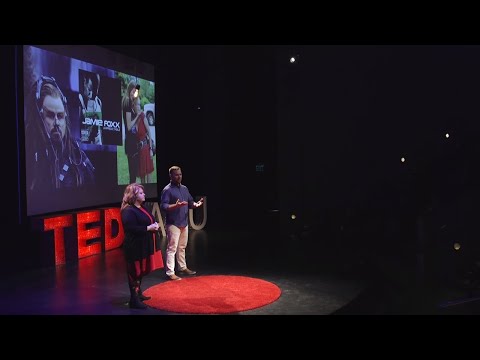
the following let’s consider John
Travolta Reese Witherspoon and Jamie
Foxx they are talented actors right they
have Oscar nominations they have even
Oscar wins they’re roundly acclaimed in
the critical community however sometimes
things happen and decisions are made and
they’re bad decisions yeah
so it would be unfortunate to think of
these very fine actors in such binary
terms right
similarly we think it would be
unfortunate if we thought about pop
culture and only negative connotations
because for us we think there is such an
opportunity for positivity so we want to
take a minute and introduce you to the
three pillars of why we think pop
culture matters okay so the first pillar
is that it really can define us and to
break this out let’s start just
personally with us so when I was born my
parents named me after comic book and TV
superhero Jaime Sommers the Bionic Woman
now if you don’t know much about Jaime
Sommers because you’re so young and
pretty right so Jaime Sommers was a
professional tennis player who after an
unfortunate skydiving accident becomes
the first female cyborg okay so she has
these two Bionic legs that get her to 60
miles per hour
she can bend still with her bionic arm
and she has super human hearing not a
shabby namesake well fast forward to
fifth grade Jaime Wow
you know that teacher described me as
bright and comical but loudly awkward
with a hearing problem all right that’s
my tinder profile by the way Christian
mingle Christian mingle um I’m sorry I’m
so sorry
so this girl needed pop culture to kind
of sand down the rough edges of who she
was so that I could be smart and funny
but without so much of the awkward so I
was fashion-forward like blossom Risa I
became a great friend like Natalie green
I was laid-back and whimsical like punky
brewster and I learned to be a good
manager of my hearing problem ADHD like
jessie spano so for me how it helped
define me was as a kid I was pretty shy
a lot of that’s because I’m introverted
but also because I had an extended
adolescence with some buckteeth you can
take a look there there’s a lot going on
so if you get past the hair and the
power pose and the shorts that are
really high how high you can see some
pretty substantial buckteeth there but
anyways I had a hard time making friends
and I always found myself resonating
more with the things I was reading and
watching and listening to and less with
the people I was experiencing life with
so
when I look back on my childhood a lot
of my most formative experiences were
rooted in pop culture for example I
remember reading the book sounder and it
being the first thing that just really
overwhelmed me and provoked me to like
real emotion and I remember finishing it
after bedtime and coming downstairs and
my parents like seeing me sobbing and
trying to figure out what was wrong and
I was just like this book was super sad
I don’t know what to say I remember
listening to Steve Curtis Chapman and
Jeff Moore in the distance albums
millions of times writing those lyrics
on my heart and being like I should
settle up my horses I do have a trail to
blazed yeah this is a great adventure it
really is and I remember watching the
last finale and that show and being so
overwhelmed with themes that had the the
friendship the community the endurance
the implications for the afterlife all
of these things were really powerful
experiences for me so in a lot of ways
pop culture was part Sunday school
teacher for me because it was taking
these things that I learned in church
and it was converging them with these
things that I was seeing and it was
deepening these emotional things with
vivid artistic examples of what grace
could be what selflessness could be of
what morality could and could not be so
it was taking what I was learning from
church and converting them with what I
could more appropriately understand and
that’s my favorite part about pop
culture the fact that it can challenge
you in ways that you didn’t appreciate
and that’s the other pillar that we want
to talk to you about here so pop culture
really can challenge us right and we’re
so good at confronting other people
we’re with the things they believe right
pop culture you can extract certain
components and then you can just put
them in other people’s face you can just
Maul them with it we’re so good at
confrontation and aren’t we I mean we’re
like Michael Phelps level good at
pushing people around based on what they
believe I mean if you need anecdotal
evidence just go to any comment thread
on the internet or just Facebook but
challenging yourself can stretch in a
lot of different directions it can be
something you don’t think you agree with
but it can actually be something you
already agree with just how you agree
with it right let’s think about the TV
shows this is us or Parenthood right
these shows take a spotlight too
the value of good counsel of family of
those awesome droopy twinkle lights you
can hang in your backyard right no one
denies these are all awesome things but
simply being on the show it highlights
the consideration we should have about
their value and so pop culture can
challenge us just by widening our lens
for example right so when I was young
growing at I thought everyone in the
world was southern and Southern Baptist
and that everybody worked blue-collar
jobs and everybody spent their weekends
watching college football and that was
the life you had until I discovered the
movies of John Hughes John Hughes he was
my Gandalf the gray guiding me through
middle Alabama and he was great he
taught me so many valuable lessons like
The Breakfast Club will teach you that
everybody has a little bit of bizarre
inside them right Ferris Bueller taught
me that confidence is sometimes actually
more valuable than real skill and of
course Molly Ringwald she showed us that
redheads can be pretty and pink no red
that’s right but for us it’s more than
challenging who we are and who we want
to be in our formative years right it’s
about the consideration that our
experiences our assumptions they’re not
everybody’s experiences they’re not
everybody’s assumptions and one of our
favorite things is just pop culture
allows you to access different cultures
different ideologies so that you can
better inform yourself about what race
is what age is what class is what gender
is so that leads us to our third pillar
which is it connects us so let me tell
you about my dad my dad and I we could
not be more different we’re so cute
though but we could not be more
different so my dad is number 9 of 10
children he attended 15 different
schools while he was growing up when he
graduated from high school he joined the
airforce and he went to Vietnam when he
got home he got married had a couple
kids a few dogs and then he retired his
favorite movie stars John Wayne the only
TV he watches is about wolves and Alaska
right and then the last book he read was
the Bible we’re so different and
sometimes it’s really difficult for us
to connect and find a common ground but
pop culture provided it here’s the deal
pop culture gave us something
we that could unite us so you might be
thinking oh it’s oh it’s war
documentaries or maybe you’re thinking
it’s like films about Western like life
and Cobb ways or maybe that’s Silver Fox
Tom Brokaw sure hubba-hubba but it’s not
any of those things the thing that
unites us is dogs on the internet y’all
when my dad and I could be having these
tense arguments about politics or
religion
we’re actually gathered around his
Facebook wall like a warm fire watching
pugs fall off beds and we’re watching
Labradors wait for their soldier owners
to return from battle that is the thing
that connects us even though my dad and
I have the same DNA we’re super
different but pop culture provides this
common ground that we can unite us
through like animal hijinks on YouTube
so for me the most vivid example of
connection happened in the fall of 2015
when my dad was diagnosed with cancer if
you’ve never experienced something like
that like it’s terrible I know a lot of
you are probably out there thinking no I
thought that’d be a great experience but
yeah I can confirm it sucks like it’s
not good a lot of it is because you’re
sad and you’re scared you’re terrified
but really the thing is you’re helpless
you just you don’t know what to do and
you know you can pray and we we prayed
my wife and I pray it our families
prayed I prayed the prayer of Jabez I
was like I don’t know if this even
applies here but I’m gonna pray it
anyway so I did and you know in that
season popular culture really didn’t do
anything for me it actively almost
seemed to want to traumatize me because
do you know how many commercials are
built around fathers and sons’ fishing
and you know how many movies came out
that year that were like tinged with
father-son relationships it felt like
all of them so I couldn’t really find
relief in anything about pop culture but
the one place I could find relief was in
the community of listeners that had
developed around her show just to be
able to connect and engage and converse
about things we were seeing and things
we were watching that was a great
distraction in a season where I really
needed distraction and I think that’s
the one thing pop culture really doesn’t
get that much credit for its ability to
create community just out of nothing and
as a postscript my dad he’s been in
remission for for less than two years
and I also refused to watch commercials
where fathers and sons fish okay call
good call so too
this set of course we want to end with a
fancy quote right because we want you to
be able to look back on this top and it
heighten your perception of what we did
here today
and so TS Eliot says in Four Quartets
fancy right we shall not cease from
exploration and the end of all our
exploring will be to arrive where we
started and know the place for the first
time and to us that is the truest
essence of what pop culture is a
exploration of who we are and what we
are challenging what we are what we want
to be and a celebration of the community
and the connection that we find along
the way thank you so much for your time [Applause]