
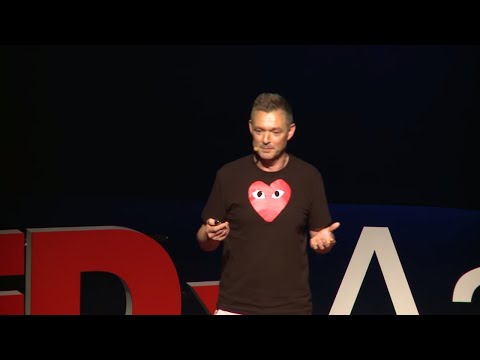
what an amazing view this uh I’m here to
talk about design and how design has the
power to make the world a more human
shape place and you know the world has
more human shaped plays what I mean by
that
I mean it plays where everything
everything is designed around real human
needs a place designed for humans and by
humans so some thirty years ago I came
to always to study here actually I did
one year at Law School I just to
discover that I was not a lawyer I was
not even become a lawyer pepper I was a
creative right and somehow that you know
thing about like breaking the rules as
opposed to following them was something
that I really really liked and I guess
it’s fair to say way back then design
was something totally different right
not that we were designing white tea
cups all the time and just like
prettifying beautifying things but
design way back was more about designing
and shaping things really but some you
know sometime along the way I met some
people that really helped me try to re
understand and you know really
understand what design has the power to
do one of them was his amazing guy
Ansari amazing guy a design professor
when I passed away
John Heskett who became one of my
biggest sources of inspiration and John
had this very soft-spoken way of putting
it you know what things really are right
so the way he defined design was the
following so design is the human
capacity to shape and make our
environment in ways that satisfy our
needs and give meaning to our lives what
do you think about that is that a
beautiful quote
I think so because to me that is what
design is really all about okay yeah all
right you know what that is guys right
right it’s not the human shaped world so
fact is there is a lot of complicated
stuff out there a lot of crappy stuff
that is not human shaped but rather
human proof and you know what how many
of you guys have tried this let me see a
raise of hands so you know what I’m
talking about here right all right
you know what happened up there so a
bunch of specialists right packaging
specialists people that know this stuff
sat down figured out how to design the
perfect packaging right so they thought
of everything it’s safe its tamper proof
you know it’s easy to manufacture it’s
cheap but they forgot one thing what is
that you know how you get the stuff out
of the packaging right so for us you
know as human beings as people
what are we careful we care for taking
things out of the box whereas that group
of specialists right with the upside
down mindset mind said they thought all
about how to pack things in right so the
Americans even have a word for this you
know what that is
it’s called wrapper age you know the
frustration you feel when you can’t get
the stuff out of the packaging and you
need to bring out your tools so just to
make my point here let’s have a look at
this video it kind of you know shows
what happens when you design stuff you
put it out there without consideration
for the human factor you know or even
yeah well let’s have a look at it yeah
it’s an Austrian so don’t mind that it’s
still like a good you know good laugh
yeah lemons fazool he’s demonstrating
else they knew he has a package.json
football that is going to replace the
milk national team
Dunkleman here MIT reference on dazzling
some fashion I’m afraid he’s a fucking
fear for you discount all the same
custom does Hindi sugar to meet select
mukajee’s things over here
hooting softly Thunder – it off repeat
this is we have star of domestic popular
victim of the under empty cause harm see
those are any shared missionary that’s
cute am i off I’m based off the type
inside the envelope so is really cute um
this’ll be here
Tinashe flat seen distinction on key
so remember guys you know the mindset
that creates stuff like this just in a
small scale it’s the same mindset with
which we create a lot of other you know
big complicated things in the world I
think we gotta you know somehow we just
started to put up with this I mean who
wants this stuff right so thirty years
after we still have you know milk
cartons that are pretty hard to deal
with mine so but as being said design is
so much more than designing you know
things in milk cartons so some time ago
Oslo University Hospital approached one
of our teams and asked us to help with
some very difficult problems at the
breast cancer clinic at the Oslo
University Hospital they were dealing
with serious waiting lines and a bad
patient experience so you might wonder
why do why does a hospital you know call
a design company why couldn’t they just
call in some real specialists I tell you
why actually they had gone through
several project so-called lien projects
right with focus on procedures and
processes without focus on people and
patients really so we were called in you
know instead of the lean smart people in
suits I think that was the way they put
it to help them fix this serious problem
the thing was the waiting lines were up
to 12 weeks and when you’re talking
breast cancer waiting time kills in many
ways right but worst of all what really
was the thing here when we started
looking into what was wrong in the
hospital right which spoke to everyone
not only the doctors the nurses the
specialists but real people the patients
and actually what became very clear and
some of the things that I clearly
remember that was being said was the
feeling of not really being part of the
system so there was one woman who
explained to us said the following so
the morning I discovered something was
wrong I discovered a lump in my breast I
went to the doctor right and then I had
to wait 12 weeks for an answer how come
you know the hospital kind of at the
moment that I discovered that there was
a lump in my breast I became a patient
immediately and I needed care but for
the hospital right I was
part of the system until I was diagnosed
and that was where the waiting time was
so quite you know it became theaters
that we needed to focus on a radical
simplification of you know all the
processes ensuring that there was one
way in one patient coordinator and a
straight line from when you get referred
from your doctor to the hospital another
thing was collaboration so all the
people in hospitals these big you know
change resistant structures they were
focused on doing their own part of the
job they didn’t see themselves as you
know delivering a full patient
experience they didn’t look at the whole
journey they just tried to optimize the
part of the work that they doing
scanning analyzing and so on and the
last one but not least important was
actually you know really amplifying the
communication in order not to leave
anyone in uncertainty about you know
knowing what’s going on so we worked on
classic you know communication materials
from referral letters to leaflets and to
user friendly websites that would make
sure that every you know all the
patients would know what was happening
all the time believe it or not the
change was radical
we managed together with the hospital
and the team to reduce waiting lines
from 12 weeks of uncertainty down to one
week of knowing what’s going on we had
three we had three key learnings here or
the hospital had the one they needed to
kind of give the promise of taking care
of a woman the from the moment she
leaves the doctor with a referral in her
hand the second learning was an approach
and I think one of the doctors actually
put it in quite a beautiful way he said
listen when we’re going to change things
and make things better here at the
hospital we got to start talking to the
real experts the patients imagine a
doctor saying this right and the third
one was a focus so put very simply one
nurse said we need to wrap the hospital
around the patient and not the other way
around these key learnings actually are
kind of interesting because not only did
they change the breast cancer
diagnostics process but I think they
have the power to change a whole
health care system if we scale it up and
that’s a lot of wood to be chopped out
there a lot of complicated stuff waiting
lines complicated processes services
that need either to be improved or
simply be designed away you guys have
tried this as one right well what an
experience uh and it’s different all
over the world imagine you know if we
could fix this how much impact that
would have
so all of you whatever you do in your
everyday lives and your job if you’re a
baker a schoolteacher a car mechanic a
developer or whatever thing we have a
choice and let’s take it we can either
keep doing you know human proof stuff
that nobody wants needs or we can switch
putting the user or putting the human
being putting people back at the center
and make human shape stuff that you know
make sense to us and bring some purpose
and meaning into our lives every
everyone is trying to change the world
so the UN with its seventeen you know
development goals I think they make a
lot of sense because there is a lot of
stuff that we need to change out there
goal number seventeen actually is you
know kind of suggesting that all the
sixteen goals the other goals that we
solve them in partnerships and I
couldn’t agree more partnerships is the
way to go when fixing these problems but
I want to add an eighteenth one and I
think they even made space for it down
there right which is introducing design
because just like partnerships design is
a universal tool that can help us solve
all the other goals in a much better way
so I’d like you really took your help
spread the message to the world
help us amplify the message and join the
conversation with us I’m pretty sure
that if we team up because if you
remember what John Heskett said it’s not
about design capacity design is a human
capacity basically meaning that all of
us can chime in so when you get out
there and have a look around yourself
you know start thinking really thinking
of what you can improve in whatever
you’re doing
I’m pretty sure together together you
know we can create a human-shaped world
thanks a lot
[Applause] [Music]