
HL ecological approach to autism and I’m
trying to find the right mechanism why
autism you’ll see things coming on stage
and I’ll explain why in a minute
why autism because it’s one of the most
discussed diagnosed psychiatric
conditions in the world and because I’ve
studied in myself extensively as a
theorist and as a practitioner I’ve
worked in different contexts with people
with autism and because I am an autistic
person myself having that out in the
open that’s why you see in the corner
people struggling with getting my laptop
to work because I am a visual thinker
and the monitors don’t work because I
have autism
I will overwhelm you with everything I
say being visualized so you don’t even
have to listen to me I support you
visual thinkers in writing out
everything and if it can’t be written
out I use images again I will overload
I’m going slow now but just like the
world feels to me I’ll make you feel the
up-tempo base and what it’s like to live
with autism so if he keeps struggling I
keep struggling but what I want to do is
bring autism back to where it belongs
to his actual subject and for me it
takes to be a theorist an autistic
person and a practitioner so the theory
I won’t bore you too much autism exists
for about 75 years now
but still load of questions when we look
at the spending and the research on
autism we see that in the US alone
federal and private funding for autism
is around 400 million dollars and in the
UK for instance 50% of the research
grants go to studying the biology of
75 years of history of autism have also
gift us given us an increase in numbers
of people diagnosed I have to control
two clickers so excuse me if I go
berserk with the coordination in 1967
the prevalence so the number of people
diagnosed was one in 2500 a bit later it
was one in 68 and now some claim it’s
one in twenty five so look around you
and start counting because one in every
row need I say no more
so it seems we’re stuck with a bit of an
epidemic we have also seen an increase
in complexity so what that means is for
autism all we have to do is just simply
solve the puzzle is crack the code
explain it’s enigma and we are there and
the Enigma we need to explain is the
neurobiological enigma and what
neurobiological means it means that it
is located in the brain it’s something
physical so it’s in the body
and we can observe autism we can measure
autism and we speak of it as being a
natural condition because people with
autism are born this way and they will
die this way the spectrum disorder the
spectrum means it has a multitude of
genes involved general consensus now is
between 192 and 244 genes involved and
it has a multitude of course is attached
and autism manifests itself in different
traits different symptoms some say some
call it different flavors
I call it behaviors and a disorder means
it’s not the optimal condition there is
something out of order something
dysfunctional but to know that we have
to set it off against a norm and that
norm in our society we call normality or
some people with autism call it being
neurotypical so to be or not to be
autistic you have to comply with all the
traits listed for autism all the traits
can be measured inside the brain and the
body and you have to behave like a
typical artist so we have created
something like a super artist haven’t we
but what if you are like me you do not
like dinosaurs or you don’t like trains
and you do like cuddling or social
interaction with a hiccup once in a
while or what if you have as Yavana said
in the introduction you have one of
those trades that is not even listed in
a definition of autism i’m synesthetic
what that means is that my senses get
intertwined so I think we’re stuck with
a problem
and yes autism really has some problems
for one it’s ever-changing diagnosis
through history and it has a multitude
of courses attached to it another a
multitude of underlying mechanisms
attached to it and moreover the
diagnosis the diagnostic approaches
itself it seems a bit like working with
the sorting hat according to the
symptoms you show or the behavior you
show you get classified and in the end
it’s all a question whether you are out
or out so on the neurobiological site
where we speak of things being
neurobiological we say it is encompassed
in a medical model then we see autism as
mental illness as opposed to mental
health and we focus on the complex
interaction between biological and
psychological and of course the
dysfunction so one can have the
condition of autism without actually
being ill one can have a few symptoms
without actually having full-blown
autism in medicine you can compare it
with having the HIV Viereck virus and
having full-blown AIDS
so what that means when you think of
autism from a medical Oh model is we
have to bring the back the body back
and I don’t know how this happens so we
have to bring the body back into its
original condition we have to restore it
I kind of tracked Murphy he’s my best
friend it’s been from this moment this
morning on so I’m used to it I’ll talk
you through it and no worries seems like
we autistic people can cope with change
very well can’t we so just like with
other illnesses the flu etc and autism
needs to be treated and needs to be
cured so if anyone in the presentation
can find the one with my picture and the
question marks then we’re back on track
so me for one I don’t want to be cured
for traits that make me me I like my
wits I like my intelligence I like my
thinking and my hearing colors my
synesthesia gives me loads of fun but
what I do like is to be able to function
more efficiently in society do groceries
have less social anxiety I would want
not to be lost for words sometimes and
not have to suffer with two clickers
anymore so I’m going to lay one on the
side and I want to be a normal full
spectrum person and the spectrum when we
come to look at it again it is something
physical we derive it from physics which
is a linear model and when we look at
the linear model we see that the
secondary colors are not a mixed one of
the primary colors and each of the color
remains separate from the other what
that means for ASD is that all the full
colors and flavors can be found in one
person which differs from the next
person and from the next person
and moreover autism changes throughout
lifespan I was very different when I was
small I couldn’t have handled this I
would have chucked this from the stage
believe me
so isn’t autism if we look at it that
way a bit like the normal variance in
humans or if we say it’s linear can we
stack people up net one next to another
and shouldn’t autism shade of into
normalcy you all know the expression
were all a bit autistic and on the other
side does it mean that it shades off
into the other conditions mentioned in
psychiatric manuals because we see a lot
of overlap and when we talk about people
what are we on about autistic people are
they indigenous are they tribes or just
a collection of individuals so all in
all we have a bit of a problem with the
boundaries and yeah
autism is in trouble the category is
vague it’s not clear and distinct from
anything else and the pure biological FM
aspect of autism is its biggest problem
so is it real or not believe me it’s
rather real because people with autism
through blogs autobiographies through
the internet they keep informing us
about their experience of problems in
the real world so in with this
information this we can take into the
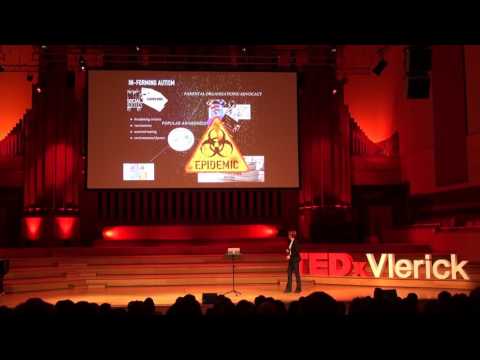
practices the epidemic lots of studies
have been done about it with lots of
causes etc but it wasn’t until the
parental organizations came into being
and advocacy came into being that autism
came into popular awareness and from the
moment it came into popular awareness
there was easier access to treatments
etc which we have lots of and then all
these things had to be published in
books then we got the autism films the
autism cinemas you all have seen and
heard of and perhaps the popular
awareness is what caused the epidemic so
how about that popular thinking on the
one hand we have the treatment but lots
of research still has to be done about
its effectiveness and on the other hand
we see people who say we have to
celebrate this neurodiversity among us
we should see it as a new category of
human difference because autism is a
biological fact on par with
homosexuality skin pigmentation etc it’s
not as pathological it’s just a
differently wired brain though different
from the standard brain but it functions
as you can see equally well so no
treatment all society has to do is just
accept it but that being different plays
a big part in the autistic culture
that’s different being we are creating
it is out there and if we say different
what do we mean is it it’s different
from what aren’t we then again creating
a new category of human beings
and if we say different and a new
category aren’t we as polarizing as
psychiatry is in the first place and if
autism really was an evolutionary
benefit then why are people with autism
still experiencing problems in this
world and how about the one with a very
much younger developmental age than mine
we are on our way to exclusion instead
of acceptance but if we zoom in on this
popular practice we can see lots of
solutions coming from the people with
autism themselves to have and gain
control over their environment what you
see on the screen is a squeeze chute
which is invented by Temple Grandin and
when she gets overwhelmed by stimuli or
social interactions she gets into the
Machine and she applies deep pressure to
herself to calm herself down this is how
she copes with environments and then we
saw it being adopted by the families and
even in practitioners rooms we see seats
hugging people and then again later on
from that came a commercialization into
portable means and all these means get
adopted by the public so can we use this
popular awareness as a means to a
solution and then we get to the actual
subject of autism when treating
individuals it sometimes comes as
natural to us and as we heard in the
previous presentation we should we do
things intuitively so when we see
behavior like is it is projected on the
right hand side somebody covering is he
is with his hands and we we take look
around and we see a roomful crowded room
of people talking television playing
loud we immediately know what to do the
person knows what to do in a crowded
room he covers his ears which is an
adaptive response and perhaps the people
in the room turn down the TV or suggest
him to go outside we just have to use
our common sense sometimes so what we
see is all in all a dynamic process of
one organism adapting to another
organism and we speak of autism’s real
well I can’t get it to move reading for
so when we see when we talk about
adaptation we talk about reacting to one
another and of course some of the
reactions are more adequate than other
reactions some of the behaviors the
inadequate one they come when one can’t
meet up with the expectations of the
environment and what we see as adequate
behavior which we in common language
call appropriate behavior we call this
or we see this as a more healthy
reaction can you please turn the music
down and healthy is in fact being more
than normal it’s a meaningful reaction
to the environment
it’s being able to adapt to different
norms in different contexts and that
requires some flexibility and although
people with autism are not known to be
flexible although at the moment I’m the
living proof of flexibility one could
say that creating a rich and meaningful
environment also for people with autism
is something that leads us to well-being
one has to create one with in which the
individual pins be stimulated can
develop and can flourish
be successful on its own conditions so
adaptation cuts both ways because if we
come to think of the squeeze machine as
a society do we think such a machine is
appropriate in an office or do we think
of it as being appropriate when an
autistic person plays with his or her
saliva so it’s not only society who has
to adapt or the environment the person
with autism has to adapt as well and as
we see in the practices and coming from
people with autism they are already done
and who knows in future we can get used
to having a squeeze machine in the
office after all we got used to these
strange machines in fitness halls as
well so if we want adequate and flexible
adaptation to one another
it’s not about society nor society’s
norms it’s not about imposing the
individuals norms it’s not adapting to
the artist alone and it’s not to
limiting things into clinical practices
not all the methods or all the methods
we have now are most for the most part
retaining to the clinical practice and
it’s not limit we should not limit
things to a specific area as we know the
strongest organism is a bit more
resilient so it’s perhaps a bit more
easier for the environment to adapt to
the person sometimes but what we have to
do is make the person and the
environment stronger in real life and
that’s the only way we can in fact cope
with each other’s behavior and develop
so it’s a very subjective subjective
thing but if we take the subject as a
starting point it causes
less distress unless distress means more
opportunities for developments the need
of knowing where autism ends the
normality begins diminishes it’s the end
of a normalization process the need for
validation and diagnosis become less
prominence because we can put support
before the labeling and the need for
explaining all those complex biological
and psychological mechanisms diminishes
because we can do research and put all
the funding of research into ways to
support the subjects which means the
people with autism the environment
society the practices as well and we can
think about subject specific funding not
only even funding to a person with
autism to buy all those memes but also
to context schools society to invest in
a more adapted and that is what
socialization is all about so how we see
autism is how we come to think of autism
and using a label a diagnosis or a
classification as a justification not to
have to adapt it’s still too frequently
in practice this is what I call autism’s
biggest excuse but for me autism is the
best excuse for development so I thank
you very much for your patience and I
wish you all the development you can ever get in your life