
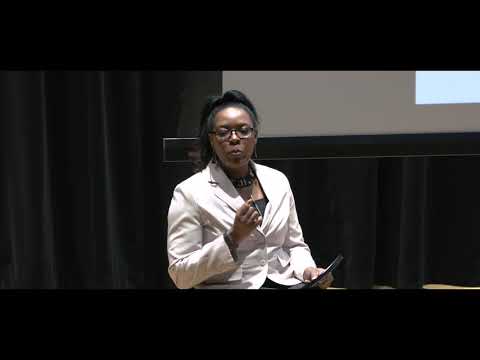
my name is Anwar fulla strike I am a
Paralympian I am a mother I have
traveled the world and I’ve won medals
some would say I have achieved a lot for
a woman whose father was told should let
me die because of a disability today I
want to tell you what I’ve learned about
disruption how disruption can be a
powerful vehicle or driver for change
and how feminist movements like me to
and time’s up
must disrupt its thinking if it’s to
create equitable world for all women for
me disruption means
interrupting the non-challenging the
status who are creating space to
introduce new ways of thinking and how
we do things it might look like this
only me today on this stage but there’s
so many of us today it’s not just me
there’s a million of the same word women
alongside me today disabled women and
girls are some of the most marginalized
and forgotten people on the planet we
are here today to try and disrupt how we
think so that we can actually work
together for a richer more inclusive and
a movement that can bring equality you
know to all of us
mine is not a story of victimhood it’s
not a story of blame or accusation this
is a story of how we all of us together
can actually share our experiences and
use them to disrupt our way of thinking
and create a more compassionate and a
disruption first hit my life when I was
very young I was born as an normal
healthy child and when I was two and a
half years I was struck down by polio
and it left me actually paralyzed from
the waist down and the villagers did
know
understand what it was they believed
that I’d been struck down by black magic
and some thought had been cast they said
I should be left to die they wanted to
burn our house down and because of that
we actually left the village because it
was no longer safe for for me and my
family to live there you know when you
have a disability you are the lowest of
society when you have a disability and
you’re also a woman you are even lower
very low the stigma I experienced
growing up was really devastating it
took everything away from me I was
broken I didn’t develop self-esteem I
really hated who I was I had so many
demons I tell you when you’re broken
when you have those demons inside you
when your sense of self and your
self-worth are reduced to nothing it
leaves you more disabled in your mind
than any physical impairment can when
you are broken it is also very difficult
to rise up and actually make things
different and that was me if it wasn’t
for my father telling me I had a place
in this life I wouldn’t be here today
my father was told to actually cast me
out and leave me to die he was told
she’s better off dead and that out
amount to nothing because I was a woman
you know when you’re a disabled woman in
that community you are not expected to
find love not find a job to start a
family or even have a career I have done
all of those things my father’s and we
were in support his conditional love
fast actually disrupted my own sham it
is disrupted the stigma around me and it
made me believe a new story for myself
was actually possible and this
disruption did change my life
now believe nothing disabled somebody
nothing disables you more than staying
silent on things that impact your world
in my case
nothing disables me than staying silent
on things that impact me that’s why I’m
so passionate about using my voice to
actually amplify the voices of other
disabled women nationally and globally
adopting to disruption has given me a
platform and this platform helps me to
try and create disruption just on a
wider stage on a societal level for all
the disabled women that’s why today I’m
actually a proud ambassador for a
disability rights organization called an
international and together we are
actually an ally to the global
disability movement that is supporting
women with disabilities
most of them activists in Africa and
Asia to build powerful movements that
bring change to the community and a key
focus of our work is to support disabled
women in particular disability stigma is
present in every society disability
stigma is present in Africa its present
in Asia and it can be very oppressive in
the village where I grew up for example
there was no research or any technology
available to explain the cause of my
impairment to the community and it is
within that void of understanding that
dangerous misconceptions about
disability can form disabled people are
often considered weak what less and in
some cases sub Yuman societies just
don’t value them disabled women are
doubly discriminated against of both
their gender and their disability they
people who should not be there and women
with disabilities experience a much
higher physical sexual and psychological
violence for longer periods of time
actually much worse than able-bodied
women unfortunately too many services
and programs that are meant to protect
and empower women such as myself do not
take into the account the unique dangers
and challenges that this disabled women
face how does a woman with a hearing
impairment hear the warning sounds of an
approaching attacker how does a whim a
woman with a visual impairment know
where to run for protection and without
specific attention and solutions
disabled women have been left behind and
actually at a greater risk I’ve
international did a recent research into
violence against women and girls in
Tanzania and it exports some shocking
realities nine out of ten women
experienced abuse not just from men but
also from ever bodied and also from
people who were supposed to care for
them nine out of ten women and girls
with intellectual disabilities had been
abused so many times without
intervention from family or community
our research found that disabled women
and girls of such fundamental lack of
awareness of their own rights and in
relation to violence that many did not
even recognize what their experience was
in fact abuse because of this most
and sometimes even when women get to
report these incidents nothing is done
there are so many obstacles because they
cannot just access the support and
justice that they require how does a
hearing-impaired woman disclose her
abuse in a court that does not have a
sign language interpreter how how does a
visually impaired woman walk with the
police force that has no assistive
devices to identify a predator how when
I hear these stories I think that so
could easily have been me I am here
today I’m only here today because I had
people who believed in me and people who
supported me so many women have been
left behind
Society has discarded them that is why
it is so important to me and other
organizations such as I’d international
that I work to amplify the voices of
these women and with the right support
and infrastructure change is possible we
have seen women with disabilities formed
strong groups become more empowered and
become outspoken but change only comes
when disabled women are actually given a
political voice and proper
representation the invisibility of
disabled women is not just in the
developing countries even here in in
Britain the lack of disabled role models
is as serious issues often ask myself we
are all the disabled women where are
they where are they in our magazines on
our TV shows our communities friendship
groups and/or professional networks
where are they
one in five women have a disability one
in five women have a disability so we
should be able to actually call plenty
of disabled women to mind but I wonder
how many each one of us can disabled
women are invisible and this
invisibility means our voices are never
had our pain is never shared our abuse
never acknowledged last year I was
forced to wet myself on public transport
because there was no accessible toilet
can you imagine how that felt not just
as a human being but as a mother as a
grown woman it brought me but I chose to
speak up I chose to speak about it
because I wanted to create change and
that moment of indignity became my foil
for disruption but every time I spoke
about it it brought me I wasn’t being
brave I was humiliated this is the 21st
century
Britain we shouldn’t be talking about
people accessing toilets we shouldn’t be
talking about people accessing their
basic needs but after I spoke up I got
so many emails from disabled people who
had left their jobs who’d stopped going
to school who’d stopped attending
universities who’d given up on their
careers just because they’d also wet
themselves and the shame and
embarrassment that they suffered reduced
their lives to barely leaving their
houses and you know what these stories
brought my heart disabled people are
being robbed of their dignity
we don’t want sympathy we don’t want
pity we want opportunities we want our
rights
and in order to work to achieve this in
order to achieve these rights we need
space in the women’s movement we need
the voices of disabled women had
otherwise this is not a movement for
women it is just a movement for
able-bodied women when disabled women
are left out they have the Weinstein
scandal last year prompted a global
outpouring of sexual harassment the
sexual harassment experience was the via
me too and times up movements I wonder
how many of these stories actually came
from disabled women how many I’m
guessing not many yet we know that
disabled women experienced the most
violence and they are the most people
that I hit the hardest that’s why I’m
asking this new wave of feminism to
carry us with them the women’s movement
could play a vital role in amplifying
the voices of disabled women so that we
can finally be heard at your meetings
I’m asking you make sure they are
disabled women in the room on your
panels bring them in in your leadership
teams hear their stories share the
experiences bring us into your movements
broaden the discussion while able-bodied
women are fighting and talking about the
pay gap remember that disabled women are
still struggling and fighting to access
the basic things such as an education
sexual health sanitary towels and in
some cases just an accessible toilet in
a truly inclusive society it will be the
norm to see women with disabilities
presented in all areas and in these I
mean the media politics engineering
medicine or even the catwalk what is
your first reaction when you see a
disabled person approaching you shock
sympathy pity it’s natural to think
those things I think it is natural
because the sight of disabled people is
still so unusual and when people see
these they react differently
until disability is part of the
mainstream these barriers will always
exist these are the barriers that divide
and separate us from so many of you we
need structural systemic change proper
access barriers broken barriers in the
environment and barriers in the mind of
the non-disabled society about
disability we need to reimagine society
with disabled people moved from the
shadows today you know to be part of the
everyday life I am disabled I am female
and guess what I am black so much of my
life and experiences have been outside
the status quo so much of my life and
experience have been invisible but for
change to come for change to come for
the disabled people for us to live and
move from that Majan it falls on the
minorities to be disruptors of the
status quo to use the experiences as
foil to challenge the norm and bring
their stories into light creating social
change requires changing social thinking
what do you think when you hear disabled
do you see me as unfortunate do you see
me as
Tim do you see me as a hero I want only
to be human I want to be met with
actually the same openness as anyone
else I want you to give me your ears to
hear my story and to hear the stories of
many other disabled women to allow my
experiences and the experiences of all
those other disabled people this is not
an accusation but this is a plea from me
this is a plea so that we can actually
grow collectively as human beings to
deepen our understanding of each other’s
experiences and to move towards for a
better and more inclusive world ladies
and gentlemen to me
diversity is being invited to a party
and inclusion is being asked to dance and I want to dance
Paralympian I am a mother I have
traveled the world and I’ve won medals
some would say I have achieved a lot for
a woman whose father was told should let
me die because of a disability today I
want to tell you what I’ve learned about
disruption how disruption can be a
powerful vehicle or driver for change
and how feminist movements like me to
and time’s up
must disrupt its thinking if it’s to
create equitable world for all women for
me disruption means
interrupting the non-challenging the
status who are creating space to
introduce new ways of thinking and how
we do things it might look like this
only me today on this stage but there’s
so many of us today it’s not just me
there’s a million of the same word women
alongside me today disabled women and
girls are some of the most marginalized
and forgotten people on the planet we
are here today to try and disrupt how we
think so that we can actually work
together for a richer more inclusive and
a movement that can bring equality you
know to all of us
mine is not a story of victimhood it’s
not a story of blame or accusation this
is a story of how we all of us together
can actually share our experiences and
use them to disrupt our way of thinking
and create a more compassionate and a
disruption first hit my life when I was
very young I was born as an normal
healthy child and when I was two and a
half years I was struck down by polio
and it left me actually paralyzed from
the waist down and the villagers did
know
understand what it was they believed
that I’d been struck down by black magic
and some thought had been cast they said
I should be left to die they wanted to
burn our house down and because of that
we actually left the village because it
was no longer safe for for me and my
family to live there you know when you
have a disability you are the lowest of
society when you have a disability and
you’re also a woman you are even lower
very low the stigma I experienced
growing up was really devastating it
took everything away from me I was
broken I didn’t develop self-esteem I
really hated who I was I had so many
demons I tell you when you’re broken
when you have those demons inside you
when your sense of self and your
self-worth are reduced to nothing it
leaves you more disabled in your mind
than any physical impairment can when
you are broken it is also very difficult
to rise up and actually make things
different and that was me if it wasn’t
for my father telling me I had a place
in this life I wouldn’t be here today
my father was told to actually cast me
out and leave me to die he was told
she’s better off dead and that out
amount to nothing because I was a woman
you know when you’re a disabled woman in
that community you are not expected to
find love not find a job to start a
family or even have a career I have done
all of those things my father’s and we
were in support his conditional love
fast actually disrupted my own sham it
is disrupted the stigma around me and it
made me believe a new story for myself
was actually possible and this
disruption did change my life
now believe nothing disabled somebody
nothing disables you more than staying
silent on things that impact your world
in my case
nothing disables me than staying silent
on things that impact me that’s why I’m
so passionate about using my voice to
actually amplify the voices of other
disabled women nationally and globally
adopting to disruption has given me a
platform and this platform helps me to
try and create disruption just on a
wider stage on a societal level for all
the disabled women that’s why today I’m
actually a proud ambassador for a
disability rights organization called an
international and together we are
actually an ally to the global
disability movement that is supporting
women with disabilities
most of them activists in Africa and
Asia to build powerful movements that
bring change to the community and a key
focus of our work is to support disabled
women in particular disability stigma is
present in every society disability
stigma is present in Africa its present
in Asia and it can be very oppressive in
the village where I grew up for example
there was no research or any technology
available to explain the cause of my
impairment to the community and it is
within that void of understanding that
dangerous misconceptions about
disability can form disabled people are
often considered weak what less and in
some cases sub Yuman societies just
don’t value them disabled women are
doubly discriminated against of both
their gender and their disability they
people who should not be there and women
with disabilities experience a much
higher physical sexual and psychological
violence for longer periods of time
actually much worse than able-bodied
women unfortunately too many services
and programs that are meant to protect
and empower women such as myself do not
take into the account the unique dangers
and challenges that this disabled women
face how does a woman with a hearing
impairment hear the warning sounds of an
approaching attacker how does a whim a
woman with a visual impairment know
where to run for protection and without
specific attention and solutions
disabled women have been left behind and
actually at a greater risk I’ve
international did a recent research into
violence against women and girls in
Tanzania and it exports some shocking
realities nine out of ten women
experienced abuse not just from men but
also from ever bodied and also from
people who were supposed to care for
them nine out of ten women and girls
with intellectual disabilities had been
abused so many times without
intervention from family or community
our research found that disabled women
and girls of such fundamental lack of
awareness of their own rights and in
relation to violence that many did not
even recognize what their experience was
in fact abuse because of this most
and sometimes even when women get to
report these incidents nothing is done
there are so many obstacles because they
cannot just access the support and
justice that they require how does a
hearing-impaired woman disclose her
abuse in a court that does not have a
sign language interpreter how how does a
visually impaired woman walk with the
police force that has no assistive
devices to identify a predator how when
I hear these stories I think that so
could easily have been me I am here
today I’m only here today because I had
people who believed in me and people who
supported me so many women have been
left behind
Society has discarded them that is why
it is so important to me and other
organizations such as I’d international
that I work to amplify the voices of
these women and with the right support
and infrastructure change is possible we
have seen women with disabilities formed
strong groups become more empowered and
become outspoken but change only comes
when disabled women are actually given a
political voice and proper
representation the invisibility of
disabled women is not just in the
developing countries even here in in
Britain the lack of disabled role models
is as serious issues often ask myself we
are all the disabled women where are
they where are they in our magazines on
our TV shows our communities friendship
groups and/or professional networks
where are they
one in five women have a disability one
in five women have a disability so we
should be able to actually call plenty
of disabled women to mind but I wonder
how many each one of us can disabled
women are invisible and this
invisibility means our voices are never
had our pain is never shared our abuse
never acknowledged last year I was
forced to wet myself on public transport
because there was no accessible toilet
can you imagine how that felt not just
as a human being but as a mother as a
grown woman it brought me but I chose to
speak up I chose to speak about it
because I wanted to create change and
that moment of indignity became my foil
for disruption but every time I spoke
about it it brought me I wasn’t being
brave I was humiliated this is the 21st
century
Britain we shouldn’t be talking about
people accessing toilets we shouldn’t be
talking about people accessing their
basic needs but after I spoke up I got
so many emails from disabled people who
had left their jobs who’d stopped going
to school who’d stopped attending
universities who’d given up on their
careers just because they’d also wet
themselves and the shame and
embarrassment that they suffered reduced
their lives to barely leaving their
houses and you know what these stories
brought my heart disabled people are
being robbed of their dignity
we don’t want sympathy we don’t want
pity we want opportunities we want our
rights
and in order to work to achieve this in
order to achieve these rights we need
space in the women’s movement we need
the voices of disabled women had
otherwise this is not a movement for
women it is just a movement for
able-bodied women when disabled women
are left out they have the Weinstein
scandal last year prompted a global
outpouring of sexual harassment the
sexual harassment experience was the via
me too and times up movements I wonder
how many of these stories actually came
from disabled women how many I’m
guessing not many yet we know that
disabled women experienced the most
violence and they are the most people
that I hit the hardest that’s why I’m
asking this new wave of feminism to
carry us with them the women’s movement
could play a vital role in amplifying
the voices of disabled women so that we
can finally be heard at your meetings
I’m asking you make sure they are
disabled women in the room on your
panels bring them in in your leadership
teams hear their stories share the
experiences bring us into your movements
broaden the discussion while able-bodied
women are fighting and talking about the
pay gap remember that disabled women are
still struggling and fighting to access
the basic things such as an education
sexual health sanitary towels and in
some cases just an accessible toilet in
a truly inclusive society it will be the
norm to see women with disabilities
presented in all areas and in these I
mean the media politics engineering
medicine or even the catwalk what is
your first reaction when you see a
disabled person approaching you shock
sympathy pity it’s natural to think
those things I think it is natural
because the sight of disabled people is
still so unusual and when people see
these they react differently
until disability is part of the
mainstream these barriers will always
exist these are the barriers that divide
and separate us from so many of you we
need structural systemic change proper
access barriers broken barriers in the
environment and barriers in the mind of
the non-disabled society about
disability we need to reimagine society
with disabled people moved from the
shadows today you know to be part of the
everyday life I am disabled I am female
and guess what I am black so much of my
life and experiences have been outside
the status quo so much of my life and
experience have been invisible but for
change to come for change to come for
the disabled people for us to live and
move from that Majan it falls on the
minorities to be disruptors of the
status quo to use the experiences as
foil to challenge the norm and bring
their stories into light creating social
change requires changing social thinking
what do you think when you hear disabled
do you see me as unfortunate do you see
me as
Tim do you see me as a hero I want only
to be human I want to be met with
actually the same openness as anyone
else I want you to give me your ears to
hear my story and to hear the stories of
many other disabled women to allow my
experiences and the experiences of all
those other disabled people this is not
an accusation but this is a plea from me
this is a plea so that we can actually
grow collectively as human beings to
deepen our understanding of each other’s
experiences and to move towards for a
better and more inclusive world ladies
and gentlemen to me
diversity is being invited to a party
and inclusion is being asked to dance and I want to dance
Please follow and like us: