
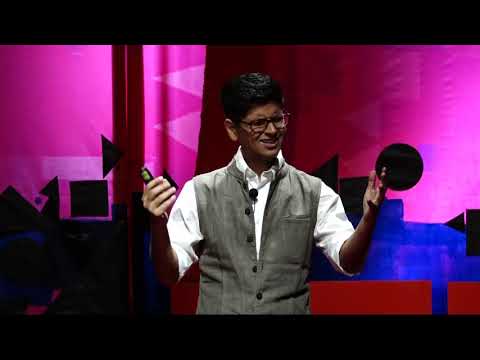
hello I have an interest in education
and I find that if my students some of
whom are here today so I’m really happy
to see their faces I find that if my
students take an interest in something
then they work really hard to learn that
thing allow me to explain I used to be a
teacher at this very institution I
learned a lot from this place amongst
the things that I learned one thing that
I observed really keenly is that
teachers are busy incredibly busy so
Diwali celebrations are coming up called
the teachers an important guest is
visiting our school bulalo teacher
school annual day or assembly has to be
organized all the teachers I can keep
going you understand where are my TEDx
teacher superstars who helped organize
this event about a round of applause for
them so you know what I’m saying as Java
doctor subset teachers are busy and what
happens when teachers are so incredibly
busy in non teaching related tasks is
that there is very little time left for
planning in my observation there was
about 30 minutes to plan for a week’s
worth of instruction that’s about 30
minutes on a Saturday for three hours of
classroom teaching time clearly that is
not enough while teachers are so busy
what happens is that they rely on
textbooks and that would be fine except
that this is where I need your love and
support to say the things that I know
are true but are also incredibly harsh
the textbooks that we as teachers rely
on are incredibly boring they are
horrible
they are mediocre allow me to give you
some examples yeah I’m here not just
talking about the typos or the spelling
mistakes that are littered across these
documents which I would say are perhaps
some of the easiest mistakes that we can
fix in those things right I am talking
about deep structural design challenges
here text these are text books that are
not propelling student interest not
illuminating their questions not raising
their curiosity here are a couple of
examples this is the first chapter from
the class six science textbook yes can I
move back a little
absolutely this is chapter 7 from the
class 6 science textbook title is
getting to know plants now this is a
14-page excruciating detail on learning
the parts of the plants are you ready I
am a teacher I will quiz you after this
pay attention yeah reticulate venation
stigma style
pistol’ lamina petiole stamen enter I
can keep going this is barely half the
list now don’t get me wrong I am NOT
saying that the students should not know
the parts of the planet of course that’s
what not I’m not saying that right what
I am saying instead is that if all we
focus on in that 14 page excruciating
detail is an encouragement to our
students to memorize the parts of the
plant then important ideas important
questions that are authentic and organic
to the students will get left behind in
the class period questions like the one
they wish a 12 year old boy asked me
which is do bananas have seeds another
question that was presented to me was
why do plants make flowers which then
led to a conversation that an Apple was
once a flower which when I learned by
the way blew my mind another piece of
evidence this is chapter 4 in the class
7 science textbook the title is a little
hard to read but I think it is sorting
materials into groups the learning
objective here by the way I’m going to
do a lot of this so let’s just get used
to it yeah the learning objective here
is some objects are soluble in water and
others are not soluble in what no big
deal important idea for the students to
learn when I was finished teaching this
chapter inside my classroom one of my
students came to me and said
Thirteen’s I’ll say Barbary a cheese
Ferrari oh you’re teaching us this from
the last three years he said right and
sure enough you go look in the textbooks
from previous year and the year before
that this learning objective with the
same level of complexity exists in all
of those textbooks right again what I am
saying is not that students should not
know about solubility of course they
should but if we keep on doing mindless
repetition again and again year after
year then what is going to happen is
that authentic questions that students
have about solubility will get left
behind questions like water is not
soluble in oil we know that why are all
spills in oceans so hard to clean if you
think I’m harping way too much upon
this is a chapter title simple equations
in a mathematics textbook and quick
primer here these are equations that
just have an equal to sign in the middle
right they have a left-hand side and
right inside things are balanced equal
to sign in the middle right the most
interesting part of this chapter for me
and my students was this section which
said practical situations right where
are we going to use simple equations in
practical situations let’s talk about it
the first question underneath that
heading is sum of three times the number
is 11 is 32 find that number I don’t
know about you but to me and my students
that doesn’t look like a practical
situation right what is a practical
authentic situation to a child or a
student is how many marks do I need to
get in my final exam so I can get 90%
for the whole year
that’s an organic calculation my kids do
so you take that word problem which is
authentic and organic and interesting
dare I say and convert that to math
which is what this thing is prescribing
and you get an answer to it right what
this is is it’s it’s the middle if the
context for this math is missing this is
like going to a hindi movie made by
Shahrukh Khan and starting at
intermission that is not interesting
it’s at best frustrating all right let’s
keep going I’m not done here this last
piece of evidence that I will present to
you is from a social studies textbook
right but you can find it pervasive
throughout all textbooks all subjects I
stake my reputation on it right what
this is is just an exercise section at
the end of every chapter the assessment
that we present our students and for the
sake of clarity what I will do is in
continuity I’ll just go back to the
getting to know plants chapter where you
will find questions that are mostly
multiple-choice in nature which are
encouraging the student to remember what
we had previously taught them in the
chapter questions like what plant leaves
have reticulate venation you know you
can tell a lot about what the learning
objective of the textbook was just by
looking at the assessment all right this
assessment is not propelling student
curiosity this assessment is not
propelling student interest this
assessment is not addressing their
authentic questions what this is doing
is a very clean and simple message this
is delivering a clean and simple message
rather I should say that hey listen your
formative and summative assessments are
coming we know that you know this right
make sure you know the answers to these
questions and if you do we are okay all
right you know that famous villain that
we all love to criticize in the
education circles called rote learning
right he knew Volterra Tom arnica Qi
scar where is it coming from it’s coming
from the assessment sections at the end
of each one of these chapters right all
right so I hope I’ve given you a little
window into the lives of students and
teachers and
relationship with the textbooks and how
some of these textbooks are just well I
mean the soft euphemism for it is
they’re not good but I’ll stand here and
tell you the truth today they’re
horrible there’s somewhere in between
mediocre and boring and because teachers
are so busy in non teaching related
tasks what they have to do is rely on
these textbooks so what is in the
textbook get started yeah that’s a
problem so a few years ago we decided to
do something about this and we started
an organization that would propel
student interest in learning by
addressing some of their authentic
questions allow me to give you some
examples yeah this is a chapter in the
class seven maths textbook which is
called comparing quantities the main
idea here however is ratios right one
way I would argue to make ratios
interesting to our students is to show
them a conversation with Shanker G
Schanker G lives in a village in
Rajasthan and if you ask people in the
know they will tell you that he is the
man who is pivotal behind the passage of
the Right to Information Act in our
country so when I went and spoke to him
and recorded that conversation on camera
he basically connected for me ratios and
corruption I didn’t understand so I
asked him to explain it to me and he
said the co beta is about building
Minotti ho toh building me
he took a beach miss cement car or
ritika mixture lava right so there is a
mixture of cement and sand that we use
to build the mortar which is one part
cement eight parts sand now because the
cement is expensive what many of the
contractors do is they will mess up with
this ratio it will go from one is to
eight to twelve to sixteen to twenty
right and so what happens when we build
buildings in our country with a messed
up cement sand ratio well here’s what he
said Babu suppose the corruption cannot
tell you what could be guarded – what it
should be guarded it bara if so logic
B’s MATLAB khaki egg brad.leah s America
huh obvious back of me with cattle via
Auto building to take name on any
building me money give se da a tomonaga
ok garlic in voodoo get in a lake with
Yaga
just icky just a panic eating Cuba
negative some ponies
that’s a big company okay to get woody
panchayat dummy why do you think I just
didn’t see bunny enough a strike was no
planning in Dallas
you’re gonna go monument funny the doll
Tiki Vega dan7 away come bakery hey hey
looking for adultery he will get a key
confuse me cement valid ally a barber a
dolly be smart these other women come
dolly cooky cement Li Ming here up coup
corruption can match the quantities
could mr. kaui up up mrs. swim the key
aponogeton key just me I’d be career up
mr. Tomich a look at art we could even a
hard to be funny me a new opener quickly
think a putting a showpiece a kiss a
this is chapter four from the geography
textbook which introduces students to
the idea of air and its corresponding
pressure now one way I would argue to
make this interesting to the students so
they pay more attention and I problem
interested in the subject is to show
them an experiment take an empty glass
take a piece of paper which is a little
bit bigger than your notebook cackled
guys fill the glass up with water and
place the paper on top of the glass and
then hope inward the whole apparatus and
let your bottom hand go and watch your
students lean forward and say how did
you do that and that leads to a
conversation on air pressure and air
pressure in real life which is all about
filling your stipple tires up with air
and then more questions from students
thank you may have a new image I hear
they’re not taken you may have gotten
points on a hoverboard Andy okay Who I
let’s keep going give you a few more
examples of this this is chapter one
from the grade six science textbook
where does food come from one way to
learn about where food is coming to our
dinner plates from is to read this
chapter one way I would argue to make
this more interesting is to actually
take a journey take a journey from your
local fruit and vegetable seller to go
to then the local sabji Mundi and then
from there to go all the way to the
farm and talk to an actual farmer who’s
been living this chapter for thirty
years you would also without an answer
non so gamma is opposition correct
certain cascavel Attila refer simply
civilly look to that short Megara panic
hit me what again mara Haddad Atari
keeper the home will be who we’re so
we’re over santos abused our judges are
Joey ki Orakei best example ok is from
chapter 11 which is titled lights and
shadows and one way to make this
interesting is to ask the students hey
what are your questions about this
chapter that you are interested in and
that will yield questions like can
shadows be colorful do they necessarily
have to be black and that leads to some
silliness
can you guess what is all about the
theme
well other than my crazy dancing you may
have noticed that the shadow is not
black but instead it’s colorful what’s
going on here
all right I’ll leave you with one last
example right which is from chapter 11
of the science textbook which is all
about liver and kidney one way I would
argue to propel student interest in that
particular topic is to use things they
already find interesting things like TV
advertisements jingles and poems so this
is a 1 minute long video played in its
entirety
it’s kahani make villain he just needs a
Dhamma chaya here Namaskar ammonia or
highway and a stripper is not Jan de
Faria
konnichiwa trotting Akane see or badonk
a bad mood or booty a vodka lemon is a
protein yoke Mossad our dalam Nick hey
kubinashi Pius at me muscle be when I
lick in protein correct by product
ammonia what I just keyboard Amiya
Prasad Ahuja whoa Janko hot Zito tire
huh Mitch I hear Oh Roddy hamari what is
such a joy is here ok Copenhagen de Ojo
20 Bullock a dog a chair Agni hero to
open it Doha film Sholay KJ or Veeru say
yo hey
yep asshole kisi KO na hoku here keoki
Tinoco Himalaya Student of the Year up
napela hero Konami he’ll never take a
scone muniya Kurdish ever liver ammonia
Co Julia met Abdullah katpa then raha
Morelia come carry the bin Lavaca gee
Papa Lake in you yeah be a merry body
clinics and I okay
ammonia Chabad yoknow Khalnayak hey
Vikram at querido stow up Madan kidney
Nizam Allah Jurgen says actually to life
jingle Allah hey Kent arrow purifier
Katara kidney blood coach shunta-kun
Mikula urea Co a locker key here Monty a
la quiaca a blingy home hisab Nicola is
Kabaddi say panic risk Oh Bob yuzuru
naval airship do catch a leg Ozora
purusam anime ureter urinary bladder
urethra kara stay Doreen Nick lega go
Sal Kaname
we liver or kidney Khajiit some lockjaw
above-knee her G story Co son Hamza
Ebola
what an idea sir G so I hope I’ve given
you a little window into the lives of
students and teachers as they interact
with the text books which are horrible
let me say it again and an attempt to do
something about that situation where we
can perhaps propel student interest in
learning we are not the only ones on
this journey however there are other
people who are fellow travelers on this
journey with us and I want to introduce
their work to you also but before I do I
also want to do a quick reflection on
the work that we’ve been doing for the
past few years if there were a scale
with meek on one end and bold on the
other end meek and bold educational
interventions that propel student
interests that surface their authentic
organic questions I’d say that the work
that we have done is somewhere to the
middle of the left that begs the
question what is to the right what is a
bold educational intervention that
propels student interest and the answer
to that question is embedded in another
question which is what is good pedagogy
what is good teaching and learning now
this is the part of the presentation
which when I was rehearsing yesterday
evening in front of my mother even
though she loves me she had to stifle a
yawn so it gets a little dense stay with
me I will walk you through it ready okay
what is good pedagogy what is good
teaching and learning there are many
answers available from various problem
posing model to seymour papert’s
constructionism to Mitch Russ Nick’s
4-piece of learning these are convoluted
phrases I understand but here’s the good
news the good news is there is a lot in
common between these three theories of
learning so knowing something about any
one of them is going to go a long way
learning something about all of them
today we are only going to focus on
Mitch Russ Nick’s four piece of learning
in fact we’re only going to focus on two
of those peas which are projects and
passion all mitch is trying to say all
he is trying to say is let students make
projects and things they are passionate
about let me give you an example if we
were to teach variables to our students
many of which are sitting here how do we
teach them variables in a traditional
classroom
well we teach it to them when it appears
in the textbook and we deliver that
information to them
it’s one way that we are doing it right
now I content that’s boring that’s not
interesting to the child the other way
in which is suggesting is that you let
students make projects and things they
are passionate about so say a student is
passionate about making video games
let’s say so you give her the
opportunity to make those video games
and very soon while she is making those
games she is going to come across the
idea of hiding either a timer or a score
to that video game and the teacher or
the facilitator can then introduce the
idea of variables to the student at that
point let students make projects in
things they are passionate about there
are already schools all over the world
who are doing this well the one that I
visited was in Ahmedabad Riverside
School where students are making
projects and things that they are
interested in and there’s another school
called decile in Bangkok Thailand where
they reserve as much as 50% of the
student time 50% to let them make
projects in things that they are
passionate about now if what I have said
to you today is even somewhat convincing
and you want to try out this idea I know
50% of the students time from his or her
time table is going to be an almost
impossible task so I will leave you with
an actionable idea if you choose to
implement it right take 4 class periods
you can’t do 4 take 2 take 2 consecutive
class periods on a Friday before the
lunch break and let students make
projects that they are passionate about
and because the reporting is important
in our school system add a line item in
the report current communicate to the
parents how the students are doing
during that time through some rubric
based analysis so in the end I will say
what I started with I have an interest
in education I find that if my students
take an interest in something they work
really hard to learn it over the past
several years we’ve tried to design
content that propels student interest
that illuminates their authentic
questions but if I’m being truly
reflective about how to make education
interesting perhaps the best question we
can ask is what are the students already
interested in I invite you to do the same thank you
Please follow and like us: