
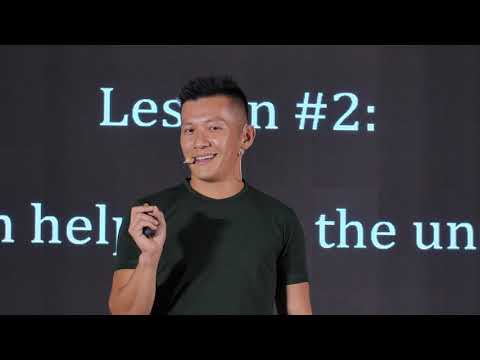
so good afternoon everyone thanks for
bearing with us I’m very happy to be
here very honored to be here and I’m
here to share with you a story about
appreciation about why I started a
movement about appreciation and what
that movement has taught me what amazing
things that it has taught me it was a
few years ago that I started this
movement and before that I was just
completing my graduate studies my
master’s degree in educational
psychology and during that time I came
to learn about a little bit about the
world and how it’s becoming you know a
little bit more ugly a little bit worse
and this world that we live in is
becoming increasingly neoliberal and
psychology is contributing to that so I
just drew out a world word here called
military neoliberalism and neoliberalism
is a big word what does it mean so it’s
basically this idea that your lives my
life should be increasingly regulated by
this thing called a free market and in
such a neoliberal world governments
social organizations should be
deregulated or minimized individuals
like you and me become reduced to
economic units and to function
efficiently as economic units right we
need to take self-responsibility now I
know it sounds very technical but bear
with me I’ll come to a good point so in
light of this psychology then
contributes because it focuses a lot
about self responsibility and under this
neoliberal regime we increasingly don’t
need our community that’s what it means
now here’s the challenge I find a
neoliberal regime that we’re
increasingly living in misses the point
about a lot of things
first of all the free market is never
really free there are people behind a
free market there are actors in a free
market and some of them have more power
than others secondly if we are to say
that we are always and solely
responsible for our lives we are also
saying that the rich became rich on
their own and the poor are poor because
they’re not responsible enough to me I
reject those I don’t buy this this is
not right
and most I guess most tragically what
happens is if we’re all self responsible
economic units then there really isn’t
no need for community there really is a
no need for our stories we don’t need to
talk to each other so with that in mind
I was thinking well wait a second this
cannot be and I’m a psychologist I
cannot be a part of this I cannot be
perpetuating this something needs to
happen our stories matter how community
matter right so at that same time
technology was getting you know pretty
pretty crazy we increasingly talk to
each other in abbreviated spaces and
social media so there are no remains
very little very few spaces where we can
actually reflect and tell stories
because there isn’t space there isn’t
space in and it’s the story that isn’t
space in a tweet or a Facebook post and
these opportunities become increasingly
compressed and on top of that I myself
in my graduate study felt like I needed
an appreciative space because as a
graduate student I remember being
criticized all the time everything I did
wasn’t right every time I was about to
graduate I didn’t graduate so I talked
to myself
we need our stories to be heard and we
need to appreciate each other a little
bit more so it was with neoliberalism
social media and my own graduate
experience that I decided we need a
space where we can talk to each other
about
stories and appreciate our lives take
stock of an hour of our accomplishments
because those things matter our stories
are the bedrock of our community so I
started this movement called the best of
you and how I started this is simply by
asking people to answer to this very
complex question called who is the best
of you at that time when I asked this
question on social media I was worried
that nobody would understand this
question and nobody would care enough to
understand this question or even answer
to this question well thankfully today
those fears have been put to rest
because we’ve so far five years along
received at least 23,000 stories but
what’s more important than these the
number of stories is what stories have
taught me in return an appreciation
became a catalyst for our stories and
it’s opened up so much more to my life
and to the people who worked behind a
movement and I want to share with you
these four lessons of learn through the
movement
the first one is appreciation provides a
space for negativity a necessary space
for negativity now you be you’ll be
asking me why hey appreciation is
supposed to be a positive thing right
but guess what when we receive our
stories the most profound ones tend to
begin at a low point and you know this
because when you’re motivated right it’s
normally it’s not me Spock because you
know something bad has happened or you
want to remediate something so it
normally starts at a low point and it
goes up so I want to illustrate this
point further with one of our key
stories that we’ve featured on the
movement and that’s Patrick
so Patrick never had a good childhood he
came from a broken family
he committed crimes at a very young age
he beat up people he never did well in
school right so that was his low point
and he felt that that was always his
trajectory until he met someone someone
who believed in him and then that’s when
his life became better Patrick now gives
back to the community
he’s a community worker at the same time
he teaches delinquent students the point
of Patrick story is that a lot of on
motivational or motivate and
motivational stories begin with this
structure the negative part is extremely
valuable and in this day and age when we
are often asked to be positive at the
expense of censoring on negative
feelings this reminds us that our
authentic experience requires this
negative space the second lesson I want
to share with you is that appreciation
has helped me take a look at the
diversity around us so it helps me see
the things that we don’t see all the
things that we refuse to see all the
things that society tell us we shouldn’t
see right it helps us see those things
and let me share with you the story
deulim to illustrate this point this is
amar amar is a deaf dancer so yes you
heard correctly he’s a deaf dancer so he
has impairments in hearing but he
break-dances and a breakdancing coupe
and he uses some of what he can hear to
form the beats no one else has this
experience but amar amar story let us
know that this abilities are not lack of
abilities rather disabilities are
diverse abilities and he’s helped us see
through our own stereotypical lens of
disabilities that there are there is so
mr. Mohsen is the only editor-in-chief
of the only Bangladeshi newspaper in
Southeast Asia and his contribution to
our society is to let us see the
thousands of fans of thousands the
hundreds of thousands
Bangladeshi working workers within our
myths amongst our myths that they have
contributed significantly to our economy
to our culture and our society but yet
don’t receive the same type of treatment
as we do his newspaper allows us to take
a better look at what we should do to be
a more inclusive society to see that
there is much more diversity than what
we take for granted
so appreciation is powerful because it
opens up our sights to these things
isn’t that amazing the third lesson is
this not only does it open all sites to
things that we don’t see or we take for
granted it can bring people together it
can unite people and in an interesting
story Amy and Alison you see in the
background here is a story we featured
last year and when I was about to
feature the story I was thinking here
you know what is the impact what will
they have the impact of the story be I
couldn’t quite figure it out because Amy
and Alison’s story was just about the
off friendship all it was was a me a
Muslim Malay woman hanging out with a
Chinese woman in Malaysia and the entire
story is about how to go and eat how to
go watch a movie how they spend their
time together in one month it ignited a
national conversation on top of a three
million viewership on YouTube the
national conversation was this we want
this Malaysia oneness
this is the Malaysia we’re looking for
friendship is the basis of our community
and it brought people together to say
hey we want this Malaysia back not the
racialized one that we currently live in
so what that taught me was this
appreciation can bring people together
but more than bringing people together
it can bring people together to affect
change and this is the fourth lesson
I’ve learned and I want to share with
you this story this illustrates my last
point this is City Ohio and where she is
right now is buku Jalan unchoke it for
those of you who don’t know what buku
jalan tun means that means mobile
library Chowk it for those of you who
don’t know I’m sure most of you do for
those of you don’t it it is the area in
metropolitan KL that has the highest
level of poverty many of the inhabitants
and chocolate are sex workers refugees
or undocumented workers and their
children do not have access to education
for whatever reason so City Rahu is the
founder of boku Jalan and chocolate it’s
more than a mobile library it’s a street
school that teaches them on two nights
of the week social skills and basic
education the children who do not have
access have access to a school like that
so that they can pick up social skills
when we featured the story it became
viral within a month the videos we
received at least 1 million views within
a month but more than that it galvanized
communities across countries Singapore
Malaysia Indonesia to pour and support
for buku Jalan and choke it from a lack
of volunteer teachers they now have a
wait list of volunteer teachers medical
clinics around the area provided medical
support soup kitchens provided show the
children and the families of the
children free meals on the nights of
your study and two years down the road
they have now moved from the street to a
permanent space so this tells me and
this is what I’ve learned throughout
this movement that appreciation the
stories that come up when we appreciate
other people can make great changes so
as I end of my talk today I’m humbled
I’m always humbled to be a part of this
movement because as the stories come in
I’ve learned that the stories are what
build a community it’s yeah what
humanizes us so as we walk away in a
world that becomes Malu neoliberal and
treats you more like economic units I
want you all to do us all a favor take
15 minutes out of your lives to ask
yourself this question who is the best
of you and extend that question out to
someone you love or someone who’s
important to you who is the best of you
because you never know what impact that
may have on someone else and more than
that because our humanity our lives and
our community depends on it thank you [Applause]
Please follow and like us: