
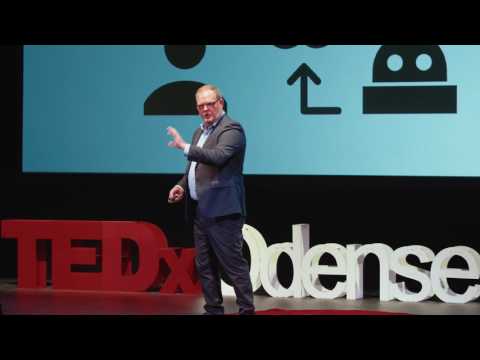
at that time we humans we created the
first robots ever to get into our world
these robots came into manufacturing
industry mainly producing cars they were
big they were heavy they were difficult
to program they were doing mass volume
production but they were also unsafe
because they were blind they were not
able to see what they were doing so they
were basically just moving but not
knowing what they did so that is going
on in the 70s and the 80s and when we
get up to the 90s
these robots gets a little bit more
advanced we put on cameras and other
type of sensors so these robots can now
see what is happening in the workspace
they can see the objects they are
working with and in that way they become
more flexible and we’ve been working
with these robots for a long time but in
2005 close to that there was a
completely new generation of robots
coming in these robots are called
collaborative robots and they are
different they can sense the environment
around them people being close to them
and since what the people are doing and
want to do and also they are
force-feedback sensors in the robot
itself so if you touch the robot it
stops moving or even if you get close to
it it can sense it and stop so they are
safe so they are collaborative you work
together with it so these are the new
robot assistants it’s not just in
industry this is also in hospitals and
many other places so this is what we
have already today let us look at
another thing exponential growth in
computational power is really an
important and a very interesting thing
you know how computational power
continues to grow exponentially today if
you spend $1,000 you can buy a computer
chip which has a compensation of power
just like a small Mouse but in six seven
years from now and 2023
it has the computational power as a
human brain and think about it it makes
a huge difference on the robots because
robots will have to sense the
environment understand what is happening
and think about what they learn so that
they can change their behavior all of
that comes down to brain power or
computational power so therefore we are
in a revolution now where the robots
change from being first they were blind
and stupid and dangerous then they were
collaborative and then what my
suggestion is my proposal is what we
will see over the next ten years is what
I call the cloud where the robots let’s
talk about that the traveller robot is
really a robot which is connected to the
cloud it gets information from the cloud
about what to do and the cloud is
operated in such a way that when you
start up the robot maybe the robot does
not exactly know how to do the things
let’s say you have the robot in your
kitchen maybe the road is not exactly
knowing how to do the omelet for you but
someone out in the cloud there will be a
cloud worker some person will be
connected to the cloud and to the robot
and they will take over the control of
the robot and do the omelet for you by
operating the robot and that is kind of
the first bottle of robot we get it’s
operated like this what happens is that
the robot will save the way that
operator that cloud worker it will save
in the cloud the way it has been done to
make that omelet and then this robot can
learn through that to actually do it by
itself so it will be autonomous
doesn’t need that operator over time so
that’s the cloud worker we can have
small simple robots installed many
places in the beginning cloud worker
people connect to the robot take over
control of the robot show or a guide and
operate the robot to do the job but over
time and with the Big Data and
artificial intelligence put into the
cloud the robot will be able to do it by
itself this is what we will see over the
next 10 years but it’s not just sci-fi I
want to show you that we already have
some of these cloud workers today but
the people participating do not know
that they are cloud workers let me show
you one example here this is an
autonomous driving car you know that in
2020 the European laws for this is in
place all car manufacturers in the
entire world are today building
self-driving or robotic cars what is
happening is that when you’re driving
autonomously and you get into a
situation and the robot does not know
how to handle it
the robot or the car asks the driver to
take over the driving and at the same
time the robot locks all this monitors
put it into a server and this happens on
tens of thousands of cars every day and
then based on Big Data artificial
intelligence every day the robot can
crunch all this data and learn in the
cloud how to actually drive the car more
autonomously so every day your car gets
more and more autonomous and one day it
will never ask you again to actually
drive the car it will always drive
autonomously and some point it will be
much much better than any one of us to
drive its reacting 12 times faster than
any human can physiologically ever do
there are other places where we see
things like this like surgery it’s being
done by connecting remotely to a robot
this guy’s now this doctor is sitting
just close to
the robot but he could be a thousand
kilometres away right oh my god we
already have one of these robots pretty
scary okay
Thank You Martin so um yeah so it could
be very distant marching could be on the
other side of the well it wouldn’t make
a difference we can already operate like
that the surgeon here can be very
remotely connected to the robot and make
the robot do the job we see it also with
drones you know that we have control
sent us they are operating the drones
basically the drones do most much most
of the work themselves but we can
actually take over control of the drones
and do specific things and help them on
that mission future applications they
actually a lot I mean industry like
picking up parts like this it’s obvious
to have someone to control a robot in
the beginning then the robot will learn
and it can do it automatically sometime
so that’s industry this is shopping some
of the initial testing of that picking
things from shells packaging and stuff
like that we can see this as in
construction industry today the workers
are operating the robot but they could
be in the cloud controlling the robot
and the robot could learn to do it by
themselves this is what we will see this
is agriculture so learning how to deal
with crops and weed and so on but it
could also be gardening get a robot home
in your garden to do all the dirty work
value-add while you are at your work
right it’s not a bad idea really doing a
cooking that’s obvious have someone to
connect to the robot in your kitchen you
call home and you say I want a pizza I
want whatever when you get home and
someone is doing that for you for you
either it’s a robot because it has
already learned or someone that has
connected to your butler robot and then
they’re doing the work so what what does
it take to be a cloud wiggle my bed is
that most of you will within the next 10
years be thinking about should I take a
job as a cloud worker and become an
expert in controlling and operating
these robot
so basically what you do is you have
your you have your computer maybe a game
console game device and then you go to
the web page cloud worker web page you
sign up and then first you get the
ability to train some simulated robots
when you pass that test you get a
certificate now you get to work with
real robots but they’re in a lab they
still in a lab then you work with these
and once you’re good enough you get a
certificate again and now you get real
robots out there and now you can start
doing a real job and earn money trained
robots and always support the robots
when they need help only when they need
help or do surveillance of the robots
and help them when they need it so we’ve
done some initial Studies on this so one
person we can increase by one person can
now be be as productive as five to
twenty people are today so it will be a
giant leap in our productivity it means
that we can save a lot of time people
can either work less or do other things
that are more funny we also think we can
have a butler robot in our home for
something down to $70 a month I think
most of us would want to buy one at that
point so what we’ve seen already today
is that you start by working with one
robot so one cloud worker will connect
to one robot and train but actually over
a very short period of time especially
we see this with logistic robots right
now you can have one guy operating a
hundred and fifty robots because they
quickly learn how to do the things so
you only do surveillance and help when
needed there’s a lot of good things
about this but there are also some
challenges or dilemmas some of the good
things is that anyone can set up a
production company or provide service or
you can get help at home anyone can get
that that’s great anyone can actually
also get a job I mean you can get a job
in a production company in China you
become a cloud where you operate the
robots in China it’s great but what
about
what about salaries and labor union and
structures and rules and with just
kicking out uber from Denmark just
recently I mean how will this affect
labor force and the ability to earn
money so a lot of questions I don’t
think we have the answers but this
technology is coming and we need to find
the answers for this another dilemma
privacy that Butler robot you don’t want
just anyone to get into your kitchen you
need to know who they are before they
get access to your kitchen and your food
and stuff and I think the last thing
about under dilemma side is you will
start as a cloud worker you start
operating the robot you will start
training them then they become
autonomous to some degree you will
support them to supervision but then at
some point will the robots have learned
more and more and more until a point
where they will tell you how you should
have done your job
thus they get smarter will there be a
conflict there or a problem we don’t
know but we’re certainly heading that
way to find an answer within the next 10
years so I think I want to welcome you
to the future welcome you to your new
job as a cloud waiver thank and
you know next day
[Applause] [Music]