
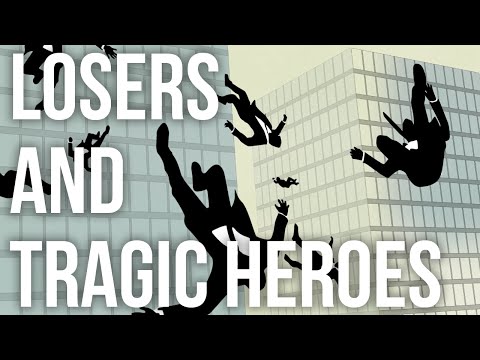
our societies are very interested in
winners but they don’t really know what
to do about losers of which there are
always by definition far more for a long
time around success and failure the chat
tends to be very upbeat we hear about
resilience bouncing back never
surrendering and giving it another go
but there’s only so long this kind of
talk and go on at some point the
conclusion becomes inevitable things
won’t work out the political career
isn’t going to have a comeback there’ll
be no way of getting financed for the
film the novel won’t be accepted by the
30 second publisher the criminal charges
are forever going to take one’s
reputation unstuffed up big time
where does responsibility for success
and failure lie nowadays squarely with
the individual concerned that’s why
failure isn’t just hard as it’s always
been it’s a catastrophe
there’s no metaphysical consolation no
possibility of appealing to an idea of
bad luck no one to blame but oneself
no wonder suicide rates climb
exponentially once societies become
modern and start to hold people
profoundly responsible for their
biographies meritocracies turn failure
from a misfortune to a none budge Abul
existential verdict on the state of
one’s soul but not all societies and
eras have seen success in failure in
such a stark light in ancient Greece
another rather remarkable possibility
quite ignored by our own era was
envisaged you could be good and yet fail
to keep this idea at the front of the
collective imagination the ancient
Greeks developed a particular art form
tragic drama they put on huge festivals
at which all the citizens were expected
to attend to act out stories of
appalling often grisly failure people
were seen to break a minor law will make
a hasty decision or sleep with the wrong
person and the result was ignominy and
death yet what happened was shown to be
to a large extent in the hands of what
the greeks called fate or the gods it
was the Greeks poetic way of saying that
things often work out in random ways
according to dynamics that simply don’t
reflect the merits of the individuals
concern in the poetics
philosopher Aristotle defines the key
ingredients of tragedy the hero of a
tragedy should be a decent person better
than average often highborn but prone to
making small mistakes as we all do at
the start it may not be obvious that
it’s an error they’re making but by an
unfortunate chain of events for which
they’re not wholly to blame this small
mistake leads to a catastrophe a tragedy
is the sympathetic morally complex
account of how good people can end up in
disastrous situations it’s the very
opposite of today’s tabloid newspaper or
social media sphere where the mob rushes
to make judgments on those who slipped
up Aristotle thought is extremely
important that people see tragic works
on a regular basis to counter their
otherwise strong inclinations to judge
and to moralize a good tragedy should
thought Aristotle inspire both pity and
fear pity for the tragic hero based on
an understanding of how easy it is to
make the slip that leads to a disaster
and fear for oneself as one realizes how
open our lives are to careering out of
control all of us could quite quickly
come apart if ever events chose to test
us tragedy is meant to be a corrective
to easy judgment it exists to counter
our natural instincts to admire only the
successful to spurn all those who fail
and to dismiss unfortunates as losers
we’re currently very uncomfortable
around the idea of a good person not
succeeding we’d rather say that they
weren’t good at all then embrace a far
more disturbing and less well publicized
thought that in fact the world is very
unfair but without the idea of tragedy
we make existence for everyone far
crueler and far more judgemental than it
really need be it’s time to look back in
history to recover an extremely important idea
Please follow and like us: