
it was completely legal as the dump
plastic in the ocean until the 90s and a
lot of that plastic is still there
because plastic lasts out there for a
very long time it just breaks down into
smaller and smaller pieces
we know that over 300 species of
wildlife have ingested this material
it’s been reported in animals and so as
it is eaten by animals it actually can
move up the food web and as the
scientific literature on this issue
increases literally almost every habitat
they’ve gone to sea mounts Arctic ice
coral reefs deep sea it’s become
ubiquitous and I don’t think anybody
would fight anyone on an argument the
plastic debris is not become a
contaminant of concern
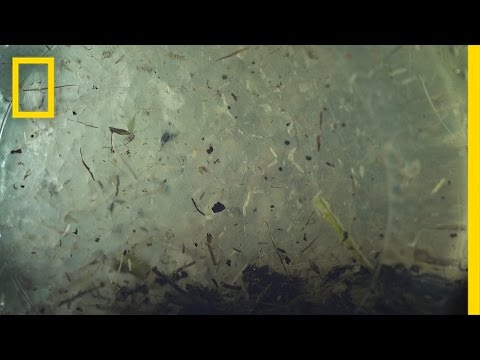
reflecting the sample is blazing a manta
trawl it’s basically a big metal box
with wings it looks like a manta ray
with a very long about 12-foot mesh net
off the back one two three at the end is
a piece we can take off that has
collected all of the solids rinse it all
out filter it through another strainer
and then put it into a jar it’s caught a
lot of other stuff you want to take a
look at one for rinsing out of the
screen it’s more tiny plastic what we’re
concerned about ultimately is what are
the implications of trash going into the
water getting into the food we harvest
and we’re still connecting the dots
they’re a bit we know that lots of trash
goes out into the water we know that the
Sun and waves breaks it down into small
pieces we know that many many many
species of animals eat it and we also
know that bigger animals eat smaller
animals and we also know that we those
big trophy fish and so what we’re really
trying to figure out is how big a vector
plastic is for transporting chemicals
into the tissues of the animals that we
eat every day
that’s a big problem much bigger than
big chunks floating out into the ocean
we don’t know exactly what that plastic
is we don’t know where exactly it’s
coming from and if we’re trying to find
policy and educational solutions to it
we need to know what we’re targeting we
can’t just ban plastic that’s not going
to work
what kind of plastic is it and what’s
the best policy route to reduce it is it
a ban is it a fee is it market change is
it education and behavior change work
what’s the best way to tackle it and
until we know exactly what we’re dealing
with we’re not going to be able to
design the right programs to address it
Please follow and like us: