
JK Rowling didn’t use calculus
Potter and not everybody needs to know
the quadratic formula or Newton’s laws
of motion in order to make money so why
do we learn it anyways well to begin
let’s start with a bit of history who
here has heard of the McDonald’s quarter
pounder with cheese yeah basically none
of you well it existed back in the 1980s
and it was a pretty successful burger
however another fast food brand and W
wanted to compete with this burger and
they tried to be clever their strategy
make the exact same burger just make it
a little bit bigger they increase the
patty sighs from one-fourth to one-third
which seems like a better deal but this
backfired and people still went to
McDonald’s but it wasn’t because
McDonald’s puts toys in the kids meals
it wasn’t because the mcdonalds burger
was tastier either in fact blind taste
tests showed that more people actually
preferred the A&W burger over the
mcdonalds burger the reason is that over
fifty percent of the people surveyed
believed that one-fourth is greater than
one-third therefore making McDonald’s
seem like it was the better deal I mean
next we could be having the McDonald’s
fifth pound burger but let’s be real
here the lesson is to not pick a fight
with McDonald’s now this is not the only
case in history where our knowledge of
math has failed us even NASA is not
immune from these types of errors in
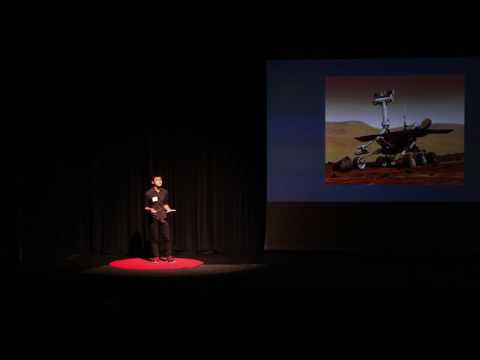
1998 NASA was undertaking one of its
missions to Mars the Mars climate
orbiter and one of the teams that was
working on the project did all of their
calculations in feet and pounds the
other team used the metrics
them and to nobody’s surprise the
orbiter crashed I think that’s really
big incentive for us Americans to switch
over to the metric system already now as
we can see math and science teaches us
some pretty important basic skills
skills that we cannot live our lives
without they teach us how to reason and
think logically and carefully we use
these skills every day to make rational
decisions whether we’re trying to decide
which burgers the best view or we’re
solving a difficult engineering problem
our lives depend on how we think and how
we reason and learning math and science
is one of the best ways to do so however
there is a more philosophical reason for
why we learn math and science and the
benefits go far deeper than everyday
arithmetic or problem solving it has to
do with how we deal with knowledge let’s
look at an example now in 1905 there was
a little-known patent clerk in
Switzerland he had messy hair and a
small mustache he failed some of his
classes and he was a daydreamer I mean
that pretty much describes what my first
year of college is going to look like
next year but little did he know his
work would lay the foundation for all of
modern physics and his name was Albert
Einstein now there was an unusual
problem that puzzled Einstein and the
problem is that the speed of light is
measured to be the same no matter who is
measuring it and this puzzled many
physicists because it means that if you
ran with the flashlight you would be
breaking the laws of physics and that is
because if I were running with a
flashlight I would see that the light is
traveling a certain distance but to
somebody in the audience that distance
would be measured differently because
the person in the
audience isn’t moving so how can it be
that two people measure different
distances and yet get the same speed and
yet there have been numerous experiments
done on this very phenomenon and they
have all proven that this fact is true
whether we like it or not so how did
Einstein solve this problem well he kept
thinking and thinking and thinking and
he realized that he had to break away
from what he and the scientific
community already knew about the nature
of space and time until one day when
Albert Einstein was sitting on a bus he
glanced up at a clock tower and as the
bus started moving he imagined the hands
of the clock slowing down as if time
itself was ticking slower and yet when
he looked at his own watch he saw that
it was moving just normally now that’s
what I usually see when I’m late for
school but for Einstein this was the
most profound revelation in all of
modern physics because to him it meant
that in the case of running with the
flashlight just because the distance is
measured aren’t the same that doesn’t
mean that times have to be the same
either and with this simple fact
Einstein proved that space and time are
not absolute but rather they are
experienced differently depending on
your frame of reference he showed us
that space and time can twist and Bend
like a fabric the fabric of space-time
he showed us that as we move faster and
faster through space time dilates and
length contracts but the only constant
in both of these cases is the speed of
light now this is the way that
scientists think it is the way that
scientists break down problems and find
beautiful solutions
the endeavor of science involves
constant questioning and the challenging
of our preconceived knowledge now I’m
not saying that if we all think like
this we’ll be able to unravel the
mysteries of quantum mechanics just by
looking at a clock but what I’m trying
to say is that what we learn in math and
science we can apply to our own lives
and find beautiful solutions to our
problems that is because math and
science is in just a study of how the
world works it is a methodology it is a
philosophy for how we should deal with
knowledge because math and science
teaches us that human progress is made
by reconciling conflicting ideas it
teaches us to attack problems from every
angle and to use perspective to break
them down it teaches us the importance
of synthesizing ideas instead of
dismissing one or the other it teaches
us to expand our minds with imagination
and not let our preconceptions interfere
with our search for the objective truth
Carl Sagan once said that every kid is a
natural-born scientists every person is
filled with questions and to learn math
and science properly is to foster this
innate curiosity we were born to ask
questions and science is the art of
questioning we learn it to be more
open-minded and more insatiably
inquisitive to challenge our intuition
to expand our perspectives to use our
imagination and to keep asking questions
so that we can learn about more about
ourselves and about the world this is
why we learn math and science thank you
you [Applause]