
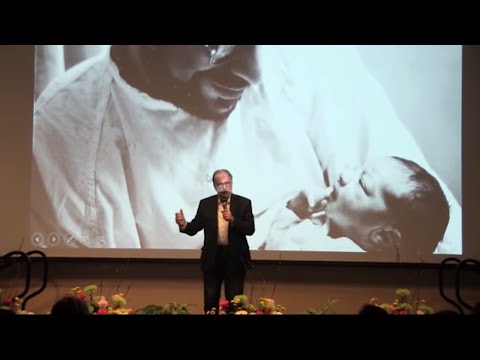
saying there was not a young father my
son my son to read is 37 years old
please go to any quick mass what I’ve
learned from him I’m going to try to put
into words about autism and what it
like most children with autism
he was seemingly normal at birth he was
meeting all of his developmental
milestones here he is making eye contact
at one-day-old what could be more normal
and those of you who are parents you
remember the first time you love your
child
and everybody else also just the magic
of holding a newborn it just opens your
heart to the miracle of new life he
wasn’t the son I expected he wasn’t the
son I dreamed for my hope is that he he
would be proud of the man and the father
I became in the process of raising him
it wasn’t easy
it was a long journey I’m going to give
you a short version of it and a longer
version of the lessons of the
universality of this experience of being
different of having a different kind of
with a different kind of child Wow
it’s just kind of that awesome moment
now he walked on time right on his
birthday that was pretty cool
they started talking then at 18 months
he stopped talking time stopped in that
moment time really stopped the train ran
off the tracks and ever since that day
I’ve been slowly and then sometimes more
quickly living and learning about autism
about what it means about what it is for
a given individual I’ve been reading
about it writing about it talking about
it counseling families children and
professionals teaching about it and I
never dreamed what my son without any
words could open and teach me here’s how
the incense of autism was five and ten
thousand in the mid-80s when he was
diagnosed today it’s 168 close to 2% if
this was an average group year there
would be two people with autism and
maybe there is we’ll see soon
maybe not but but we’re talking like
almost 2% of every birth in the
industrialized world which is all we can
measure turns out to have autism so he
never spoke again he never learned to
there’s a slide missing all right we’re
going to go on so so today is going to
show you a slide of him right and with
me but today I’d have to say you know he
lives in a group home outside
Philadelphia
he is happy most of the time and
severely autistic all of the time so so
that’s the Reader’s Digest version now I
want to ask you a few questions how many
here are family members of somebody with
autism could you just raise your hands
okay and that by that just just in case
parents grandparents cousins siblings
aunts uncles okay all right we got quite
a few and how many have some kind of
personal or professional connection to
someone with autism wow wow this is
great this is great and some of you have
both you’re like me a double agent foot
in each world you know and that’s a
pretty cool place to be all right now
here’s a little more how that journey
goes on the inside on the inside it’s a
transformational experience oh there it
is there it is there is now always happy
always autistic and quite handsome and
looking right at the camera okay a man
that there’s no eye contact there’s a
different kind of eye contact but the
myth that there’s none okay
so here’s some important things this
spectrum of autism from the mentally
gifted to the severely cognitively
disabled
and nonverbal has a lot to teach us
about our shared humanity but getting
there both for the individuals with
autism and for their family members is a
transformational experience it changes
us at the core it takes more out of you
than you knew you had and stuff you
didn’t know you have so before I go on
does anybody here have autism and is
comfortable to disclose ok then
presumably the rest of us or all of us
have been diagnosed normal I could did
it fear
your parents someone else so so this
condition of being human comes with it
with a certain amount of uniqueness and
this transformation they’re out of the
order okay sorry about that this
transformation is a process so let me
talk to you about it
I’m the grandchild of immigrants Arabic
and a town many of you are most probably
most of you are you know descended from
immigrants or you are immigrants and and
we have been taught like me and
conditioned that we can work hard to do
anything
it’s the American dream right it’s the
American dream but it wasn’t true this
time it wasn’t true and that was a rude
awakening so so one night
I’m writing in my journal I think my
son’s about eight at the time and I’m
kind of weepy and and I realized that
I’ve been trying so hard to change and
fix him but that he had changed me that
I had become and I was becoming a
different kind of man a different type
of father than I ever dreamed of and
that was the beginning of my road to
acceptance and awareness and ultimately
appreciation of the difference that
autism brings to the table but just like
the butterfly in that cocoon it took
everything I had
there was a grief like no other it felt
like a death but it wasn’t and that the
horrible so you grieve you moan you
complain you scream you cry and how long
does it take this morning for the
perfect child this morning of the death
of a dream it just takes as long as it
takes and that varies but eventually we
come through it we come through it
because we love our child as much as
life itself and it was spit was so hard
to comprehend that a little boy so cute
so he had something so perfect could
have a condition so invisible so life
defining that wasn’t easy to wrap my
head around I couldn’t get the a word
out of my mouth for a long time but when
I was writing in my journal that night
something loosened up and I could say he
has autism to myself and
and I can go on I’m okay because I
realized the breath was mine not his
he was okay he was okay and one of the
gifts that autism has brought me has
been the ability to put this into words
and because I can put it into words in
writing and out loud like this I got the
opportunity to travel around the country
and to some extent around the world and
recently I came back from a trip to Asia
in the Middle East and I can tell you
and every time I go it’s like this and
every time I go to California or Nevada
or you know Wyoming or you know wherever
parents are asking the same questions I
ask and professionals are asking the
same questions about how to understand
the parents and how to help them it goes
like this what caused this is there a
cure how severe is it will my child ever
talk will my child ever be independent
will my child ever have a relationship
will will how can I help my charge
that’s what the best actor how can we go
how can we make a difference so so
that’s we’re going to go now how we can
make a difference and find our common
humanity so so in a recent book pub
uniquely human berry croissant talks
about how there’s no such thing as
autistic behavior only human behavior
now the important thing here is that
this word autism often serves as a
barrier between us and individuals who
have this
and that barrier can separate us from
our common condition our common cause
our common dreams and hopes so so let me
take you through how we can break that
barrier down so we’ve got several
questions so anyone here do you ever go
to a sporting event jump it down scream
and cheer as your team hits a homerun
scores a goal wins game how many people
ever like go and really are really
enthusiastic fans and a sporting event
raise your hands
okay good thanks how many here ever
repeat yourself like to make sure you’re
being heard make sure people are getting
your point how many people here ever
repeat yourself wow that’s a lot okay
okay
you’re recognizing this that’s right so
how many people here ever don’t like the
labels on clothes but the way to have
certain fabrics with you
okay how about certain smells certain
smells like really Steve you you just
can’t stand it and I understand during
pregnancy this can be even worse even
worse but for people with autism it’s
24/7 how many people here have something
like really intense interest that
sometimes distracts you okay some people
have two hands up anybody
the one I’m on got you’re something
special you know then you realize people
that turn it off to your to your
conversation all right now if you raised
your hand for any of these any of these
at all raise your hand now Wow look
around the room just just check it out
are we all on testing I don’t think so
but some people get the diagnosis
because if you have enough of these
symptoms or trades of all trades and
they occur frequently enough that they
interfere with having a relatively
functional life then you need the
diagnosis you need the diagnosis in
order to understand yourself to
understand your child or your brother or
your sister and to get the kind of help
and education and treatment and
sometimes medication that you need to
live as fully as possible now while
there’s this great similarity let’s not
underestimate the difference because
this 1 to 2 percent of the population
has a much steeper road to travel so how
do we help the most important thing I
found is that learning to make a
difference is a huge step on the road to
acceptance so there’s a series of
questions or type of questions that I
ask people that helps them find their
way so I ask what’s the best thing about
your child or the teachers what’s the
best thing about your students or to
therapists you know your clients or
patients what’s the best thing what’s
what’s something your child did lately
that was really cool
what does your child enjoy and what do
you enjoy doing with your child and
sometimes people go ahead and answer
right away but when they start
they see that the road to acceptance and
to growth is to find connection in the
opens our minds and hearts connection in
the moment is what we all need that’s
what we all thrive kids with autism can
be harder to find connection with and
likewise teens and adults but in those
moments of connection the barriers come
down the barriers come down and we keep
then moving along step by step so loving
this child and dedicate it to this child
or or individual we keep moving one step
at a time and sometimes maybe milestones
aren’t the best concept it’s more like
an inch dongs and we need to celebrate
very little one because people with
autism just like everybody else
can live and learn through their whole
lifetime thingy energetic parents and
family they need evidence-based services
they need a supportive community at
anytime time a really important variable
in this whole mix right and that
celebration along the way we only that
we all need that so we have really
important things in common and important
so as we go along we’re always figuring
out what we can change and trying to get
out of this trap of trying to fix
everything and boy I’ve learned a lot
about that my wife and daughters have
took me to school about that they’ve
helped me understand feminism and
embrace it the biggest thing I had to do
was to shut up and listen
respect their power and get the hell out
of their way now that’s not a sweet good
man we show our love by trying to fix
things to make a difference but if we
learn to better listen we can actually
be better helpers and the women in our
life lives will let us know what we can
do to help if we listen closely so so
these are the important lessons and it’s
been years in the making and as I
traveled around the world in the country
people with different ethnicities people
of different color people who pray
differently people who dress differently
people who speak different languages
we’re all connected in a worldwide web
of children and families and yes social
media helps us you know kind of be there
you know and see this more and more and
the thought I want to leave you with
very relevant to the world we live in
and
relevant to autism and beyond is that
what’s really so important is to build
bridges not laws with the rest of the
[Applause]
you [Applause]