
my MA
as the elephant’s say I’m living in a
great way
[Music]
nothing but I watch it like a heart and
I’m doing okay
believe it in a great way something
oh I’m the Sun in the sky
[Music]
a million dollars as long as I gots to
set my finger got to rhythm in my bar
the devil to pay in a great way well
we’re a little out of breath but I’d
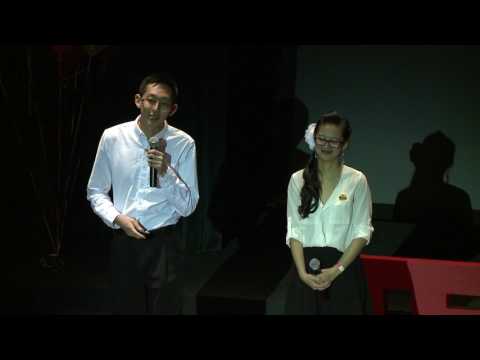
like to introduce ourselves hi everyone
I’m Sam and I’m Calvin
we’re Lindy hoppers or swing dancers
that means we do a dance called Lindy
Hop Lindy Hop is a social dance they
evolved in the 1920s and 30s alongside
the evolution of jazz music and while
this dance saw a major decline around
World War two it was brought back around
the 1980s with a huge swing dancing
revival and thinks important figures
like Frankie Manning here we are today
with the dance very much alive in fact
here in the Bay Area
you can go dancing almost any night of
the week and walk into a room full of
people all you know may be close friends
with each other
maybe strangers and they’re all dancing
together and eager to dance with you
we’re not experts at the dance
we’ve both been dancing for about four
years now but there’s one thing that’s
for sure and that’s we love this dance
we love the joy and exuberance that you
can feel dancing with someone totally in
Prague but feeling really inspired by
your partner and the best part is that
you get to share the same feeling and
sentiment over and over and over again
the entire night with a new partner and
a new dance and for this reason we love
the swing dancing community but with all
great communities there’s always room
for improvement
so today
Calvin and I want to share with you our
experience in trying to improve our
already great swing dancing community or
at least our little corner of it we want
to share with you our process for taking
and looking at our community asking
ourselves is this the ideal state that
we want it to be in and if not figuring
out ways in which we can improve on them
so Lindy Hop like most social dances has
a leader and a follower someone who
initiates movement and someone who
responds to those movements in that
dance that we just had I started as the
leader but halfway through we actually
switched so that I was following and Sam
was leading now that’s probably not
something that you see very often in
movies or in TV shows like Dancing with
the Stars it’s almost always a man
leading and a woman following but we
think that this seems to perpetuate a
very negative power dynamic one where
the man pulls and the woman Falls one
where the man asserts and the woman
reacts or one where the man makes the
decisions and the woman allows them to
happen to her what he says goes now
obviously Sam and I would love to see
you know more diversity in pop culture
media but let’s look at something a
little smaller in scale let’s look at
our swing dancing community so
historically when men left to fight in
World War two the women back home had to
learn to dance with other woman and and
sorry our pictures not showing oh here
it is and the men learned to dance with
other men and so woman leading and men
following wasn’t super
coming nowadays though at least from our
experiences we don’t see that many men
lead it dancing with other men or women
dancing with other women and we don’t
especially don’t see women leading men
we almost never see a reversal of the
power dynamic it still seems to be the
case that when one man and one woman
dance together it’s somehow more ideal
if the man is leading and the woman is
following and if you look off the social
dance floor and you look at competitions
and performances and choreographies you
know the videos that would probably end
up on YouTube that you all could watch
they seem to all be saying the same
exact thing and that’s swing dancing is
a man and a woman and the man leads and
the woman follows always but don’t get
us wrong let’s take a step back don’t
get us wrong we’re not trying to say
that we think that all men have to lead
and all women have to follow not at all
but we want to get to the real issue the
deeply rooted and in fact dangerous
issue the assumption that men must lead
and that women must follow and like with
all assumptions and values that you have
with you in a hobby such as swing
dancing they apply to the outside world
the your outside life as well so if we
don’t believe that men and women should
interact in this way in the rest of our
lives
then why is it that we’re cultivating
this idea in
side of our swing dancing community okay
so now we’ve kind of looked at our
community and we’ve seen that yes there
are things we can improve in it so now
one thing we can ask ourselves is kind
of how does this happen
kind of what forces are at work that
cause essentially all men to be leaders
and all women to be followers well let’s
start at the beginning
yeah so imagine that you’re learning to
swing dance by the way we hope this is
true after this talk that you do decide
to learn to sing dance but anyways
you’re learning to swing dance and you
go take your first class now in most
maybe not all but most Lindy Hop classes
you’ll only get to learn one roll so you
have to choose Sam and I have found that
in a lot of swing dancing classes there
are elements that kind of perpetuate a
gendered status quo you walk into the
class and all the teachers are always a
man leading and a woman following maybe
the teachers start off the class by
saying let’s have everyone get into
pairs and then everyone kind of
automatically pairs up one man one woman
maybe the teachers use gendered pronouns
like she and him when they refer to
followers and leaders even something as
simple as splitting the class
geographically maybe the teachers say
something like let’s have all the
leaders stand behind me on this side of
the room and watch my footwork and let’s
have all the followers stay on that side
of the room behind sam and watch her
footwork well that can be a little bit
of a tough situation if you don’t want
to be say the one guy standing on that
side of the room surrounded by was
otherwise all woman because maybe you
feel like that makes you stand out a
little too much or maybe because you’ll
feel awkward when someone you know and
the really helpful manner kind of taps
you on the shoulder and it’s like hey
buddy I think you’re on the wrong side
guys are on that side right it can be a
little scary already we know to learn to
dance going out there and learning to
dance that can be a little scary
and you know it’s scary enough without
having to challenge gender norms at the
same time and when you’re finished with
your classes it’s off to the social
dance floor but the social dance floor
and swing dancing is totally different
than say maybe homecoming or prom right
you don’t ask someone to be your date
for the entire night and you only dance
with that one person in swing dancing
social dancing means that you go to a
venue by yourself and then you get to
dance with lots of different people they
may be friends they may be acquaintances
but they could also be strangers so with
that in mind let’s get back to Calvin’s
scenario you’ve just finished your
classes and you’re super excited to get
to social dancing maybe a little nervous
you stand at the edge of the dance floor
waiting watching the other dancers and
hoping that someone will ask you to
dance and sure enough someone will
probably ask you to dance but it won’t
just be anyone if you’re a man women
will ask you to dance and furthermore
it’ll also assume that well you’re a man
so you must know how to lead right
and vice-versa if you’re a woman men
will ask you to dance and they’ll also
assume well you’re a woman you must know
how to follow and so
with that idea we’ve also applied that
to our experiences as well in our
experiences we found that people who
learn the role that quote unquote
doesn’t match their gender for example
if you’re a woman who learns how to lead
first you have a much harder time on the
social dance floor after all if you’re a
woman who only knows how to lead and men
keep coming up and asking you to dance
expecting you to follow well either you
get really lucky that that man also
knows how to follow or more likely and
more commonly you just you can’t dance
and so now we kind of have a coherent
explanation maybe for why when you watch
media of swing dancing you know
competitions and videos performances all
the men are leading and all the women
are following if you’re going to dance
in front of a crowd you know maybe in
front of a few cameras you probably want
to look good or you know maybe at least
look your best so you’re probably going
to dance in the role that you spend most
of your time in classes and in social
dancing doing right and well there you
have it from the classes to social
dancing – now performances and videos on
YouTube
we’ve analyzed and explained why dance
roles are so ingrained in gender so now
what well luckily we’re not the only
ones talking about this vlog city stomp
is a local event in San Francisco that
really makes it a point to be
progressive in what they do
for example they hire women in
underrepresented roles such as MCS and
DJs and musicians and they also enforce
that teachers don’t use gendered
pronouns when they’re teaching
they also help to promote a safe dance
space by having a very clear code of
conduct and even right here in Palo Alto
there’s a weekly swing dancing venue
called Wednesday night hop and it’s a
weekly venue that has classes and social
dancing every Wednesday night and
they’re also a force in which they’re
creating a progressive environment for
dancers here in the South Bay and what
about us well we are on the organizing
team of a new event called the switch
it’s a weekend long workshop being held
in San Francisco that’s focused on
breaking down gender norms we think that
this is an opportunity for us to kind of
address a lot of the you know coercive
forces and issues that we just described
for example we want to have classes in
which the teachers show that women can
be leaders and men can be followers in a
serious manner and we also want to offer
classes where people can learn both the
roles instead just one but we also want
to offer classes where people can choose
to learn one role but not have to worry
about feeling awkward about the world
that they chose chose and we also want
to have role markers these buttons that
say I know how to lead or I know how to
follow and you could even wear both at
the same time if you wanted to just so
gender isn’t the primary thing that we
use when we are trying to find someone
to dance with and we want to push the
word Amba dance trous kind of like
ambidextrous as a term that people who
dance both roles can identify with even
if they do one role better than the
other after all if a man takes one class
as a leader and you know everyone calls
him a leader then a woman who dances is
a follower for five years and then takes
one class as a leader it’s going to be
just as good a leader if not probably a
lot better and so we hope that this kind
of
helps to you know change our language
and separate and kind of decouple the
words leader from man and follower from
woman and for the switch what are we
really hoping for we’re hoping to create
a safe dance environment a safe dance
space and we want to promote these
thoughtful interactions between leaders
and followers and men and women but also
new dancers and experienced dancers and
these thoughtful interactions really are
not just about this small swing dancing
community that we have this really niche
thing that we do it’s about an attitude
that we can bring to the rest of our
lives because with the rest of our lives
it’s about all the things that we talked
about it’s about gender equality and
it’s about empowering both women and men
and it’s about shifting power dynamics
so that attitude that we can bring to
the rest of our lives is really what
we’re hoping for just in the same way
that we fight for gender equality in TV
and in film and in literature and many
other things we also fight for those
things and dance and we think it makes
the community stronger for it so
whatever community you’re part of
whether it’s a school club a workplace
maybe a group of friends we encourage
you to explore this process of
evaluating your community of kind of
looking at its flaws and understanding
why they’re there that way you can make
your little corner of the world a better
place we hope to see you on the social dance floor sometime thank you