
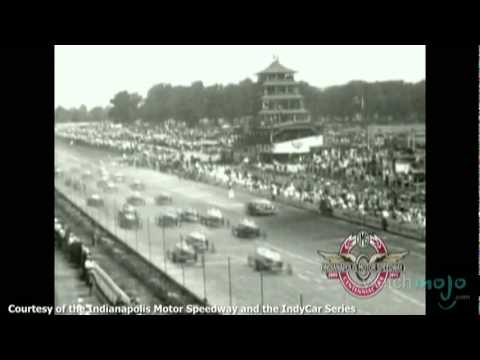
this race is called the greatest
spectacle in racing welcome to
watchmojo.com and today we’ll be
learning more about the Indianapolis 500
the history of the Indy 500 did not
start with the first race it began two
years earlier in 1909 with the
construction of the Indianapolis Motor
Speedway in Speedway Indiana as a
testing space for the local auto
industry amid an increase in interest in
auto racing founder Carl Fisher
suspected people would pay to watch
these cars being tested against each
other and the idea of the Indy 500 was
born races on this tar and gravel track
began attracting huge crowds
however after fatal accidents on the
speedway it was deemed too dangerous and
was paved with brick that’s why the
track was nicknamed the Brickyard
finally on May 30th 1911 the first
Indianapolis 500 was run with 80,000
spectators in attendance it has been
held almost every year since on Memorial
Day weekend the winner of the first Indy
500 was American Ray Haroon and he was
awarded a purse of $25,000 he and his
Marmon wasp finished with a time of
roughly 6 hours and 42 minutes and ran
an average speed of seventy four point
six miles per hour
his wasp was fitted with the first
rearview mirror in any motor vehicle by
October 1961 the entire track had been
paved over with asphalt as a tribute to
the Brickyard nicknamed three-foot wide
strips of the original brick were left
at both the start and the finish lines a
tradition was then started by NASCAR
champ Dale Jarrett visitors and drivers
now kiss the bricks to pay homage to the
history of the speedway in fact this is
one sporting event that’s big on
tradition since 1936 successful drivers
are awarded the coveted BorgWarner
trophy in the winner’s circle another
custom that has been carried on since
1956
is for the winners of the Indy 500 to
drink milk in victory lane a number of
popular names have participated in these
Indy Kustoms throughout the years these
include Mario Andretti AJ Foyt Al Unser
Juan Pablo
toya and Helio Castroneves however women
haven’t been left out of the fun at Indy
the first woman to compete was Janet
Guthrie in 1977 and over the years
others have followed suit with Danica
Patrick becoming one of the most
recognized faces in the sport something
that has remained relatively unchanged
is the track the Indianapolis Motor
Speedway is 2.5 miles long and features
two straightaways each measuring five
eighths of a mile long as well as two
shorter straightaways at an eighth of a
mile each there are also four quarter
mile turns that are all banked at 9
degrees drivers must run the track 200
times to finish the race and when it was
conceived it was planned to last the
better part of seven hours however today
the race is finished well under the
three-hour mark with only a few
exceptions there has been a 33 car limit
on the race since the Indy 500 first
started the cars used have undergone
substantial changes engine size
authorized speeds and safety features
have all been altered today’s average
speed exceeds 160 miles per hour while
individual lap speeds can top 220 miles
per hour the prize money has grown
substantially as well
winners in the Centennial era took home
well over 1 million dollars while ray
Haroon net just over $14,000 in the
races inaugural year today with a
capacity of roughly 400,000 spectators
the Indy 500 is one of the world’s best
attended one-day sporting events as part
of the Triple Crown of motorsport it is
also one of the fastest and most popular
races for the most expensive cars in the
auto world
you
spectacle in racing welcome to
watchmojo.com and today we’ll be
learning more about the Indianapolis 500
the history of the Indy 500 did not
start with the first race it began two
years earlier in 1909 with the
construction of the Indianapolis Motor
Speedway in Speedway Indiana as a
testing space for the local auto
industry amid an increase in interest in
auto racing founder Carl Fisher
suspected people would pay to watch
these cars being tested against each
other and the idea of the Indy 500 was
born races on this tar and gravel track
began attracting huge crowds
however after fatal accidents on the
speedway it was deemed too dangerous and
was paved with brick that’s why the
track was nicknamed the Brickyard
finally on May 30th 1911 the first
Indianapolis 500 was run with 80,000
spectators in attendance it has been
held almost every year since on Memorial
Day weekend the winner of the first Indy
500 was American Ray Haroon and he was
awarded a purse of $25,000 he and his
Marmon wasp finished with a time of
roughly 6 hours and 42 minutes and ran
an average speed of seventy four point
six miles per hour
his wasp was fitted with the first
rearview mirror in any motor vehicle by
October 1961 the entire track had been
paved over with asphalt as a tribute to
the Brickyard nicknamed three-foot wide
strips of the original brick were left
at both the start and the finish lines a
tradition was then started by NASCAR
champ Dale Jarrett visitors and drivers
now kiss the bricks to pay homage to the
history of the speedway in fact this is
one sporting event that’s big on
tradition since 1936 successful drivers
are awarded the coveted BorgWarner
trophy in the winner’s circle another
custom that has been carried on since
1956
is for the winners of the Indy 500 to
drink milk in victory lane a number of
popular names have participated in these
Indy Kustoms throughout the years these
include Mario Andretti AJ Foyt Al Unser
Juan Pablo
toya and Helio Castroneves however women
haven’t been left out of the fun at Indy
the first woman to compete was Janet
Guthrie in 1977 and over the years
others have followed suit with Danica
Patrick becoming one of the most
recognized faces in the sport something
that has remained relatively unchanged
is the track the Indianapolis Motor
Speedway is 2.5 miles long and features
two straightaways each measuring five
eighths of a mile long as well as two
shorter straightaways at an eighth of a
mile each there are also four quarter
mile turns that are all banked at 9
degrees drivers must run the track 200
times to finish the race and when it was
conceived it was planned to last the
better part of seven hours however today
the race is finished well under the
three-hour mark with only a few
exceptions there has been a 33 car limit
on the race since the Indy 500 first
started the cars used have undergone
substantial changes engine size
authorized speeds and safety features
have all been altered today’s average
speed exceeds 160 miles per hour while
individual lap speeds can top 220 miles
per hour the prize money has grown
substantially as well
winners in the Centennial era took home
well over 1 million dollars while ray
Haroon net just over $14,000 in the
races inaugural year today with a
capacity of roughly 400,000 spectators
the Indy 500 is one of the world’s best
attended one-day sporting events as part
of the Triple Crown of motorsport it is
also one of the fastest and most popular
races for the most expensive cars in the
auto world
you
Please follow and like us: