
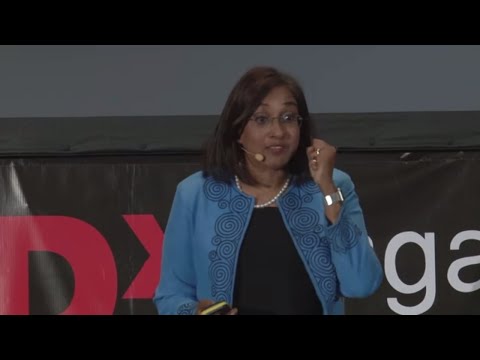
it’s Diwali or it’s we call it here
deepavali which means the festival of
lights it signifies the triumph of good
over evil of light over darkness and I
want to talk to you about a darkness
that covers almost half the world’s
population and that darkness is poverty
did you know that more than three
billion people list lived in less than
two dollars a day and they die of
malnutrition hunger and diseases that
can easily be cured it’s about time we
end hunger will live in an age of
abundance and it’s time for us to end
hunger now if i asked you to think of an
image of poverty I wonder will what will
come to your mind more likely than not
you probably would have imaged something
like this a woman sitting by the side of
the streets with her child and begging
out of desperation why because one out
of every seven women today live in
poverty that’s like look around the room
and count every seventh but person and
imagine that she lives at lesson without
dollars a day but why is this the case
because often these women are rural
women and deliv in areas where there’s
no roads no electricity no sanitation no
water and they are the bottom pyramid of
the society and they are the ones that
are made to go walk for half a day
collect water bring it back cook and
clean for the kids and many of them even
have to farm to bring subsistence living
so when opportunities do come to the
village like education these women are
forgotten they are invisible and they
get left behind and this phenomena is
called the feminization of poverty and
when I first heard about it I was
shocked to the core of my being and I
wanted to learn to how I can do
something about it the second question
I’m going to ask you to imagine is do
you think you are contributing in any
way to perpetuate poverty well when will
you walk into a store and you see
something on sale do you ask yourself I
wonder who made this or how was I able
to get it on a deal well think about it
most of not the not it’s done
factory this is actually a pretty nice
factory often it’s in a very dingy place
and the women don’t get paid enough to
even buy the clothes that they saw and
even the same goes for farmers the fast
food industry and the fast fashion
industry exploits the poor and brings
things to you so when you are not a
conscious consumer you are actually
perpetuating poverty think about it okay
why do I care so much of what poverty I
am actually of humble beginnings my
parents I was born and raised here in
Singapore but my parents left India to
make a better life for themselves they
came from humble beginnings themselves
in fact my mother is the daughter of a
rice farmer who wanted to see how
education could give her a better life
and we lived quite humbly we lived in a
home where we didn’t have any in
flushing toilets and luxuries like ice
cream was very rare for us and it could
to me that it had my parents not done
that I easily could have been one of
those women living in poverty today and
not standing here and talking at TEDx
thing for women my parents worked very
hard and made a lot of sacrifices and
enabled me to go overseas and studies I
studied in Geneva I went to Harvard
University I managed to work at the
United Nations I ran an e-learning
company traveled to about 47 countries
around the world and today I live
between Silicon Valley in Singapore so I
consider myself very fortunate that I
had the opportunity to do so and I feel
the need to pay it forward to do good to
others my parents also raised me that
way when we were living in Singapore
they made us celebrate our birthday in
orphanages so that we could see that
there were people who had less than what
we had and that instill something in me
now another reason why I care so much a
poverty is because in nine 2008 I ran
across a book by professor muhammad
yunus called creating a world without
poverty and that book changed my mind
about how I saw poverty because like
most of you I’m sure most of you think
that poverty is just a way of life it’s
there there’s nothing we can do about it
and I used to think the same too but
when I read the book he said poverty is
man-made and if we did something about
it we can in fact end poverty he says
someday poverty will be in the museums
and our grandchildren will walk with us
look at the image of poverty
look us in the eye on say grandma did
you actually allow people to live in
such inhumane conditions and what did
you do to end poverty now that really
shook me to the core of my being I said
not only do I have to care about poverty
I need to do something to end poverty
and that began me on my journey he also
talked that we need to move beyond
charity because charity actually rubs
the dignity of the poor and it doesn’t
solve the problem it’s just a band-aid
solution we need to do more so most of
you know professor Yunus is very well
known for microcredit and he is the
father of microcredit for which he got
the Nobel Peace Prize and that idea has
spread all over the world I lived in
Indonesia for two and a half years and
you would see there that ninety-eight
percent of the business is actually
small and medium enterprises and a
majority of that are actually run by
women micro enterprises but then poverty
still persists so obviously there’s
something more that needs to be done you
can give money to the woman to have a
sewing machine and she can sew but she
needs to be able to sell she needs
access to markets she needs to know that
the quality is good enough so he also
went on to write another book called
social business it’s a model that he
came up with where you can have an
umbrella organization that helps the
training and influences the quality of
the education and the work for the women
to be able to do something meaningfully
for example Grameen Shakti is an
organization where women get trained to
be solar technicians and solar engineers
and they go out there and they actually
put solar on the rope so about 200,000
homes have been solarized because of
these women in Grameen Shakti and you
should see the look on their faces with
pride when they climbed up the roof and
they install the soul and they turn on
the light I did that and that made a lot
of sense to me because in 25 years I’d
been working on trying to bridge the
digital divide I realize you can’t
bridge the digital divide without
bridging the energy divided but it
wasn’t technology and it wasn’t just
money it was business models it’s very
expensive to do business in the last
mile but if you have a grassroots social
entrepreneur doing it the cost of
business goes down now if you donated
the solar panel today
they may not be able to do anything if
something went wrong but if they were
trained to maintain it then it’s a
successful model so that gave me hope
that wow they are models out there that
are beginning to end hunger and poverty
in this world but this other phenomena
that I saw which was really fascinating
is the movement of social enterprises as
well and what was fascinating was that
many of these social enterprises were
actually run by women there were women
helping women women helping the micro
enterprise women access markets get the
training know what the market needed and
that was really really fascinating and I
was very fortunate to know many of them
and I wanted to sell you the story of
one of them this is a lady her name is I
bedini yourself and she started a social
enterprise called toraja’ mellow which
is based in Indonesia and she works with
the weavers up in the rulers mountains
in Sulawesi called toraja’ beautiful
place but it’s very difficult to access
anything up there and she works with
them to bring them to global markets to
get them trained on the quality and also
what the market needs the funny thing
that I bedini is that when she started
to Raja mellow she was actually thinking
she was going to retire she had an
illustrious career in citibank she
worked in the woman’s world bank she was
even the secretary-general of the
commission against violence against
women so women issues very passion to
her she goes up to this beautiful
mountains to raja which is her husband’s
village and she sits there and she
begins to see all the things happening
around her she was shocked that families
were forced to send their young girls
overseas to work as migrant workers and
believe it or not some worked as sex
workers because they needed the income
to be able to survive this was a
community that used to make their money
from be weaving but weaving was no
longer respected so even in the
community they never wore weaving
anymore people considered it as rags but
more importantly they could not compete
with the cheap fabric that was coming in
from China so teeny would see these
young girls come back with unwanted
pregnancies many abused many sexually
molested and she wanted so much to save
those girls from having to
go overseas but she knew to do that she
needed to try to make weaving a way for
them to make the income again but to do
that she had to restore pride in waving
so what she did was she began to take
part in fashion shows bringing their
things in very contemporary clothings
she worked with the urban poor women to
make head to toe very innovative
products that she brought to market she
would find out what kind of threads and
colors people like bring it back to the
weavers and then bring the goods to the
market and true that slowly celebrities
began to one look at what she was doing
so President Obama’s sister who is
Indonesian when he was getting
inaugurated actually ordered clothing
from her the minister for trade in
industry would wear her clothing the US
ambassador’s wife would we had learned
and before you know it the villages were
like wow if President Obama’s sister
could wear it then surely I can wear it
too so before you know it they began to
wear their weaving again and when they
were the weaving the women could weave
and they could make an income so danny
has actually gone on to save the lives
of vehicles many more young girls today
are staying and learning how to weave
because it’s actually now prestigious
it’s actually one way for them to get to
Jakarta because Jakarta always has this
meet the weavers session they’re like oh
if I want to go to Jakarta I should
weave and she got families to stay
together and has really made a
significant impact but despite her
success can you imagine Indonesia has
250 million people and she’s impacting
1,000 weavers she wants to grow bigger
and help more people a lot of NGOs come
to head said please help us but to do
that she needs access to funding but
believe it or not what happens is that a
lot of the funding that is going towards
women in poverty today are stuck in
microfinance there is his unconscious
bias that small business run by a woman
big business run by a man and so women
have difficulty she has pitch I’ve seen
her pitch so many times and she can’t
get access to funding and that’s one of
the things I’m trying to help her with
and we find that even in developed
country in a place like Silicon Valley
one would think there must be a lot more
women accessing funds but even in a
place like Silicon Valley only seven
percent of women
get access to venture capital funds and
out of small business loans that are
given up only four percent go to women
so you can imagine for a developed
country woman educated having difficulty
what more from someone from the emerging
countries and I myself face that I used
to run an e-learning company way before
techno partnership with sexy in
Singapore and 96 I sold it in 2006 and
even though we had large customers like
Cisco we had difficulty raising funds as
well so this is something that I feel
very passionate about how can we ensure
that women can scale the good that they
are doing the other bottom line problem
that they have is that most companies
are only doing profit maximization
social enterprises are trying to do both
profit for in order for them to do more
good but doing good is very important to
them and in poverty as I told you
there’s no roads no electricity no you
know it’s really hard so the cost of
doing business is very high there so
it’s very hard for them to be able to
deal both and monitor group report
actually shows that impact investors
tend to shy away from poverty areas so
this is an example of some of the work
that Dini does for example on the
grassroots level communities that she
works with it takes us some times a day
and a half to get there it’s really
really difficult and when she’s there
she has to work with them about changing
the colors of the weaving because it
made out to be something they used to
using so just to talk them through
looking at white is something people
like now culturally maybe white was only
for funerals and they’re like why would
I want to weave and white so these
things take time and she works with the
community so social enterprises find
that to be equally important for on
their work so I asked myself ok what is
my response going to be to Professor
Yunus he said ok I need to be aware we
can end poverty but I needed to do
something right so I said ok what can I
do maybe I start by walking the talk
first let me take some of my money and
give it to her so that she can do good
but obviously I’m not a high net worth
individuals so I felt that’s not going
to be enough so I turned around and I
talked to my best friend and I said Sufi
you know I’m trying to do some good
would you join me and she immediately
said yes because it gave an option you
do good and she could actually tangibly
see the results of it so together with
our money we were able to help I bedini
set up a prototype workshop
upon which she was able to come up with
a new line took part in a fashion show
and she had an increase in sales now in
the meantime my farmers my student
Audrey was so inspired by the story but
she’s like I can’t give as much as you
gave but I can get a little I just got
married and I have all this money gifts
that people have given me why didn’t I
give a portion of it and by the way i’ll
turn around see my mother wants to join
me in her mother said yes now with that
small int contribution I bedini was able
to buy the raw material she needed to
fulfill a corporate order that was
coming in so small amounts making big
difference Audrey and I got so inspired
by the fact that people will in fact
jump on board and work together so we
started angels of impact we call it
angels of impact because we consider the
social entrepreneur the angel we
consider the conscious consumer the
angel and we consider the ink that
investors the angels as well and
fundamentally what we do is we focus on
profit poverty alleviation gender
equality and responsible production if
you buy a response Lee produced good
that is made by a poor women you have
basically killed three birds in one
stone so we’re very focused that way and
what we’ve done is with socialist
socialized this idea out to our trusted
networks and our response has been
really overwhelming people have been
coming out of the woodwork to say yes
I’ve been looking for something like
this and it’s been very very encouraging
we also help to take them to corporates
because corporates have been talking
about wanting to do shared valley but
they don’t know where to start they
don’t have anyone to do due diligence
for them so they come to us as a trusted
network and Facebook and LinkedIn and
Twitter have all purchased the social
enterprise products and goods and its
really really inspiring these are some
of the social enterprises have come on
the network an angel set of impact we’re
looking at how we can leverage
technology because Audrey and I are a
bit of geeks we like to see how
technology can help them scale we’re
experimenting with Bitcoin to reduce
transaction cause we’re looking at
blockchain to create in transparency and
together we feel we can make a
difference and if you think about this
quote from Richard Branson where he said
that the brands of the future that will
thrive are the ones with purpose beyond
profit and guess what this women
group of social enterprises are already
doing purpose beyond profit because they
truly care and we believe that what we
are starting here today is a movement of
people that can help change poverty so
I’m just going to end with giving you a
thought what exactly was the idea worth
sharing that I wanted to spread with you
it is time to see women as the solution
and it’s also time to see that we can in
fact end hunger it’s very important to
have some data in your mind stop seeing
women as invisible stop seeing women as
the one who only carries the water see
women as key to poverty reduction the
World Bank has shown that a statistics
the UNDP has shown that money in the
hands of the women can do a lot more
good for nutrition health and education
of the child and the family then the
same amount in the hands of a man so
when you take a woman out of poverty you
take the family and the community of the
poverty so that’s very inspiring now
comes to you what are you going to do to
take up professor Yunus this challenge
and help end poverty one start by
believing you can end poverty do not
accept the fact that poverty is a way of
life that’s the first thing you can do
secondly become a conscious consumer
just don’t walk in there and buy
anything ask yourself who made it how
was it made what was the supply chain
like when you do that you impact lives
and last but not least try and support
these amazing women entrepreneurs buy
from them invest in them and together we
can actually make a difference in the
spirit of Diwali let’s in fact shine the
spirit of light in the darkness of
poverty because together we can make a
difference and it’s about time we end
poverty so powerful indeed is the light
of unity that it can envelop the whole earth thank you