
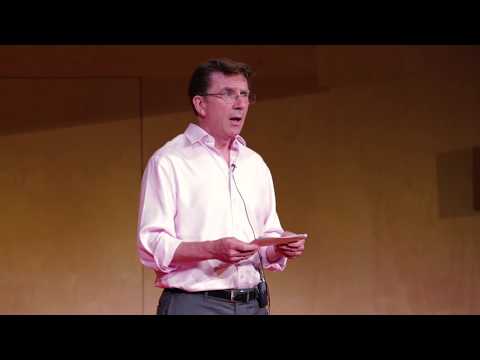
mr. Hill Jamie shame
ladies and gentlemen a lesser custom
sapin okay Becky Vash no general alladia
eat latech more dilute on and now I’ll
shift the language in which I’m more
comfortable well thank you very much for
your welcome today I’d like to explore
with you the rational and irrational in
the context of migration and diversity
topic which has been hot not just for
the last three years but being hot for
decades and indeed hundreds of years and
I’ve got news for you it’s going to
continue to be a hot topic for the next
few decades and probably a lot longer
and the irrational and the rational
clash on migration and diversity in a
way which happens with very few other
serious issues so why is that because
fearing Outsiders is one of our oldest
built-in psychological tendencies and
this is an issue which impacts on
millions of people and every year it’s
had a major political effect on this
continent since 2015 and the the large
influx of migrants into Europe then it
clearly had a psychological impact here
in Hungary on Hungarians and on this
country and it’s had a political impact
in the brexit referendum in the u.s.
presidential election and in the recent
German and Italian elections the
Financial Times chief foreign
correspondent gideon rahman recently
wrote that immigration arrivals
economics as the driving force in
Western politics and many people have
said in recent weeks is going to be a
key issue in next year’s European
parliamentary elections
yet it’s clear that this is an issue
where there is as much that is
irrational as there is that is rational
so where do we start time for a bit of
audience participation hands up if
you’re a migrant okay could see some of
us here so I’m gonna start in my journey
my journey as a migrant age six years
old I was born in Central Scotland I
could say that if I’m in Hungary Hungary
I can say Scott Abed York but when I say
that I know there are two meanings in
Hungarian yes one of them is correct the
other one’s totally wrong my father ran
a biscuit factory in Glasgow some of you
may have seen the biscuit chocolate
digestives McVitie’s that was his
biscuit and in 1965 the age of six he
was appointed to the headquarters of the
company in London and we moved from an
industrial town in Scotland to the leafy
suburbs of London it was a huge shock
and it had a profound effect on me now
some of you may say I’m not really a
migrant there is moved within the United
Kingdom but there are huge differences
between Scotland and England political
economic social cultural and those
differences were far greater in the
1960s than they are now my difference
was I had a very strong Scottish accent
in fact my accent was so strong that my
parents put me into elocution lessons to
weaken my Scottish accent it was the
subject of jokes and children make jokes
and make lots of them now then I did not
think in terms of rational and
irrational but I couldn’t understand why
my accent made me a victim if you like
in the playground purely because of my
Scottish nurse as a consequence and as a
reaction to that
I became consciously even more Scottish
I became a young patriotic Scot expat
holidays to Scotland compounded this
effect now in the same way you go to a
petrol station to fill up your car with
petrol I would go with my family to
Scotland at Easter in the summer maybe
Christmas and I would fill up with
things Scottish Scottish food Scottish
drink I hasten to add at age of six I
wasn’t drinking whiskey Scottish
football everything Scottish and as a
consequence I really became something if
you like of a Scottish nationalists now
looking back I think we can draw a
rational irrational lesson rationally I
should have integrated and to some
extent I did I was good at a game called
cricket which is as foreign to most
hungarians in this audience as it was to
Scots in the 1960s but irrationally I
took on this sort of nationalistic
attitude in a way as sort of a form of
resentment I come on to various aspects
of my Scottish identity for example my
nickname at school was jock now jock is
a stereotypical and sometimes derogatory
term the English use for Scottish people
I loved being called jock I relished
that so I can understand when some
migrants hold on to their original
identity rather than integrating and
frankly many of them have lots of a lot
stronger reasons than I had mine if you
like was an adolescent reaction I was
not the victim of full-on full-blooded
racism and yet here in 21st century
civilized Europe millions of people are
the victims of racism every day so it
was maybe not unnatural that many
migrants reject the societies and to
which they have they have arrived they
reject those values if they’re not made
to feel welcome because of the color of
their skin over which they have no
control or because of the religion that
they’ve been born into why should they
be positive but
how then do we describe the reaction of
people to migrants who they see is
different are their fears rational or
irrational we move on to 1974 Abba are
number one with the hit Waterloo I am 15
years old when my father retires and I
have a choice
stay in England and go to boarding
school or go home with my parents to
Scotland I hated the prospect of
boarding school I came from a large
family were a close family and I was
Scottish with the prospect of going home
to Scotland no-brainer I moved but again
I find myself to be a migrant I was at
school in Edinburgh and I was the
English boy this is rather ironic for
those of you who know Edinburgh
Edinburgh is probably the most English
city in the United Kingdom outside of
England English middle-class habits and
accents which could be slightly in
English but I was very much the outsider
I had come up from London now again you
could say that I was just migrating
within a country that these are
childhood experiences where the
irrational play and undue influence but
let’s just think about that babies are
not born racist Nelson Mandela said that
no one is born hating another person
because of the color of his or her skin
his or her background or his or her
religion people must learn to hate and
if they can learn to hate they can be
taught to love for love comes more
naturally to the human than the human
heart then the opposite children are not
naturally anti-semitic or anti-muslim by
the age of six to eight kids have learnt
to mirror parents attitudes the
attitudes of those around them their
prejudices their rational and irrational
fears
let’s fast-forward to 1980 Abbas hit now
is I have a dream and my dream had come
true I had dropped my Scottish
nationalism I had adopted if you like
British nationalism and I was about to
make my third migration internally
within the UK I was moving to London
because I joined the Foreign Office as a
young diplomat I was used to moving
that was a good news because in the 38
years since um I and my wife have moved
8 to 8 different countries they are if I
can remember Poland guitar Japan twice
Australia Romania Hong Kong Bahrain and
Hungary so when people talk about
migration about different cultures about
diversity I speak from experience in
virtually every place that I have lived
and worked migration diversity and
associated rational and irrational fears
have been an issue in one form or
another Japan like the United Kingdom an
offshore island off a continental
landmass unlike the UK a country which
traditionally had been inward-looking
with a strong suspicion of foreigners in
the 1990s one of the big issues in Japan
a country with a rapidly aging
population low birthrate even then was
the influx of Japanese Brazilians or
Brazilian Japanese who’d come to Japan
to do jobs that Japanese people wouldn’t
do largely hard jobs dirty jobs
dangerous jobs
the Japanese government believed that
Brazilians would be easily integrated
because of their Japanese background the
opposite was true because they were
treated as foreigners they were
discriminated against even children born
in Japan were discriminated against they
looked Japanese but they did not act
Japanese they also had a Brazilian
identity and this apparent contradiction
between being a nationality and seeing
seeming a nationality
conflicts of adaptation of acceptance in
many societies another good example
would be ethnic Germans from Russia who
have found it difficult to integrate in
Germany for me the Japanese example is a
clear one of the rational and the
irrational it was rational for the
Japanese government to encourage
Brazilians to come to their country
given the aging population and the given
that Japanese people were unwilling to
do many of the tasks which Brazilians
would do if there was an irrational fear
or rather if there was a rational fear
it was that these people would undercut
wages that’s an issue in the United
Kingdom to where in many of the low wage
industries there’s been concern that the
large influx of workers from Central and
Eastern Europe has brought down wages in
low-wage industries but in Japan it
wasn’t the rational fear that one over
it was the irrational fear that was the
more significant one these people didn’t
speak proper Japanese their families
their their parents their grandparents
had emigrated from Japan because of
largely economic reasons there was a
stigma associated to these grandkids
because of what their grandparents had
done in leaving Japan there was also
concerned that they would bring social
problems from Brazil by contrast
Australia where immigration was a
constant theme this is a country that
was built on migration the debate there
was largely rational as a country
Australia has always needed migrants to
grow it is poorly got one of the world’s
best managed migration programs and my
experience of Australia of a
multicultural Australia was very
positive as indeed was my experience of
Canada and the u.s. when I went there
during school student summer holidays as
is my experience of my own country at
the UK which brings me to diversity and
the rational and irrational perspective
there my own experience of travelling
around the world for the last 40 years
or so is that diversity is fundamentally
and rationally a good thing it brings
creativity and innovation it brings
growth as society’s benefit from
diversity diversity of thought diversity
of background I have certainly felt
enriched by that experience it has
opened up my mind in a way that I could
never have imagined and back in 1980 I
think I’m more respectful of other
cultures and of other norms a practical
benefit I think it’s enabled me to build
rapport with people from hugely diverse
societies from Australia to Bahrain from
Japan to Hungary but I can understand
that some people feel that diversity
threatens their way of life their
culture their language I can
particularly understand if people feel
that they are disenfranchised in the
process of deciding how their society is
going to develop but to suggest that
diversity is in itself fundamentally and
basically wrong is I think an irrational
fear the fear of the other and coming
from the UK I find that hard to
understand the UK for nationalities
English Irish Scottish and Welsh diverse
but United as island nations we have had
to travel the world travel the Seas I’m
just reading a book that my son gave me
for Christmas about how the British
Empire was basically built on food with
fishermen from England traveling to
Greenland and to the the the great
fishing grounds off the east coast of
Canada in the 16th century our
connections around the ground the world
go back hundreds of years
yes colonies yes an empire as a result
of which we now have a common wealth of
53 nations who met in London in April
representing 2.4 billion people the
called Anglosphere as a result of that
history we have a multicultural UK which
I’m hugely proud of I’m proud of the
fact that London the largest city in
Europe eight million people our capital
city 3 million of the 8 million were
born overseas they have brought with
them over 300 different languages so the
diversity of thought the diversity of
background has made London one of the
most diverse economically exciting
cities in the world and a message for
you is I do not believe that brexit is
going to change that the B word is now
out there the elephant in the room has
appeared and I’m going to talk about
brexit in a migration context the
migration factor now some of the
concerns expressed about migration
during the referendum campaign were
rational were real others were not the
rational fears were that with freedom of
movement of labour there was no control
over the number of people coming to our
by any standards small island and in
parts overcrowded the influx of people
and particularly since 2004 has had a
huge impact in some parts of the UK
particularly in the east of England
which had not previously seen migration
on the scale that we have seen since
2004 public services put under huge
pressure education schools hospitals
general practitioners in a way we were
unprepared you could say you only have
yourselves to blame this particularly
affected rural areas and towns in the
East of England there were real fears
but there was also an element of the
irrational fear of foreigners people
speaking on languages but here there are
ironies which reflect the rational
irrational dilemma Boston not
Massachusetts Boston Lincolnshire from
where the Pilgrim Fathers set sail to
massachu
in the 17th century Boston in
Lincolnshire was in the referendum the
most Pro brexit town 75% of people there
voted to leave the European Union I
don’t believe it’s a coincidence that
Boston has seen the largest increase in
EU migration of any town in the UK in
2001 one and a half percent of the
population of Boston were non British
now nearly 20% of the population under
20 years under two decades nearly 20%
come from the European Union
particularly from this region many from
Poland Lithuania now talking about
Poland I mentioned the start that was my
first posting I come from this town in
central Scotland which traditionally has
at a strong polish community I love
Poland
I love poles and let’s think about it
Paul’s European and Christian in largely
white British communities perfect
migrants you would think yet it’s clear
that many people in places like Boston
and elsewhere in the East of England
felt very unhappy at the way that their
communities had changed without as they
sought any say from them any input from
them as to how this would happen
and again reading articles looking at
newspaper stories people talking about
foreigners speaking their own languages
having their own shops there are
misconceptions about foreigners taking
jobs both unemployment so low in the UK
under 5% if there are no GU workers who
picks the crops a current issue of
concern to farmers who cares for the
sick in the hospitals and the elderly in
the care homes an issue of concern at
the moment the National Health Service
these are just two examples but there
are many more it was economically
rational to bring in workers where we
needed them they contribute wealth to
their community they contribute
diversity of thought or fresh ideas they
keep communities going so the local MP
for Boston has
pointed out that thanks to the influx of
migrants from Central and Eastern Europe
now that 40% of all births in Boston are
of children of to migrants the maternity
unit in the local hospital is now viable
the Catholic Church in England has had a
revival due to the influx of people from
this region so what do I conclude from
all this
there are rational fears about migration
diversity and multiculturalism
there are also irrational fears history
and common sense tell us that irrational
fears are dangerous if we ignore
rational fears if we do not lay people’s
concerns if we do not address their
concerns with rational argument people
turn to the irrational well why does
this matter because migration is going
to continue to be an issue for us in
this continent and why is that
why does migration still matter here
because our demographics are changing
low birth rates across the continent
people living longer by 2030 over a
quarter of the population of this
continent will be over the age of 65
some examples in Hungary Hungary
according to the UN is due to be 5
percent smaller in terms of population
by the year 2030 there are already labor
shortages here when Philip Hammond the
British Chancellor was here last
September he said that he thought the
biggest challenge for Europe in the
2020s would be competition for labour
ageing populations are a threat to
economies and societies because of the
increasing costs of pensions and of
health care but a smaller working
population smaller amounts of money
coming in from taxpayers between
government finances public finances
under pressure leading to debt and that
issue is compounded by population
movement within Europe in my view it is
highly unlikely in a Europe of
freedom of movement of labor with higher
wages in the West and with a consequent
movement of people particularly young
people from east to west I think it’s
highly unlikely that population growth
alone can solve longer long-term
demographic problems and challenges
which is why the British government my
government supports managed migration
safe orderly and regular migration which
is why you citizens matter to us which
is why I’m happy that one of the first
things that we did agree upon in the
brexit negotiations was on the rights of
European Union citizens in the UK and
British citizens in the European Union
people do not need to leave when we
leave the European Union people matter
to us migration matters to us will
continue to need migrants but to
conclude the debate about migration and
diversity has to be a rational debate
because frankly if it’s an irrational
debate we’re all lost thank you [Applause]
Please follow and like us: