
greetings and good day to all of you it
is a pleasure to be here today to speak
about the role of culture in a just
society night before that thank you so
much for the tedx so may have Delia for
inviting me here and I consider it as
honor to address you well when we talk
about culture and also relating that to
India we see a very grand picture in
front of us there are many many the
history of India for example I mean the
recorded history of India goes back to
more than 4,000 years there is a complex
web of ideas institutions there is a
complex web of I have many many many
philosophies that have turned out in
India many religions performances so
everything all this makes up the count
the the idea of culture in that sense
but I would like to take I mean that is
culture with a big capital C I’d like to
come down to our level and see what is
culture about it just look at this
audience for example you come from
different social backgrounds you speak
different languages you perhaps see the
same movies and perhaps the same music
perhaps but at home it is different the
language that you speak the lullabies
that you may have heard or perhaps even
the Proverbs that your mother or father
may have taught you are very different
so diversity is perhaps what we are all
about we are as diverse as it gets we
have many many ideas we are shaped by
culture we are bound by culture each and
every idea of us is also comes from
within so the composite of all that is
what I think we would call as culture
and that has a different take on
different people and that is what
impacts us in our behavior our daily
life are our respect towards the other
person everything so we have we are
governed by culture at all levels so
this is the basic premise that I’d like
to start with I have been I’m part now
associated with a help
project a console project called the
Encyclopedia of Indian arts and culture
called Sahab media saha is a word in
Sanskrit that means to be together to be
bound together to work together with so
to that extent Sahar pedia is an open
online encyclopedia on the arts cultures
and heritage of India open in the sense
that it interacts with people experts or
anybody with any any idea about arts and
culture who have an expertise we ask
them to contribute if what they know
towards this platform it is a web
because it’s an online encyclopedia and
not like a print encyclopedia there is
much more flexibility to what we can do
what we can get into this platform so we
ask people either with written knowledge
or with other kinds of knowledge for
example a terracotta person a painter
who may have not published an article or
written a book but has a core core
contribution to make in his or her field
so if he asked such people to contribute
to us not just in terms of articles of
books because they’re they’re also very
important articles and books they can
also contribute in terms of photographs
in terms of audio video content in terms
of maps or even a recorded interview
anything that they have an archival
material so that comes to the to the
platform and we want to make it as
accessible to everybody as possible so
this is one of the biggest challenges
and biggest contribution that saha pedia
makes for that makes for India and
perhaps I mean this is what even for a
globalized India for anyone the
information and access to access to
different kinds of heritage now just
look at the the the diverse cultural
complex that is India there are so many
traditions so many types of literature
for example there is literature there is
philosophy there is what we call as of
our contribution this is India as a
cultural superpower of contribution to
mathematics to astronomy astrology
to the different scientific fields
greatly to medical heritage we talk
about iron whether we talk about yoga so
it is well and it’s an endless it is a
very very what we talked about all we
are all that we do have all that we have
to take pride and all that but it is not
what we are but how we take it to the
next generation how we make it more
meaningful to the next generation is
what matters and this is I think where
the power of culture is in for a just
society how to make it more democratic
how to make it more accessible to all
people and not just make it the preserve
of a few is the challenge that we have
taken up and we hope that each step
towards that is one is one success story
for us this is how we want to operate
actually we know that we are a small
small institution we cannot do
everything together there are many many
institutions who have acquired core
knowledge in all these things so we
alive with institutions we contact
institutions who have archives and ask
them to share this material we also
contact experts of different domains
different even small small areas of
scholarship and we ask them to
contribute not like I said not just as
articles but in different kinds of
materials so this is perhaps a big
advantage that we open it out to the
world and we also share it asmath take
it as it comes and every material that
is in Sahar pedia is not copyrighted it
can be accessed as freely as anybody can
so this is the core idea and I in on
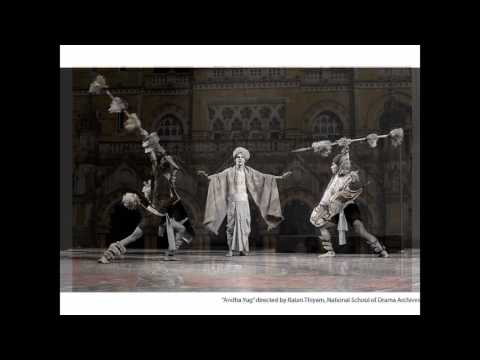
this context i’d like to show you some
images of what we have gathered is very
little compared to what we have gathered
but then it will show you a small
example of how we have been going about
it these are just still images we do
have documented material audio video we
have maps we have many other kinds of
material also but this I’d like to show
it to you for now it is a self
so that’s it it’s a selection from what
we have what I wanted to make the point
is that the ambit of what we call
culture is very wide and and also the
richness is it is this goes beyond our
definitions of what we think of as
definitions of culture it has so many
domains it has the four wat and we also
don’t want to make a distinction between
what is classical and what is folk I
mean there is this a 2 n’s or perhaps
the same same thread of the same
spectrum this is what we wanted to show
in all these pictures the thing is that
for example let us take the example of
dance dance as a professor maybe
performance as we know humans performed
all right from ever up from right from
the beginning of history they performed
for example this way to the wind they
imitated the movements and the sounds of
da of the moments of of the nature and
also imitated the sounds of animals and
birds and all that so there is a long
history of dance that we have as it
evolved when during the agricultural
practices for example men and women
worshipped nature for different for
different forces of nature for the ends
for example to have a good harvest or to
propitiate some elements of our wadding
of the evil for warding off diseases so
this became a community engagement dance
slowly as it happened as it turned out
as it evolved it became more more than a
communal active community activity it
became more of a personal activity for
example the people hi people of high
society the Royals or the elite began to
patronize arts so perhaps the emphasis
at this point shifter from the dance to
the dancer and people started honing
their skills the the artists started
honing their skills to suit a big
audience saying that I mean and so they
stopped and their skills and it became
more and more personalized in that sense
and he statics also did many kinds of
theories of aesthetics also developed by
and by so in a way if I take an example
from the form that i know and i have
studied kathakali the police have art
form that may have evolved sometime
around the 17th century
as an art form we call it a classical
dance um it is also described with one
of the classical dances of India but how
it evolved it has taken elements from a
very vibrant folk and existing other
traditions it has taken for example its
makeup from the theam from the folk
tradition of theam music from the
existing soap on a style of style of
singing and perhaps the vibrant facial
expressions and and and the and that
power from the the theatre form of
podium so innovate synthesized all these
elements and made it a much more
spectacular and a narrative kind of
dance so I am what I am saying is
everything has a works in a state of
complementarity and give and take and
there is nothing that is exist on its
own as classical so we don’t get into
that kind of the car of that kind of
divisions I would binaries I would say
now before this I was I had the
opportunity to work in the national
mission for manuscripts which actually
was a great experience for me because in
manuscripts is what we have all the
storehouse of knowledge that we call the
intellectual traditions of India
whatever I said about the mathematics
the there is no no knowledge that is not
that India did not produce right from
like I am very happy to say from
aesthetics to anesthetics to
shipbuilding to philosophy to even folk
wisdom everything is our ancestors
recorded in these manuscripts so it was
a great challenge to put them together
to serve a document to make a database
and two went to a give conservation
treatment to these manuscripts they are
available and we made a database of more
than 2 million that is 20 lakh
manuscripts and still there are more and
more and more manuscripts waiting to be
discovered waiting to be documented put
together so just imagine the challenge
these are written in languages i mean so
many languages and scripts in which
people don’t even many people don’t even
know how to read so it was again another
challenge to make people understand
scripts read these scripts so so many
levels we had to work but the problem
with this mission was that because it
was a public
a onde institution they were very few
they were constraints on how to give
without access was a problem though the
database was available for people to see
the digitized texts were not free for
all this was one of the one of the is
incentives for us to start creating this
aha pedia because we thought that if
this knowledge is are locked up in these
libraries and people are not able to use
them researchers are not able to use
them students are not able to use them
what is the point in claiming that these
are our great assets and the cultural
heritage so we the first principle that
we started out when we started with the
Sahaba days make knowledge free make
knowledge accessible to everybody
secondly go in for participation
participation of all kinds in the sense
i mean it can have any kind of
participation and if what we wanted to
avoid is monocultures of the mind we
cannot have a single mind we cannot have
a single-minded window it tells her hair
take diversity it has to take many
levels of engagement so this perhaps
goes for creation of a just society a
true society and in which everyone
enjoys the fruit of our culture or what
we call as our common culture or I will
put it in the in the plural as cultures
not just culture because cultures are
many even each of us have culture bv
bear with us our culture and we have a
special special feeling towards our
heritage and that is what we wanted to
foster through this now coming to say
happy day itself there are like I said
there are many institutions who engage
with our car there is ncpa for example
there is a national this is the National
Center for Performing Arts that is the
sangeet natak academy there are
universities slowly we are building up a
kind of corpus of a network of
institutions and the corpus of knowledge
ideas not in many ways I mean in
multiple ways for the engagement of all
and for the consumption of all this is
Evan this I think is a core of what I
wanted to say and I would like to end
this by citing MS Subbulakshmi
mellifluous music which many of you may
have heard it is when she
at the UN she is she is she sang it for
the UN during the UN General Assembly
years back but it is still I think I
think very very very resonant in all our
just called my dream vijetha my which
means that you practice friendship
towards everybody and also not have an
treat others as you would like to be
treated by by them to you so give
respect and then you expect that you
give or take respect from people so this
I think is perhaps the core and essence
of culture and what it can do to a just
society you bring you give equal status
to people you give respect to people you
take your respect so this is the essence
of what I wanted to say and what we
strive towards through so happy dia and
this is an invitation for everybody in
all of you here and also many other
people to come and join us in this
initiative and give us and support us in
creating this as a global platform on
India and India sculpture thank you so
much [Applause]