
Translator: Milena Tomol Reviewer: Denise RQ
When I realized the scope of the Panama Papers,
it was on April 3, 2016, at 7:48 pm.
I remember this so accurately
because it was the moment when I was sitting in the newsroom of my newspaper,
and Edward Snowden posted a tweet
12 minutes before the story of the Panama Papers
went live on our website
and on the websites of 107 publications in 78 countries.
A few minutes later, our service went down.
(Laughter)
He was a man who had single-highhandedly changed
the course of history in world politics
by uncovering one of the greatest wrongdoings of secret services ever;
a man whose leaks turned not only into media stories
but also into a Oscar-winning documentary and a movie by Oliver Stone.
He called the Panama Papers, “the biggest leak in the history of data journalism.”
Let me tell you: the rush of realization even overwhelmed our panic
that our digital outlet went black that moment.
And remember, this was not a simple scandal.
Offshore banking is a world-wide problem, and it’s very complicated.
It had never shown like that before.
The Panama Papers were not only the biggest data leak
in the history of journalism
they were also the beginning of a new phase of journalism.
With new digital tools and with a new approach,
journalism today can do things it couldn’t dream about before.
We always knew that a global world needs a global journalism.
We just did not know how to do that.
The good news is it can be done.
Let me show you a brief video we used to summarize this story.
You will see the new possibilities right away.
(Video starts)
[John Doe: Hello. This is John Doe. Interested in data?]
[Süddeutsche Zeitung: We’re very interested.]
[JD: There are a couple of conditions. My life is in danger.]
[We will only chat over encrypted files. No meeting, ever.]
[The choice of stories is obviously up to you.]
[SZ: Why are you doing this? [JD: I want to make these crimes public.”]
[SZ: How much data are we talking about?]
[JD: More than anything you have ever seen.]
[2.6 terabytes of data]
[11.5 million documents]
[214,000 letterbox companies]
[Panama Papers]
[The secrets of dirty money]
[Researched by Süddeutsche Zeitung, ICIJ]
(Video ends)
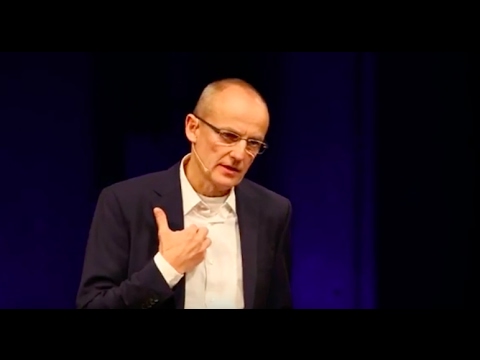
Wolfgang Krach: When I see this video, it always makes me remember
what a seemingly mundane event triggered the biggest story
in my professional life.
The thing is we get hundreds of tips and hints every day at the paper.
It’s hard to know which one could only make a great story,
or which one could make history.
When we agreed to look upon the data, we were first overwhelmed.
In the end, the Panama Papers amounted to 2.6 terabytes of data.
This is something we cannot imagine.
It means 11.5 million documents.
You will need some trucks to transport those.
Now it all fits on a hard disc.
This is where we all started.
We had to rethink our way to work from the ground up.
Normally, journalism is a very secretive business; for a reason.
You have to protect your source. You have to protect your material.
You have to protect your story.
In journalism, in most cases, sharing is not caring.
It means to lose your story to a competitor.
The first things, the first steps, we managed to do ourselves.
The Panama Papers came all from one place,
from the law firm Mossack Fonseca in Panama City.
The process of verifying all this material
is a bit complicated but manageable.
We cross-checked samples
with public records, with witness testimonials,
court files, with some material we had collected in the years before
because we had done a lot of coverage about offshore accounts.
There was also a much smaller batch of Panama Papers
that had been sold to German authorities a few months or years before.
This first batch had already brought on raids and investigations
of big, well-respected banks in Germany and other countries.
So we knew if the small batch had lead to lawsuits and millions in fines,
the huge one, the gigantic one we had in our hands,
might change the way money flows through the offshore industry.
But how do you sift through truckloads of documents
that affect the accounts of hundreds of people from all over the world?
We had to rethink our approach completely.
First, we had to outsource some work to machines.
For me as an editor, it’s still amazing,
and I have to remind myself in situations like this
it is equally important to understand we need data journalists in our staff.
These people can write something
that journalism courses do not teach up to now – algorithms.
These algorithms are like translators who make the data speak;
first to us and then, to our readers.
Without them, the information stays silent.
Let me give you an example:
we wanted to find out about Mossack Fonseca
and their involvement in two illegal activities.
One was illegal financing in politics.
The other was circumventing embargoes.
The first is a crime threatening democracy.
The latter is a way that makes
one of the most powerful non-violent forms of international action ineffective.
We used one list of illegal financing in politics that contained 130 names.
We also used another list that came from the United Nations
with people sanctioned by the world community.
If you want to find these people in 11.5 million documents,
it will take years.
Our algorithm did this within few minutes.
So, what now? We have names that are on both lists.
We know that there is very likely something fishy going on.
We do have very knowledgeable foreign editors in our newsroom,
but these editors are not that familiar with all the details
in all the countries that showed up in the documents.
So, we knew we needed help from abroad.
We had to rethink again.
Our conclusion was we had to share the material.
Luckily, Süddeutsche Zeitung is a member
of the International Consortium of Investigative Journalists -ICIJ -,
based in Washington, DC.
This is something
like the world league of journalists who dig out inconvenient truths.
Currently, the ICIJ has a membership of 165 journalists in 65 countries.
This is the brain power equivalent
of a network of mainframe computers distributed around the world.
So, we started to reach out. We started to share.
We started to think about ways
on how to distribute the findings around the world.
In the end,
more than 100 of news organizations and more than 400 journalists
worked on this story.
Never ever in the history of journalism did a project of that size take off.
In September 2015, we first came together in person.
More than 100 journalists from all over the world
came to Munich, came to our paper.
I remember this day quite well.
We are a big newsroom with more than 500 journalists.
And that day, our paper was flooded with people from abroad.
The colleagues would ask me,
“What the bloody hell are all these people doing in our house, in our newsroom?”
And at that time, in our newsroom, in our newspaper,
just five or six people knew about the whole project.
So, I tried to explain that we are trying new forms of international cooperation
or something like that.
(Laughter)
Of cause, many of our people knew from that day on
that there was something hidden from them.
But this meeting laid the cornerstone for our work.
Why could this cooperation work? Why was it so successful?
It was because we made a very simple agreement in Munich
consisting of four points.
Firstly, nobody was allowed to talk about the project,
which is extremely challenging for a journalist
because we love to talk about what we do,
we love to talk about what we believe to know,
especially to our friends and families.
Secondly, nobody was allowed to go first.
Thirdly, everybody had the same access to the documents.
Fourthly, everybody had to communicate encrypted.
And believe me, this is very challenging for journalists
because we are not used to that.
So, after the meeting we started to share.
It still amazes me till today
that nobody leaked a single word
on Panama Papers before April 3,
that nobody went first.
OK, one person did actually – Edward Snowden.
On April 3, 2016, at exactly 8 o’clock,
the Panama Papers went live.
The fallout was immense.
You might take this
as a hyperbole of a journalist who is talking about his own work.
But the Panama Papers were never about abstract money
or just some ethically dubious questions.
Let me say
the story of the Panama Papers is about your money, is about you.
Estimates vary, but it is safe to say
that there are about 30 trillion dollars hidden in offshore accounts.
That is almost twice the GDP of the US or the European Union.
All of this 30 trillion dollars that are hidden in the offshore accounts
are there for some reason, but not every time for shady reasons.
During our work, we made it very clear
that there can be also legal reasons to have money in an offshore account,
that not all the people who put their money there
are criminals or tax cheaters.
Still, if there are 30 trillion dollars away,
a large chunk of this would be for the public.
In countries like Ukraine or Egypt quite literally,
but even in a wealthy city like Munich,
you can see every day where this money could be put to use.
Although quite rich, Munich is not able to keep up with its growth.
Instead of school buildings, we set up containers.
There is an enormous lack of flats and apartments,
but we don’t have enough money for public housing.
And we have been discussing
– all the people who are from Munich know that –
for more than ten years, whether we can afford better public transport.
You see, offshore money is also about you.
Now imagine if you are a citizen of a country like Ukraine or Iceland.
Ukraine is dealing with a war.
Iceland was hit by a financial crisis a few years ago very dramatically.
There it isn’t just about nicer classrooms or better commuter trains,
it’s about the well-being of a whole country or the whole society.
The Panama Papers had enormous consequences.
In the past seven months, the story moved
from the headlines to the streets to the parliaments and to the courts.
There are currently legal and legislative actions
in more than 70 countries around the world.
Most importantly though, the law firm, Mossack Fonseca,
where all the materials came from, is in big trouble and struggling for survival
according to the Panama’s President, Juan Carlos Varela.
All this seems to be good news.
Offshore banking is considered as one of the biggest problems of today.
Awareness, traditionally, was not very high.
Nobody dies from offshore banking; at least not directly.
And it is very complicated.
Ask our social media editors when we have to tweet stories like that.
The even better news is what the Panama Papers did for journalism.
We entered a new era of investigative journalism
that can deal with the challenges of a globalized world.
Today’s problems are, you all know that, complicated.
You cannot report about many of them
with just a team of traditional investigative journalists.
But now, we have the tools to sift through mountains of data.
We have a network of colleagues from around the world
who are determined to find the truth.
For journalism, this was, hopefully, the beginning of a new time
when wrongdoings cannot be hidden away from the public any longer
because the public eye just went global.
Eight weeks ago, we continued our work:
we faced another mountain of data.
This time, it came from the Bahamas.
This time, we were prepared. This time, we had the algorithms in place.
This time, we had a global network of colleagues to help.
On September 2, the Bahamas Leaks were published.
These investigations are another chapter
in an ongoing story about how money is hidden away in far away places.
It is another step of journalism
that can tackle things that used to be out of reach
because we did not have the tools, we did not have the network.
In the end, it was more than just technical difficulties.
Before, we did not dare to take on global issues of this magnitude.
Now we do. This for me, is truly good news.
(Applause)
Please follow and like us: