
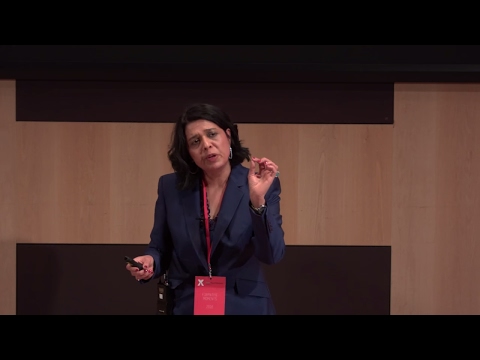
I’m a fertility consultant the founder
and medical director of create fertility
a group of IVF clinics that specialize
in natural and mild IVF that’s IVF
without any drugs or a very small amount
of drugs aimed at protecting women’s
health and safety in IVF treatment I
have dedicated my entire professional
career to helping women and men who
suffer from fertility problems but I’m
not here today to talk about IVF I’m
here today to talk about why and how we
need to educate the next generation so
that fewer people need fertility
treatment in the future I’m here today
to discuss how we can help girls and
boys avoid the emotional heartache and
the financial hardship that goes with
infertility and fertility treatment I’m
here today to argue why no one and
absolutely no one should be denied
unwillingly the formative moment of
becoming a parent formative moments
define our character define our actions
and eventually the course of our lives
they don’t have to be the game changers
that make us move the world most often
they can be those intangible slices of
life where we decide who we love what we
aspire to be in how we want to live our
lives to have a family or not to have a
family is an important part of that I
don’t want anyone to miss out if they
won’t have a family and I know how my
focus in life changed completely when I
became a mother and I’m going to share
with you some of the formative moments
of my own professional career what
changed my focus completely shifted it
from treatment of infertility to
prevention of infertility let me tell
you about Sarah
Sara came to see me around two years ago
she was 37 the only child of a parent
she had lost her father and she was
quite close to her mother Sarah was a
high flyer achieving her dreams breaking
the glass ceiling traveling the world
enjoying her job she had made an
appointment to see me urgently because
she had not had a period for eight
months she put that down to her work
schedule and international travel we
were chatting with a relaxed we were
smiling during consultation I didn’t add
some scan and I knew instantly he’d not
everything was right the black just
confirmed that Sarah had undergone early
menopause as a doctor you often have to
break bad news to patients and in my
case I often have to tell patients that
the treatment is not going to be
successful no matter what we try every
single time it’s heartbreaking and this
was no different
Sarah was devastated she said this car
this can’t be true
I’m really 37 years old what she said
next I can’t forget those words she said
I never fail at anything that I want in
my life you must have got it wrong I
said to Sarah Sarah do you know how old
was your mother when she had her
menopause she didn’t show in tears
Sarah picked up the phone and asked her
mother and her mother said she had
menopause at the age of 35 there was a
news say I had no idea that her mother’s
age of him menopause had an impact on
her and she didn’t know that my mother’s
age of menopause either Sarah thought
she could have children when she was
ready and her mother was gone wanted to
be a grandma girl and within that 30
minute appointment Tara’s life had
turned upside down her dreams and the
course for life had shifted
we gave her counseling gave her
aftercare Sarah is okay now but her life
is always going to be
different to what she had dreamed of
just that simple piece of information
her mother’s age of menopause would have
empower Sarah to make choices about her
fertility in her life her world stuck in
my head I never fail at anything I want
in life weeks went by I met Hannah in
one of my open days where she is a
successful City lawyer she stood up and
she said to me I know my egg reserve is
going to be good because I have been
taking the pill for 20 years and I’ve
saved up my eggs because I haven’t been
releasing them Hannah thought by not by
taking the pill she was saving up her
eggs and the decline in her account was
going to be prevented it was not just
unfortunate that they didn’t helpful
facts it was an outrage I said to myself
we had to stop we had to do something
about this and I decided to educate the
nation and I said it has got to start in
schools and I wrote today this works
Sarah came to see me around two years
ago I wrote to the education secretary
last year in June the media backed my
call for fertility education in schools
and I received a letter from the
Education Department saying that I
should go and meet the HEC teachers and
the local authorities I did that it was
not very easy to convince all
headteachers boys and girls schools but
I made the case as to why we need the
education and then of course I had to
make the case to parents and a lot of
parents initially thought I was or we
were going to tell their children to
abandon their careers and how babies and
that wasn’t the case and we convinced
them that the nuanced message the
balanced evidence-based message would be
to help them to manage the entire
reproductive life and to make informed
choices in their lives and the parents
agreed and guess
we launched fertility education in
secondary schools in a London School
this year in April it has been extremely
well received and I just want to take
you through those formative moments
about Sarah and Hannah and what I want
to do is to try and look at some
fertility facts and the differences
between men and women with some simple
information we know men and women are so
different when it comes to fertility
Nature has created a gender inequality
women we don’t make any eggs after we
are born okay we have our six to seven
million eggs before we are born and by
the time we are born we have got about a
million or two million left so you know
what we use around four to five million
eggs before we are born isn’t that
extraordinary and then we lose eggs we
lose around thousand x every month by
the time we get to thirty seven ninety
percent of our egg reserves have gone so
it’s not just the quantity of X that
goes down it is the quality of X that
goes down as our eggs get older and the
chromosome normality no eggs increases
whereas it’s different with men or
ovaries is a warehouse for eggs and
testes is a factory for sperm men are
constantly making sperm they may call to
around 200 to 300 million sperm per day
see the difference and we need to talk
about it because when it comes to
education all these fundamental facts
matter and so we talked about Sarah we
talked about Hannah and what is
important for us to how can we increase
the knowledge base there’s a huge gap
between what people know and what people
should know about fertility there isn’t
a week that goes by without fertility in
veneers you agree so it is constantly
there but sadly the facts are not always
correct and if we look at that just some
of the examples from recent months it is
not really that you get facts from the
media and we cannot rely on that and it
doesn’t mean media doesn’t do a good job
and they don’t give you there they have
huge influence and let me give you
full of a be 28 year old girl who came
to see me just a few months ago she had
seen me on television talking about
fertility education and she turned up
the week later because she had found out
from her mother that her mother had
menopause at the age of 31 and Abby was
28 she wasn’t ready to have a child she
hadn’t got a partner but she decided to
do something about it because she had
the knowledge so she came to consider
egg freezing egg freezing is no
guarantee but it is an option for women
who are not ready who would like to
preserve future fertility so we need to
do something about it and but let me be
clear
informing men and women about their
fertility is not going to address all
factors okay we know that women are
delaying having children and that delay
is because they are not ready most
common cause is absence of suitable
partner and then of course there are a
lot of women where they are pursuing
their careers they are not financially
ready they had they haven’t got a job
and sometimes partners are not ready a
lot of people said to me that I have a
distorted view about this because I work
in fertility that men and women are
clued up about fertility but the reality
is one in six couples in the UK have
fertility problems and they need medical
help to fall pregnant that’s around 3.5
million people in the UK and every year
there is less money for fertility
treatment from the NHS which means few
people get treatment and a lot of people
cannot get it on the NHS and that’s not
only unfair it’s unacceptable we cannot
take away that chance of trying from
people which is why prevention is
important and when we talk about
fertility of course I’ve just mentioned
about the rise of older mother ok and
it’s what just education
also equality matters because there are
a number of host of socio-economic
factors that are involved in this as to
why women are delaying having children
and so we not only need to address the
gender inequality but we also need to
address the causes of gender inequality
as a woman I have fought all my life for
gender equality and for the chance the
chances and the opportunities that I get
and to make the most of it and the most
one of the most powerful factors that
has been the cause of gender inequality
worldwide is lack of education and if we
educate our young people then they take
it to the workplace and they fight at
workplace where it is not current and
acknowledged about reproductive reality
and they are able to achieve that and
change that for us but then there are
people who will say there is IVF
yeah but IVF is not a solution IVF
doesn’t always work and IDF is not a
walk in the park it’s not a silver
bullet
IVF can be intensive IVF can be
expensive
IVF can be invasive we have of course
devised safer and healthier methods of
IVF despite that it can be stressful and
draining for women and couples and let
me tell you one of the formative moment
in my life as a trainee doctor I was
told about the death of a woman in her
twenties due to what is called ovarian
hyperstimulation syndrome a severe form
which means ovaries were over stimulated
during IVF treatment as a complication
of severe form a young healthy woman in
her 20s had died and that made me
dedicate my career in making natural or
IVF without drugs or IVF with few drugs
successful
that we can protect women’s health and
safety in IVF treatment so we just
cannot continue to rely on IVF
treatments so we do need to champion
education if we want to bring about
change for the next generation we do
need to champion that education and
increase that knowledge base and we do
need to do it formally because we cannot
rely on patch information from the media
or biology at the moment the lessons
where yes there are biological facts
about how everything is supposed to work
but it doesn’t tell you how to protect
your fertility on how to prevent
infertility which is the reason why I
feel so passionate that our young people
should be educated formally in schools
about fertility well we started
education this year and I can tell you
how overwhelming the response has been
the girls who have come along and asked
about their own fertility issues their
lifestyle issues and it has been
overwhelming I put some questions there
about that but what is important is also
to realize lifestyle factors affect
fertility in both men and women and we
discussed a lot about the effect of
being underweight being overweight
smoking sexually transmitted infections
all sorts of lifestyle factors that is
why we started it around the age of 15
and 16 which is when our young people
are making decisions about their
lifestyles and that is the optimal age
for us to help them decide on how they
want to choose their lifestyles in order
to protect their future fertility but
education works public health campaigns
work education is empowering we know
that from the education which is sex and
relationship education when it was
introduced to reduce teenage pregnancies
in the UK and clearly from introducing
sex and relationship education we have
significantly reduced teenage pregnancy
rates showing that it works but it can
take up to a
generation to bring about that change
which is why we need to do it now when
our young men and women are on the cusp
of their adulthood so that they can make
choices for the future and they can
choose their formative moments and so it
is time we shift the paradigm from
treatment of infertility to prevention
of infertility because it’s much needed
having a family of not is an important
decision what we don’t want is REM
people losing out on it because of lack
of education and also lack of funding
for treatment if they do need treatment
so what I would say to you is let’s
empower young people
I want the Sera’s of the future to have
both career and family she said I have
don’t fail at the things I want I don’t
want the Saira’s of the future to fail
at anything they want
I want our sons and daughters to be
formally educated about education in
schools I don’t want a ranked generation
to rely on peaceful piecemeal
information from the media or down the
pub I want those who need to consider
IVF to how the choices explain to them
the healthier choices in the safer
choices and what I would say is I want
the formative moment to be that the
girls and boys realize that they can
have it all if we take on the
responsibility and help them to flourish
in their lives knowledge is power and
let’s give it to them thank you [Applause]
Please follow and like us: