
I think there’s also a restlessness that
all really good entrepreneurs have and
it comes from curiosity because I
usually get asked the question you know
how to do succeed and I and I really
don’t feel like I’ve succeeded
entrepreneurs often fixate on one they
think their ideas the way it must be and
having a relationship with your audience
gives you the freedom not to worry about
all that other stuff are you trying to
change the world in some specific way to
solve a specific problem that sort of
arcs you team does not mean credibility
that’s a mistake
it was just trial by fire we were
learning everything as we went there are
a lot of entrepreneurs in the world
there aren’t that many serial
entrepreneurs that we actually got a
chance to work with so many different
types of cancerous and parasitic people
I think there’s a real sense amongst
tech entrepreneurs that we’re living in
a unique moment in history he’s an
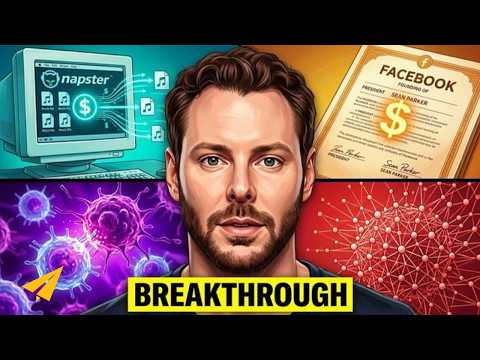
entrepreneur and philanthropist he
co-founded the file sharing service
Napster and was the first president of
Facebook as a 2015 his net worth was
estimated to be 2.5 billion dollars he’s
Sean Parker and here his top 10 rules
for success I think there’s also a
restlessness that all really good
entrepreneurs have and it comes from
curiosity wanting to understand the
world wanting to find some problem
that’s unique where you have a unique
solution to that problem and once you’ve
done it in one industry you’re going to
try to do it in other industries and
you’re gonna try to do it in areas that
maybe are unrelated to business like
philanthropy or politics or some of
these other places what you learn from
from starting so early and what have you
learned from your failures because I
mean oh the failures is kind of the only
way you really learn right mm-hmm
yeah I get I usually I this is the
correct way to ask the question because
I usually get asked the question you
know how did you succeed and I and I
really don’t feel like I’ve succeeded I
feel like I’ve sort of failed
systematically at least in terms of my
own goals and you know what I what I set
out to do but then somehow failure has
kind of you know
transformed into some weird kind of
success that I wasn’t that I wasn’t
really expecting I think of the idea
just as your approach to the market what
makes you different why you’re gonna win
and there’s an there’s a million
different correct answers to that
question
entrepreneurs often fixate on one they
think their ideas the way it must be
because you know one day they were I
don’t know what woke up from a dream and
they were reading a book on some
interesting topic and the idea came to
them and it and you know but they didn’t
consider all the other possible
different ways you could approach it so
I see a lot of companies that basically
have the same high level vision and take
a completely different approach and it’s
it’s like the it’s like the
practitioners of different religions
they can’t all be right about everything
so remaining open to a large number of
different possibilities I think is
important and being able to pivot if you
look at PayPal they changed their
business model six times before they
figured out that internet payments email
based internet payments on eBay was
actually the the correct model what I
got from what you just said was that
freedom is actually really important
freedom to focus on what are the things
that are important like creating good
art and writing a great book and having
a and having a relationship with your
audience gives you the freedom not to
worry about all that other stuff because
it’s so tempting once you start what you
get a good thing going to just sort of
get sucked into the system and kind of
mechanically go through the motions
that’s required to maintain your
audience and you know continue to sell
books and you can’t really caught up in
that Susan I think it I think it pulls
you away from the creative work not
someone who doesn’t build content or
make art I know this even as a business
person because I create companies and I
feel like I I’ve you know at times you
get pulled away from the creative work
of actually designing your product and
you get so caught up in all of that
other hoopla all of that buzz all of
that hype all the people and it becomes
a lot easier to sort of just coast so I
think that there’s two types of people
there’s always two types there’s two
types of people in terms of the way they
react to to wealth and I think some of
it has to do with your initial
motivations are you motive
did you know by simply making money
becoming wealthy status prestige or is
there some you are you trying to change
the world in some specific way to solve
a specific problem that sort of X you or
you know maybe it doesn’t bother you but
you see the problem in the world and you
you realize that it ought to be fixed
and so depending on where you start out
I think it affects kind of where you end
up and so I’ve seen I’ve seen I’ve seen
folks who make a billion dollars and
they say that’s it I’m done I’m getting
off this merry-go-round you know see you
guys later and then I’m going to the
beach or I’m going to help try to Africa
to save the world and then there’s the
there’s the people who see it as a
scorecard and they get trapped in this
like endless cycle of self rec room
where criminais Shin Hudson challenging
weirdest right scrabble word yeah so
they get trapped in this endless endless
cycle where they don’t feel like they’re
succeeding fast enough and now suddenly
they’re comparing themselves only to
other billionaires and they’re trying to
they’re worried about their position in
the Forbes list and they’ll never say it
publicly but you know you know that’s
privately it’s actually it’s it’s it’s
totally totally explicit like they’re
the conversations are about net worth
and the conversations are about you know
whose dick is bigger than then and
here’s so I think you can there’s just
different ways that people react to it
and I mean but personally I don’t I
don’t really fault see fault in either
way I don’t think it’s I don’t think
there’s anything inherently wrong with
seeing wealth as a scorecard and trying
to work your way up that scorecard as
long as you’re not hurting people on the
way up what are the three things you’re
looking on to know do you look at the
idea or do you look at the person hmm
well it’s almost a cliché but VCS talk
about team team team team team and team
does not mean credibility that’s a
mistake that’s a misconception team
means do we think this team can actually
execute the vision and do we think this
team can create a compelling vision
because oftentimes the VIS
that they initially present doesn’t end
up being mmm the business that they
create so is there someone on the team
who’s a visionary he was agile and
nimble and can come up with lots of
ideas is there someone on the team is a
great engineering leader who can recruit
a lot of engineers is there a great core
technologist who can build you know the
initial initial technology okay
he’s like a real hardcore developer is
there someone on the team who can watch
over the business do deals basically
relieve all the other people of that
burden of having to go and hire people
and deal with human resources and
operate the company and deal with legal
and so forth and in every company the
balance is different but you have to get
a complete team and so most of the
companies we see we don’t even get past
the first meeting because we Kiwi can
see so clearly that their team is
missing certain critical pieces in the
early days of Napster Shawn and I didn’t
we hadn’t developed the tools yet that
we would have needed to get to a
different outcome we were learning
everything as we went it was our first
company so we were learning about
corporate finance we were learning about
management we were learning about
intellectual property law we learned
more about intellectual property law
than we ever bargained to know than we
ever wanted to know it was just trial by
fire we were learning everything as we
went so we didn’t come to the experience
it was our first first time doing all of
these things so we didn’t come to the
experience knowing of the things we
needed to know in order to in order to
control the outcome we were we
essentially launched the product the
product changed very little over the
course of two years and we spent most of
that time just reacting to external
events so we couldn’t be proactive about
controlling the outcome we were only
able to react to the things that were
happening to us there are a lot of
entrepreneurs in the world there aren’t
that many serial entrepreneurs
entrepreneurs who have systematically
started many companies and I think you
know some of that is just that the the
the well first of all if you do very
well and you make a lot of money when
you look back on your experiences and
you know running a company or starting a
company and and
and there’s almost a kind of disbelief
in like how do i really go through that
i really deal with all of that pain and
headache and hassle and and intensity
and and that’s this is one of the
reasons why people who are founders are
often so bonded together like people who
have gone to war they they you know
they’ll never they’ll never they’ll
never forget those experiences but to
get up and do that again
over and over again knowing full well
each time exactly what you’re in what’s
in store for you I think that is that is
more rare and it definitely requires
that you’re not willing to rest on your
laurels I can’t sit back and say okay
well I founded a bunch of companies
they’ve they’ve been tremendously
successful
therefore all my companies are gonna be
successful I have to be as paranoid and
as and as edgy about each new company
although all the hiring that we did at
Napster in the early days was so bad
mm-hmm that we actually got a chance to
work with so many different types of
cancerous and parasitic people who were
all trying to extract value in their own
various manipulative and selfish ways
that we were able to put together almost
like a biological taxonomy of you know
crazy people yeah which is which has
been very helpful to me in the future
because now I can spot these people a
mile away and learning you know learning
how to separate the sort of wheat from
the shaft the hucksters from the from
the from the real deal is something that
every entrepreneur goes through at some
point because you bump into people who
have a big resume a fancy title a lot of
credibility but they ultimately don’t
have any clue what they’re doing and
they’re faking it to I think there’s a
real sense amongst tech entrepreneurs
that we’re living in a unique moment in
history and that because of
circumstances that were in some ways
beyond our control we’ve been able to do
extremely well and there’s a certain
sense of responsibility that comes along
with that a desire to try to give back
and I’m incredibly lucky and then I’ve
been able to be successful at a young
enough age that I can’t shift my 10
– trying to solve some these bigger
problems and to do it in a way that’s
fundamentally unselfish giving needs to
be a full-time job thank you guys so
much for watching I made this video
because Joel Nunez asked me to so if
there’s a famous entrepreneur that you
want me to profile next leave it in the
comments below and I’ll see what I can
do I’d also love to know which is Sean
Parker’s top ten rules hit you the
hardest is gonna have the biggest impact
on your business or your life leave it
in the comments or join the discussion
thank you guys so much for watching
continue to believe and I’ll see you
soon
Please follow and like us: