
filled with conversations of irritation
anger and fear about the year that we’ve
just had admittedly a lot of those
conversations are about celebrity
celebrity deaths well top of the fury it
celebrities leaving us before their time
there were more ominous conversations
happening across the country themes on
climate change on conflict on division
now personally I can’t remember a New
Year’s Eve that was this full of
resentment when year’s resolutions were
scattered among the wrong message of
fear it certainly seems as though our
fear of the future is growing I liken up
feeling to standing somewhere a little
bit like this but what are we on the
brink of that’s so scary feeling the
world is getting worse is actually
nothing you even has a few names decline
ism a negative bias to name a couple
since our fear about 2016 nothing more
than a wealthy comfortable world being
alarmist I’m give your social scientist
or consume to the future it’s not really
free to say but on top of the conflict
hatred and division last year there was
something else that was making us all
very uneasy and it’s the knowledge that
the physical world is predicted to come
a far more difficult place but what
exactly are we facing environmentally
it’s making it so afraid now climate
change dominates on use our politics
even responsible business
mataji that’s actually pretty good
reason because it is as scary as we’re
being here to believe this far from the
whole story unfortunately even only on
the topic of the environment we are also
talking about myriad of other problems
on top of climate change we’re looking
at deforestation pollution pollution of
our water pollution of our air pollution
even of our soils anywhere they are
using things and faster rate than they
are being formed or producing waste at a
greater rate that convenes all my planet
we’re causing ourselves problem we’re
not being sustainable you’re not being
smart and we’re not planning for the
future so let’s throw a second just
bring climate change back down the shelf
and throwing rising sea levels ocean
acidification and mass extinctions back
into the mix we end up with a picture
that’s quite bleak and one might not
really want to look at the scariest
thing for me about climate change is
that it will not affect everybody in the
same way those of us in the world who
are the most vulnerable will be the one
who will also the most vulnerable to
climate change while the wealth viewers
are the ones that are more likely to
divine thousands of people around the
world are living in conflict zones
without infrastructure and in poverty
there was a young scientist I started my
PhD in sustainable chemical technologies
I spend a lot of my time thinking about
climate change you should probably tell
and thinking about the future and modern
faced with the question however are we
meant to do this for moneys it’s
actually not far from my research
question so that’s one of the reasons I
think about it so much the team i made
happening with questions like what does
a hydrogen fuel economy look like we’re
trying to build large-scale long-term
computational models to answer some of
these questions
and to choose the technology that’s
going to see is through hopefully now if
you’re wondering whether we have the
technology to face all these
environmental problems the short answer
is yes we absolutely do the exact
technology to see is through may not
exist yet although some of it certainly
does but the ability to invent and to
overcome enormous scientific challenges
is one of our best features as a society
as a human race technology will not be
the limiting factor in what we can do in
the face of disaster so what will be a
limiting factor it’s us it’s people this
is a critical point in history for us
and one that connects us all because the
outcome will be on shared legacy but
what do we mean what we say people it’s
easy to think that we’re just talking
about consumer habits what kind of cars
with dr what decisions we made but
actually we are more than jeff’s on
consumer profile now as an audience your
teachers we are builders with scientists
politicians athletes artists there’s so
much more that we can do but if it is
down to utter the people i still have an
answer the question how on earth do we
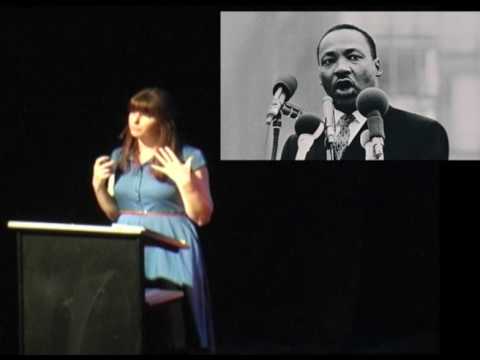
face disaster on the 20 August 1963
Martin Luther King delivered a speech
for words from that speech capture the
hearts of the people and they still
resonate through history with as much
force as the day they were first spoken
the words I have a dream now they have a
fear not we face a crisis I have a dream
I was true that most of our
communication our news our social media
much like those conversations on New
Year’s Eve i centered on fear or dread
on disaster I’ve been gives you about
myself already today and it’s the kind
of message
we’re beginning to become quite used to
something that I believe is sorely
missing from the conversation right now
about climate change and something that
I’m aspiring to inspire today is the
common thread of vision it’s time for us
to start imagining beyond the world we
want to avoid and start picturing the
world that we want to build via is only
going together so far figure is not as
creative as hope as determination
Norwich dreams but most of us concern
about climate change eventually turns
into apathy when we go home they’ll be
emerges as guilt and fear and then
apathy again but that’s the way we’re
designed as human beings if we maintain
a constant level of panic about every
distant threat we would never have
survived as a species let alone from
dinner what we are going to do is a
species is turn creativity and ambition
into astounding unprecedented results
the moon landings would never have
happened without an audacious amounts of
ambition and without a lot of
individuals sharing that our mission we
must demand more than the prevention of
the worst-case scenario the Apollo
mission was not defined by fear or by
negativity or by preventing negative
so what is that vision if I’m honest if
hard to say it’s probably harder to say
than sending somebody to the moon but I
do know that we must demand more and the
sustainability does not require and pain
you do to make sense so whether our
sense of dread this year was because of
a negativity bias or because we are
indeed on the edge of something
terrifying the solution is the same so
hopefully we face the dance though we do
with our mission we do with grapes and
we do with vision by grace because to me
the word raised
captures the integrity the compassion
and the care of thought is the best part
of the human spirit and is our best hope
for the future so rather than being
paralyzed by fear about climate change let’s build something