
hi my name is Cindy Manning and I am an
expedition leader with Lindblad
expeditions in the Galapagos Islands it
was an extraordinary event we had this
week the ship was anchored in Gardner
Bay the northern coastline of española
Island also known as Hood Island the
timing could not have been better it was
the right people at the right time with
the right equipment as we spend more
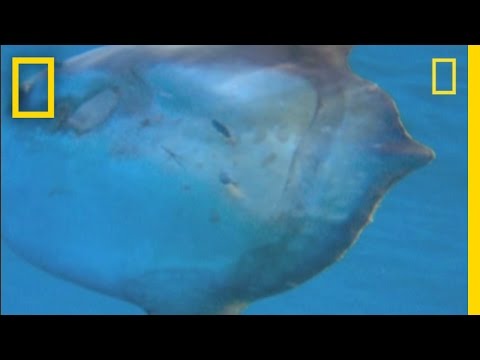
time with the fish we were able to look
at the anatomy with more care and
noticed that it started to look very
very different from what we were
familiar with in the West primarily the
tail the tail was had a point to it
which the sunfish were most familiar
with on the west coast of the mola mola
just has a very short tail all round
this one had a point to it it was
distinct the animal did not have the
spots that the Western mola mola had the
amazing thing that this is the first
sighting of this genus masterís in the
Galapagos and it’s only the perhaps
second or third in the entire East
Pacific when I first got news of this
sighting it was it was very exciting
this is a very rare species it has been
recorded in various ocean basins around
the world but the sightings are quite
rare to the best of my knowledge I had
never heard of this fish being sighted
in this region of the eastern Pacific it
was absolute excitement when the email
came through what this might mean is
when you have a new species appearing in
waters where it hasn’t been before that
is often indicative of a changing
environment and certainly we know that
the ocean is changing very rapidly due
to all our impacts so this could be an
indication of that with overfishing in
with pollutants we’re seeing a lot
larger numbers of jellyfish balloons
around the world and that happens to be
the primary diet of this fish that may
be an indication that
we’re getting some range extensions as
we alter the ocean it’s terribly
thrilling to be involved in the sighting
of a new species for the love of us it’s
not something you get to do every day
I’ve waited 23 years for this
you
expedition leader with Lindblad
expeditions in the Galapagos Islands it
was an extraordinary event we had this
week the ship was anchored in Gardner
Bay the northern coastline of española
Island also known as Hood Island the
timing could not have been better it was
the right people at the right time with
the right equipment as we spend more
time with the fish we were able to look
at the anatomy with more care and
noticed that it started to look very
very different from what we were
familiar with in the West primarily the
tail the tail was had a point to it
which the sunfish were most familiar
with on the west coast of the mola mola
just has a very short tail all round
this one had a point to it it was
distinct the animal did not have the
spots that the Western mola mola had the
amazing thing that this is the first
sighting of this genus masterís in the
Galapagos and it’s only the perhaps
second or third in the entire East
Pacific when I first got news of this
sighting it was it was very exciting
this is a very rare species it has been
recorded in various ocean basins around
the world but the sightings are quite
rare to the best of my knowledge I had
never heard of this fish being sighted
in this region of the eastern Pacific it
was absolute excitement when the email
came through what this might mean is
when you have a new species appearing in
waters where it hasn’t been before that
is often indicative of a changing
environment and certainly we know that
the ocean is changing very rapidly due
to all our impacts so this could be an
indication of that with overfishing in
with pollutants we’re seeing a lot
larger numbers of jellyfish balloons
around the world and that happens to be
the primary diet of this fish that may
be an indication that
we’re getting some range extensions as
we alter the ocean it’s terribly
thrilling to be involved in the sighting
of a new species for the love of us it’s
not something you get to do every day
I’ve waited 23 years for this
you
Please follow and like us: