
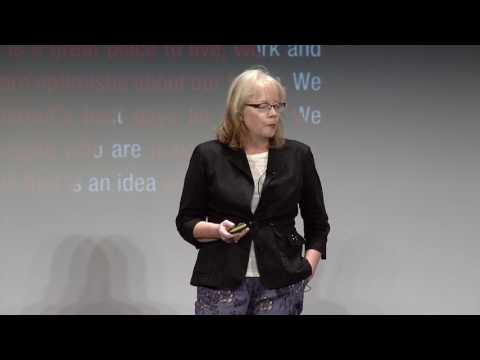
I’m dawn white I’m one of the founders
and the chief technology officer of Akio
Energy and I’m thrilled to be here to
talk to you today about what we’re doing
and how it’s going I’m especially
thrilled about our new direction in wind
energy because I hope they had the
chance to talk at the first TEDx Detroit
and that was 7 years ago 2009 and we
might not have been here today but
nearly everything we thought could
happen back then has happened and it’s
great to be able to talk about how we
got there and where we’re going next
back in 2007 we had this vision that you
could make wind energy far more
acceptable available and friendly by
making it silent stationary and not
endangering wildlife with it so we’re
working on a technology called EHD wind
energy which has no moving parts unlike
a turbine which has very high loads on
it so it needs expensive complex
machinery and you need a new system
every time you want to change the output
of it so you have low volumes with all
those expensive materials you have a lot
of cost and complexity
it’s like making airplanes it’s very
expensive
instead with electro hydrodynamic wind
energy you make a system that’s composed
of identical panels all those panels are
the same they’re made from ordinary
materials in very large volumes and
they’re made using the kind of
automotive heritage advanced
manufacturing technology we have in
plants all around our area using the
same facilities materials and people
that we use for automotive today so
besides making wind power friendlier and
more sustainable we actually can make it
cheaper and more available that way as
well and the other part of our mission
is really to create great jobs in
manufacturing here in Detroit southeast
Michigan all over our state and even
on the Midwest so how does that work
well the HT wind energy is based on a
different idea it’s a little bit like an
engineered thunderstorm we use wave
energy to pump water up our panel up the
pole to our panel and then that water
comes out as tiny little positively
charged droplets out of very small tubes
that are inside that system every time a
positively charged droplet leaves a lot
of electrons get left behind and if you
have billions and billions of droplets
leaving all those electrons behind the
very large electric field emerges that
the wind has to do a lot of work against
and it dries the system to high voltage
as it gets to high voltage you have the
opportunity to plug it into the grid and
create a wind energy high-voltage
direct-current generator out of it seems
easy but haha right sounds so easy but
no it’s actually like this for a long
time this technology was investigated in
the 60s and 70s people couldn’t make it
work and why was that well they had a
lack of insight you know droplets are
invisible charges are invisible electric
fields are invisible the wind is
invisible imagine in debugging an IC
engine in the late 19th century if
everything was clear it’d be a lot
harder right so we get that insight we
went to big models so that we have
better testing and those big models are
computer generated models you know
they’re computers back then you know
your iPhone has way more power in them
than a room size computer had back then
right and they had no visualization
whereas for us we want droplets to get
pushed away from our source what you’re
looking at here is a cross-section of a
part of our system and that turbulence
you’re seeing there is actually what the
air looks like when it comes out of our
panel it doesn’t that’s not what we
wanted to look like right but now we
know it and so we can fix it and we did
so we got rid of this turbulence we can
also fix our electric fields by looking
at them there’s a powerful powerful tool
for us and moving forward and move
forward we did we’ve been able to test
outdoors and we went from making no
power or less than no power which is
where people were 40 years ago to
gradually see
our new experiments that were informed
with our models create more power and
more power until we finally hit 50 60 70
a hundred watts per square meter and
then it’s economically viable and really
attractive as a real commercial power
foot source and yes it really did
actually feel like that let me tell you
when we finally realized that we had
made it to a point where we had a viable
opportunity and as a result of all that
hard work and those insights we were
able to apply for and receive a very
competitive grant from the Department of
Energy’s advanced resected Vance –
research project agency energy for five
million dollars over a two-year period
that lets us go from making lab sized
pals to things we have to test in very
large automotive scale wind tunnels and
and then next year to take it offshore
working with the University of Maine on
their offshore wind energy testbed out
in Penobscot Bay out in the real live
ocean and test it for the very first
time so once we get that done
successfully which we will we got here
we’ll get there
we’re going to go where the people in
the water are this map shows you most of
the world’s population lives very close
to the shoreline and it’s crowded there
you don’t want to have wind turbines
there so it would be nice be able to put
them offshore but they’re very expensive
far more expensive than onshore wind
farms so our system can make them cost
comparable to onshore wind farms and
change all that and at the same time
remember that automotive heritage
manufacturing technology well this is a
plant of GM’s not too far outside
Detroit a big one a plant the size
though could because of our high volume
identical manufacturing technology and
the logistics that go with it that plant
could potentially supply half or more
the world’s entire capacity for wind
energy every single year and be a great
opportunity to do what create a panel at
a time but do it millions of times
put it on poles and every time we do
that we create great jobs for people
right here our friends our neighbors the
people we know
and at the same time we know that not
only we’re doing all of that but we’re
also creating an opportunity to change
the world of wind energy address climate
change problems and protect the planet
that we all love live on and share thank
you very much for listening [Applause]