
so let’s talk a little bit about space
junk and space traffic which is the next
wicked problem that we as a society face
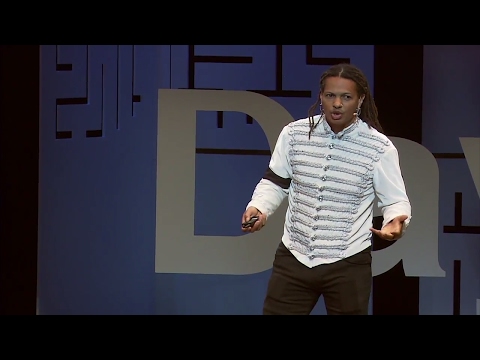
I’m an astronomic means that I study the
motion of objects in space and know we
all don’t wear what I’m wearing right
now so interestingly enough you know
from the dawn of the Space Age it all
started with one single satellite which
was Sputnik and it was an object of one
and we had this space race and it was
the u.s. versus the Soviet Union and the
interesting thing is we have a lot of
objects in space it’s not just a couple
it’s not just a few countries it’s lots
of countries lots of objects and
unfortunately there’s a big problem with
all these objects that kind of impending
doom of sorts but rest assured your
lives are in danger yet but our way of
life is certainly something that could
be threatened because all of us depend
on space services and capabilities all
of us have this cool little cell phone I
definitely use it I don’t remember the
last time I actually pulled out a map to
go from point A to point B I have this
nice dot that tells me turn left and 500
feet that sort of thing all of us are
accustomed to watching TV and seeing our
favorite sports channels sometimes the
weather the hurricane that just happened
right we had a lot of warning that this
was happening
it wasn’t like all of a sudden this hit
without any sort of notice we actually
knew when this is happening where it’s
going so all of these things depend on
space services and capability is very
important stuff so what am I talking
about here when I talk about all this
traffic and space so here we go so this
is a nice little video from NASA’s
orbital beep program office at Johnson
Space Center Houston and interestingly
enough the US Department of Defense
maintains a catalogue of 20
two thousand things the size of a
softball and large size of this cell
phone in larger twenty-two thousand
things and out of those twenty two
thousand things only about 1400 of those
things work and everything else is
garbage everything else is garbage and
the thing is most of that stuff it
doesn’t come back it just stays up there
in perpetuity
it’s just orbiting around and the thing
is even something as small as a coin
hitting you at a very fast fast speed
could also disable your satellite
disable your mission GPS could be
disabled by debris that could happen and
so things in sufficiently low Earth
orbit those things kind of reenter in
fact on average about one to three
objects per day reentrant burns up in
the atmosphere some of them survive
which is kind of scary to think about
thankfully most of the planets covered
by ocean so most of that comes into the
ocean but most of that stuff stays up
there and the thing is even if we didn’t
launch anything else that population is
self-growing because on average every
two to five years things collide with
each other and they become more and more
objects so it’s a thing it’s not so good
it’s kind of a problem and whose problem
is it who has a responsibility and we’re
going to talk a little bit about that
moving forward so space is kind of like
the Wild West
in many respects and and and why do I
say that I say that because there’s this
kind of lawlessness there’s no kind of
rule of law governing what happens in
space necessarily it’s kind of like the
Wild West that way by the way there’s a
lot of money that’s being had from space
services and capabilities it’s not just
communications but I’ve talked to
venture capitalists and angel investors
and it’s that kind of what’s the quick
return on my investment how can I put
something on orbit and I hear things
like pixels for dollars people want to
have information on tap we heard earlier
about how we have so much information
these days and how that is just doubling
and quadrupling in size on a daily basis
kind of thing
and so there’s a lot of information that
is out there to be had and people have
noticed that and by the way being able
to have things that look down people
want to have live stream video of what’s
going on on the surface of the planet 24
hours a day seven days a week all the
time so can you imagine just having on
your cell phone seeing who went to the
grocery store who didn’t I mean we
talked about privacy earlier I’m telling
you that’s out of the window with these
constellations of satellites going up
and just collecting all this data and
selling it to the highest bidder
I’m afraid that maybe you know privacy
is something that needs to be relooked
at right also the price of going to
space that’s becoming cheaper and with
cheaper access to space it’s kind of
like the Transcontinental Railroad which
connected the east coast to the west
coast I mean once this happened
businesses just started thriving
businesses boomed but with the cost of
getting the space becoming cheaper more
and more people just putting stuff up
there but there’s not a whole lot of
regard to pollution and so back in the
mining days you know you had mercury
deposits you had silt in the water that
sort of stuff it’s not like those the
EPA back in those days in the Wild West
and guess what there’s no EPA for space
there are people who care about it but
there’s no kind of enforceable mechanism
to do any of this stuff 22,000 things
orbiting by the way the 22,000 things
there’s actually more stuff and the
22,000 things are only the number of
objects that were actually tracking so
we’re facing what I call the tragedy of
the Commons and what is that well turns
out that there is this guy in 1833
William Foster Lloyd posited that when
you have a shared resource a common
resource with multiple players and all
those players are acting independently
and in self-interest that they tend to
behave contrary to the benefit of the
whole alright lots of words Murray what
does that kind of mean well let’s assume
that we’re all cattle grazers cattle
herders not that I would like to do that
but let’s just for the sake of argument
say we’re all you know cattle herders
and we had this common plot of lands
and for each head of cattle right we get
paid more more profit more heads of
cattle but at some point if any one of
us has too many cattle then there’s over
grazing and then it hurts everybody
that’s kind of the direction that we’re
going on in space is that we have more
and more participants more and more
actors we started off with Sputnik and
now from just a couple of countries now
we have I think the United Nations
recognizes well over 60 countries
participating in space so it’s not just
a couple now it’s like 60 of them
tragedy of the Commons we don’t want
that to happen
so here’s this interesting plot and I’m
not going to ask the people at the top
row to read this but what I want to tell
you is the following remember I showed
you that video 22,000 things buzzing
around the planet so there’s this
interesting sensor developed by the US
government through DARPA and MIT Lincoln
Laboratory that sits in New Mexico not
too far away from where my family
actually lives and it’s a really cool
sensor because the good news about Space
Surveillance telescope is that it
detects lots of stuff the bad news about
the space debris was telescope is that
it detects lots of stuff and so
basically what you see behind me is you
see a bunch of dots all of those dots
are detectors it’s what the sensor
detected on one night one night of
detections
of things in space the dots that are
black are things that we know what they
are the dots that are not black who
knows we have no idea which dot of those
could be harmful could be a threat is
just a piece of something floating
around or some satellite that’s trying
to do something weird or freaky who
knows so we have a problem we detect
lots of things that we can’t track we
don’t know their orbits we can’t figure
out what they’re doing or how they’re
behaving so it’s tough to regulate
something when you don’t completely
understand what’s going on all right so
who’s involved in this whole business
well turns out that you have governments
involved not just the US government but
you have the United Nations you have
governments from all over the globe they
care about this problem you have NGOs
professional societies you have
diversity x’ you have private industry
so it’s a global problem it’s
everybody’s problem because everybody
many people depend on these services and
capabilities from space but who’s
responsible is the government’s well at
some point governments put stuff up
there but it’s not just governments
these days certainly not professional
societies academia lots of universities
are saying hey I can put stuff in space
I’m just going to dump a bunch of stuff
into orbit but do they really understand
all these risks right industry certainly
Boeing’s Lockheed’s tons of companies
they’re putting up stuff they want to
put more stuff they want to bring you
write this information on tap
human-based activity all the time
knowing what everybody’s doing what’s
going on all this activity but it’s
nobody’s just single claim nobody’s just
going to strap this on and take this on
wholeheartedly so what’s the
government’s role in all this for sure
one is to retire the risk invest in
education right make make it such that
now you can transition the technology to
private industry regulate and enable
people have said oh well whatever these
people just self-regulated themselves
right well turns out that the people
already on orbit making a lot of money
maybe they don’t want Jimmy to be part
of that because they want the lion’s
share
so self-regulation maybe that’s not the
answer certainly you want the government
to be able to assess and enforce tough
keep people safe much like you have
people enforcing when people run red
lights and that sort of stuff somehow
there’s got to be some assessment and
some enforcement what’s industry’s role
certainly to get educated about the
problem and support education act
responsibly but we need to determine
what is that what is responsibly and
neighborhood-watch we don’t have enough
data to see what’s going on everywhere
all the time and we need to rely on the
citizens of that community to kind of
look out for each other as well so that
needs to happen what’s what’s academia
is role in all this certainly to provide
an education to train people right
fluor the art of the possible we should
be visionaries we should be thinking
out-of-the-box it shouldn’t just be a
couple of people’s ideas it should be
everybody’s ideas your ideas and we need
to really develop the science and
understanding to make all of those dots
that weren’t black black dots okay we
want to understand what’s up there how
it’s behaving be able to predict it and
only after monitoring and understanding
all that can we start really
understanding why are the next steps to
solve that problem so what can you do
well I think a couple things for sure I
guess I’d like to challenge you to see
you know when you’re at your next party
or next coffee break obviously not here
because you’ve heard this but once you
like go someplace else how many people
actually know about this issue how many
people know that there’s this problem
that there are 22,000 things in space
the size of a softball and larger and
all these things are criss crossing each
other and there’s these you know
abilities for things to collide and
disrupt a lot of the service and
capabilities that you depend on talk to
your governments you know you folks our
constituents people need to hear from
you and your voice and certainly this
idea of just getting educated you know
there’s a lot of information on the web
but if you wanted to you know
participate in this stuff maybe be an
astronaut a missus I’m not going to give
you one of my jackets but I’d certainly
welcome you to the club and I’d love for
you to be a part of that so thank you
very much
[Applause] [Music]