
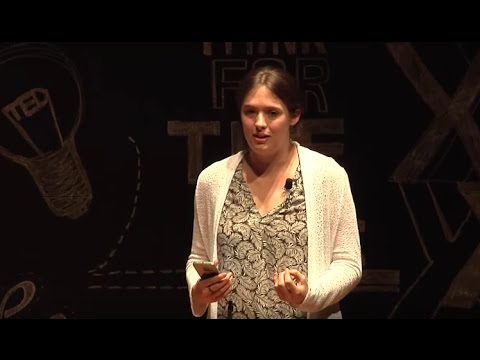
you have behind you good afternoon
everyone my name is Stephanie and I’m so
excited to be here today I work for a
global human trafficking anti-human
trafficking organization called a21 the
quote on the screen behind me is from
the founder of a21 Christine Caine I
think that it represents the mindset
that I have in the work that I do every
day but it also is very appropriate for
today’s TEDx APU themed thing for the
best
so a21 stands for abolishing injustice
in the 21st century the organization was
actually founded by Christine Cain after
she was traveling through Thessaloniki
Greece through the airport and she saw
many posters of missing women and
children all around the airport which
prompted her to ask the question what is
happening in this region that is causing
so many people to go missing it was them
that she first learned about human
trafficking and what’s happening in our
world shortly after that in 2008 a21 s
first office opened in Thessaloniki in
Greece now today as you can see on the
map we have 11 officers in 10 countries
worldwide each office will has a unique
approach to the situation depending on
the community that they’re in this means
that some officers will have shelters
and they’ll focus on internal and
external rehabilitation and counseling
and safe repatriation so returning
victims of trafficking back home other
organ other officers will focus on
prevention on awareness on education and
on fundraising I am based in our
Thailand office and I work in prevention
and awareness
and in education for Thailand for
Southeast Asia for most of my adult life
I’ve been pursuing a career in Human
Rights through the work that I do
through volunteering and also through
education through what I studied I
believe that if you pursue right a
career in human rights there are two
paths that you can go down you can take
the first path which is you become
overwhelmed and negative and angry that
all the human eye of human rights
violations that you see every day and
all the cases that you work with on a
day to day basis and it can be out of
that anger that drives the work that you
do or you can become an eternal optimist
which means that for every negative case
that you or a situation that you’re
faced with you know that there are
hundreds of more positive cases and
positive outcomes for everyone I choose
to be the eternal optimist this by no
means means that I am always happy I’m
not you can ask my friends and family
they will back you me up but what it
means is that for for every step that we
take we can make a difference even if
it’s little and so I go with that
positive attitude and to the work that I
do so today I’m excited to be talking to
you about human trafficking which is a
form of modern-day slavery the United
Nations and governments from around the
world agree that human trafficking is a
transnational organized crime this is a
crime that is physical it can be
emotional it can be psychological it is
a crime that does not discriminate
against anyone however it often affects
the most vulnerable the most poor the
most ostracized groups in our
communities many times its traffickers
and trafficking that is focusing on
individual
simply trying to make a better life for
themselves human trafficking is complex
if you ask me what’s the definition I
can tell you but the definition the
United Nations definition is more than
200 words of complex legal jargon which
is in a annex of 10 pages which is in a
convention of a hundred pages so really
when you want to get a good idea as to
what a transnational organized crime is
what human trafficking is what does it
look like you need to really understand
this so oftentimes you get through this
and you think I still don’t know I still
not sure exactly what it is there are
plenty of people that debate definitions
and they spend time arguing over this
because how do you draw a physical
boundary like a definition around such a
complex contextual and personal human
rights violation so today today I want
to talk to you about human trafficking
but I want to talk to you using a story
I want to ask you a few questions I want
to tell you a story of survival a case
that we’ve worked on and then I want to
try and equip you practically to make a
difference I believe that the only way
that we can truly understand what human
trafficking is and what someone else has
been through is to walk in their shoes
so I’m going to talk to you about the
story of Bea this story is about a young
mother who’s from the west coast of
Africa who herself and her parents
decided to sell many of their
possessions so that she could move from
the west coast of Africa to Thailand set
up a small business and then send money
home in supporting her family and her
children so she left and she left with
full of hope of what the future was
going to bring but also with the weight
of the world on her shoulders knowing
that this is really that only chance
that she has unfortunately as soon as
she arrived in Thailand she was attacked
she was robbed she had all of her
possessions stolen in
of moments her entire inheritance was
gone everything that they were lying on
because of the language breakdown
she couldn’t ask for help and people
around her couldn’t offer help because
no one could understand each other
until one lady did she offered this
woman help she said if I’ve got a place
that you can stay I have a job that you
can do now young mother was so
overwhelmed with this kindness that she
took this woman up on her offer
however this offer was to work in the
sex industry and not leave and so our
young mother ended up in the sex
industry and didn’t want to stay there
but she had her papers taken she had her
freedom taken she couldn’t leave and
that’s when this woman who had offered
so kindly to help her in fact became her
trafficker and young mother became a sex
slave in Thailand so after quite a long
a long time a young mother got enough
courage to leave she escaped and this is
in the story where her trafficking
journey should be over and she should
have seen freedom however because she
didn’t have papers to be legally in the
country she was detained she was
misidentified as a illegal migrant and
taken to immigration detention which
happens there frequently it was there
that our organization were able to help
her along with the help of another
fantastic organization and sadly this
was at the end of her trafficking
journey so we were able to get her out
pay off debts that she had reunited her
with her family
get her the rehabilitation and
counseling that she needed but in this
time her parents had both died in the
Ebola crisis when we look at this story
from a distance its trafficking there’s
a trafficker there’s a trafficked person
there was sexual exploitation there was
lack of freedom papers were taken all of
this is human trafficking yet if we
deconstruct it a little bit it’s not as
complicated see what what took her away
from her home and took her across the
world was poverty and a lack of economic
– Nadine what stole her livelihood was
the stigma sorry was the hatred and the
selfishness of the people that attacked
her that decided to traffic her the
customers that used her every night
despite not wanting to be in that
situation what kept her in that
situation was the stigma and apathy
shown towards her just another sex
worker just another illegal migrant just
another African woman what got her
detained instead of assisted and what
got her misidentified in as a illegal
migrant rather than a victim of
trafficking was lack of understanding
and lack of education so that’s poverty
hatred selfishness stigma apathy lack of
education lack of understanding all of
these things are not unique attributes
to traffickers but they’re things that
we experience in our own communities in
our own lives when we look at the case
of B in her story yes it was successful
we were able to help her we were able to
reunite her with her family give her the
care and the love that she needed
however every day another young mother
brother son father sister daughter a
trafficked when we repatriate someone
home the our job doesn’t end in fact our
job often gets a lot more difficult and
more complicated because we want to
return people back to somewhere safe to
Economic Security somewhere that you
know there are job opportunities what
this means is that we need to not only
rely on rehabilitating the one life
which is incredibly important in what we
do but also focus on how do we end human
trafficking completely and that requires
looking at prevention and awareness and
education and addressing economic of
opportunities and job opportunities so
this is important what’s interesting is
that people are often
they feel diminished that they as
themselves cannot make an impact because
they feel overwhelmed or uneducated on
that specific topic and this yes can be
true but at the same time it’s important
to recognize the reality is that
everyone is qualified to show kindness
and that is what it takes in these
situations see traffickers and the
criminals are the minority here many
human rights violations continue today
not because we’re overwhelmed by
traffickers and people that are bad but
because too many good people are not
speaking up when we see something bad
happening oftentimes this is just out of
fear that if we do speak up we’re going
to fail because the problem is so large
and we’re so small so I find this
interesting did you know that an ant can
lift more than 5,000 times its own body
weight so I imagine how my brain works
sometime in history it’s tiny little ant
sees this giant cookie fall off a table
this little ant goes oh my goodness I’m
gonna get that I’m gonna take it home so
excited as an observer when you see this
tiny little ant looking at this cookie
like he can lift it you think you’re
crazy
there’s no way that thing is 5,000 times
bigger than you but actually you can he
looks at the wall she looks at the
seemingly impossible and still decides
to try and I think with human rights
violations like human trafficking we
need to be little ants we need to look
at that seemingly impossible task and
still decide to try see if today you
told me tomorrow I’m gonna go on my
local radio station and I’m gonna tell
everyone
human trafficking needs to end I promise
you tomorrow human trafficking will not
end and you will fail that monumental
task
however that doesn’t mean you shouldn’t
still try because by you just going on
to the radio station you’re impacting
the lives and raising awareness of
everyone that is listening to that
station so if enough of us start making
Margaret Mead once said never doubt that
a small group of thoughtful committed
citizens can change the world
indeed it is the only thing that ever
has and I agree especially on this issue
see we as a collective whole can make a
difference if it’s a lack of education
and understanding that is causing people
to be misidentified as illegal migrants
or for the general population to not
know about the issue then we as a
collective whole can choose to educate
ourselves learn more about the issue we
can then choose to raise awareness and
educate others on this issue if it is
stigma and apathy that’s causing people
to remain enslaved we as a collective
whole can choose to care and we can
choose to change the way we think about
people different people groups different
career choices we can choose to think
about this differently if it’s demand
that is keeping there’s pushing people
into being trafficked and into horrific
exploitative situations
we as a collective whole can choose to
stop the demand this can look like
buying ethically or supporting
organizations where we know where their
supply chain comes from where our coffee
comes from where our chocolate comes
from we can do that as a collective
whole we can make a big impact it’s
important to recognize that your
influence as an individual is powerful
is incredibly powerful in your sphere
with your friends with your family in
your workplace at your school right at
the beginning I said Christian Kane our
founder saw posters of missing women and
children
and she felt moved to do something she
said this cannot happen on my watch
and then she started a21 less than a
decade later because of one person’s
conviction more than 400 victims of
human trafficking
have gone through our aftercare program
and are now living a much better life
because of that one person’s conviction
more than half a million people have
been impacted through our prevention
programs in schools and in universities
this is huge this is a lot of people
because one person decided I can make a
difference no matter how small I’m going
to try so we need to recognize the
wealth and potential that we have in our
own lives and go for it
in the words of brené Brown we need to
dare greatly see the young mother in our
story dead so greatly that she traveled
halfway across the world to make a
better life for herself for her children
she risked at all and unfortunately part
of her journey was awful and now she’s
starting again we need to dare greatly
to make a change to make an impact to
speak up against the small things we
need to look at the seemingly impossible
and still decide to try we need to take
a stand against things like poverty
against the hatred and the selfishness
that happens in our world against the
demand against the lack of education and
understanding on issues we need to take
a stand on this no matter how big the
issue seems we can we can end human
trafficking we can end modern-day
slavery in our lifetime if enough of us
decide to make a difference use our
little ant voices raise the issues and
if enough of us do it we’re going to be
heard thank you [Applause]