
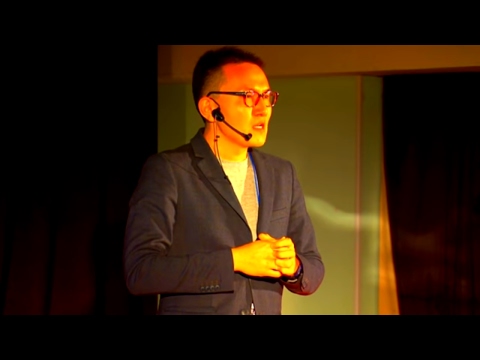
very narrow mind and a very personal
goal I was a very small kid in Dhahran
growing up in during the changes seeing
my family struggled through getting
fired doesn’t know what to do in life
and feeling the hard economic transition
of Mongolia and then I had a chance to
study in the United States when I will
finished eighth grade on a scholarship
and ever since then I’ve joined husband
and then I joined Ministry of Finance
trying to figure out what I want to do
in life how can I change my country and
how I can become somebody who is
respected who is loved and who brings
positive change to my society then I
looked at all the majors where I can
secure scholarship it was a very
personal goal and then I figured if I
choose to be a journalist then rotary
will give me money to study wherever I
wanted quite frankly at the time I
couldn’t afford the school to pay for
the tuition to study in the universities
that I want my parents couldn’t afford
it so scholarship was my only option
then when I got selected the scholarship
committee asked me what are you going to
do for this education that we’re gonna
invest in to you when you return what
are you gonna do it was a simple
question it was an honest question so I
told them I see injustice in our society
I see little people getting pushed
around I see babies need quality medical
service and I feel and breathe this
smoky air every winter I want to change
this and I want to change this fast we
want change and we want it right now
if I wanted to be a teacher I can hope
that my students will become a better
voters and change the system that we
currently reside them but I wanted to go
there faster so I told them I see
journalism as a tool to fight corruption
I see journalism as a tool to speak
truth to power
I see journalism as a tool to better our
society so today’s talk I named it can
journalism save Mongolia in the rhetoric
it sounds like Donald Trump’s slogan can
we make Mongolia great again but unlike
the Americans I think Mongolia was
actually truly great couple of hundreds
of years back we always rely on our back
how Chinggis Khaan conquered half of the
world how we let everybody practice
their religion how Mongolia had his
National Constitution rule of law based
society centuries ago so in order to
answer that question in the short
minutes that it’s given to me I’m
actually quite enjoying this audience
there’s no distraction you won’t you
can’t look at your cell phone working in
television and in journalism we would
love an audience like this one somebody
who pays attention to every word that
I’m saying because right now in
Mongolian media there’s 500 players and
there’s roughly around 120 million
dollars that were dividing it’s
unsustainable journalists are low paid
politicians own most of the media
channels and there’s a lot of paid for
journalism which I shared from TEDx or
lammeter stage three years ago because
we went undercover and we tried to show
there’s paid for journalism in nine of
the biggest media houses we got
criticized we say in Mongolian you spit
back to the bowl that you eat from the
very Mongolian culture cultural norm
that journalists don’t criticize each
other but journalists are people too
meet your house owners are people to
meteors are people and people make
mistakes and we should if you’re a good
friend you should tell your friend that
you make your mistakes so they can not
they can learn from that mistake and not
make the same mistake again so right now
there’s not enough money go in media and
there’s so many players and then we’re
all shouting but the big question that
we’re not asking ourselves is that are
we listening or really representing are
we truly portraying or truly speaking
through to power I don’t think that’s
the case right now in Mongolian media
but with changing landscape growing
number of educated professionals
returning to Mongolia and with the set
of values that you guys bring into
Mongolian society I think media is
bettering and had learned that through
the hard way through three years ago
when we did the undercover sting called
McDonald’s we set up a fake company we
started calling media offices would you
run the story if I pay you and they all
said yes they didn’t check any facts
they all just ran the stories then we
confronted them your nature your
business that you’re in
is you’re in the business of telling the
truth why would you run something that
somebody just pays you and then after
that I learned that if I want to go for
I have to go with the number of people
in the media industry I can’t go and I
can’t have impact if I go at it alone so
I started building communities in the
journalism Center the community we set
up was called media Council Mongolia how
many of you have seen post that please
share until this person is ashamed of it
can you raise your hand most of us have
seen that post recently we are seeing
that
this grandfather is holding its baby and
he’s trying to sell it for a vodka that
post was fake but it hurted that family
so now the police is investigating that
case this is the danger of social media
and this is the danger of posting
anything you wanted without thinking of
the other person without caring for
media ethics so we thought let’s fix the
ethics issue first so the media ethics
council got together every week every
Wednesday at 4:00 p.m. and we talked
about different ethical issues that
surrounds us that censors us that made
us look bad that make us look weaker as
a media and journalists and then we
finally set up the self-regulation body
called Mongolian Media Council so any
one of you in this audience is ever get
attacked by a reporter or a media or
your parents and if a media doesn’t play
by the ethical rules that ground our
journal ground our profession then you
can actually file a complaint you don’t
have to go to the court and then the
group of people that we set up and has
elected into the self-regulation body
will review your story and then they
will conclude that this was unethical
this was a wrongdoing of the media if we
want people to be responsible if we want
politicians to be responsible we have to
be responsible first so this was the
first case and recently we have been
getting into investigative journalism
investigative journalism as transparency
international has put it can be
effective way of fighting corruption as
much as national laws so the barometer
shows that the public trusts
investigative journalism to fix the
social issues to shine light on issues
that wouldn’t have come out to the
public so when we do investigative
journalism alone when you do it alone
you don’t have as much power
in numbers the biggest investigative
journalism collaboration that Mongol TV
newsroom and I was lucky enough to work
on was Panama papers Panama papers is
now changing how financial worlds
operate globally
what does BVI companies mean how does
people hide their money
how does people use this money to supply
Wars and prostitution and child labor
and so on there’s power in numbers
if 40 journalists are doing the same
investigation the person who is trying
to hide the information can they get to
all 40 of them can he stop us from
publishing maybe he can get to one or
two of us but he can’t reach all of us
that’s why starting from two weeks ago
we started the conversation to set up
the first Mongolian investigative
journalism Center this will serve the
public interest
these will publish the horror stories
that single editorial offices couldn’t
publish and we really think that this
will make mongolia great again so when
we do in when we started into
investigative journalism Mongolians are
so used to paid for journalism and
uncredible media they started attacking
us by four or five different methods
first they say oh they’re trying to
serve the different party they’re just
serving somebody else’s interest not the
public’s interest trying to discredit us
second they pull advertisers away from
us advertising is the only form to make
money for television stations
unfortunately we’re also working to
change that so when they pull
advertisers away from us they’re trying
to starve us they try to make us weaker
so that we play by the rules so that
when they give us advertisement money we
will play by their rules and thirdly
they put personal attacks on us on
social media
investigating into our family’s family
investigating into our credibility
questioning is tagua
good journalist its Mongol to what does
Mongol TV stand for but big part of
doing investigative journalism is to
defend your work you have to stand by
the reports that you have you have
investigated and revealed to public so
three years ago when we went undercover
and revealed media corruption people not
all of the people supported us they
questioned our credibility as well about
one year ago when we started since this
May when we started investigating Panama
papers people tied that to the local
elections they said we are trying to
hurt these politicians three weeks ago
we investigated a financial regulator
who has hide away his companies his
wife’s companies his uncle’s companies
his friends companies by law he has to
declare these things on his income
statement but he people choose to follow
but how are you gonna regulate companies
if you’re hiding your companies that’s
the question we brought to him and our
report was on right after Mongolia’s Got
Talent because we wanted the Mongolian
public to hear that this person is
hiding his money and how can he serve
the Mongolian public as a civil service
director how many of you watch
Mongolia’s Got Talent it’s a good number
the studies showed that 42 to 72 percent
of Mongolian audiences tuning in how
many of you watches the primetime news
on mongol TV called organ sack this is
the problem with journalism now people
like entertainment but people don’t
choose to watch the information that’s
going to help their lives and make them
make better decisions like in elections
but when we the point I’m trying to make
is that three years ago the reception
was very different but we can prove that
the time is changing with some of the
comments that we receive on our social
media channels we get a lot of people on
Twitter and Facebook who says that we
are brave that they are behind us that
they want journal they want to see more
of this style of journalism so I think
the Mongolian public despite our
cultural norms wants to support
investigative journalism and I think
that’s where Mongolian media can really
become vital because when media is not
strong the politicians or
decision-makers or corrupt officials
they can easily utilize media to attack
their opponents and discredit honest
hard-working journalists so who are we
trying to represent why do we do media I
went into journalism with a very narrow
mind but when I started practicing
thinking that these people have believed
in me when people believe in you you
feel empowered and you want to change
your country but fast so this is the
kind of people that we are trying to
represent in which we are trying to
defend let me show you a short video
that we made during New Year’s time two
years ago
familiar faces worn out places worn out
faces no expression no expression hide
find it kind of funny I find it kind of
sad the dreams in which I’m dying are
the best I’ve ever had
our newsroom decided to spend New Year’s
evening with the Mongolian people that
we’re trying to portray and every time I
watch this video why do we do what we do
is who will stand up for these people
and who will defend their right to know
and ask for social justice and I think
that’s where brave journalist come in
and I think with your support and with
the group that communities that we’re
building I think we can bring social
justice to Mongolia thank you [Applause]