
as scientists businesses and residents
seek to remedy the negative
environmental impacts of the huge oil
spill in the Gulf of Mexico it is clear
they must also address some of the
golf’s long-standing problems even
before the BPL started spewing oil the
Gulf region struggled with poor water
quality loss of wetlands and plummeting
populations of a variety of animal
species it turns out one possible key to
solving some of these issues is an
unlikely living creature the oyster
hundreds of years ago Reeves created by
the shellfish were located throughout
the Gulf Coast and there are old records
that talk about these reefs being so
expansive as to block shipping traffic
due to changes in water quality due to
over harvesting we’ve lost about
eighty-five percent of the oysters
throughout the United States about fifty
percent of the oyster reefs are gone in
the Gulf of Mexico large oyster reefs
breakup waves and slow storm surge that
can wash away marsh Beach and even homes
the oysters also filter organic
materials such as algae from the water
which helps seagrass beds they also
provide habitat for small fish and other
creatures
the Nature Conservancy is working with
the National Fish and Wildlife
Foundation Louisiana State University
and other partners to learn how best to
restore oyster beds in this project in
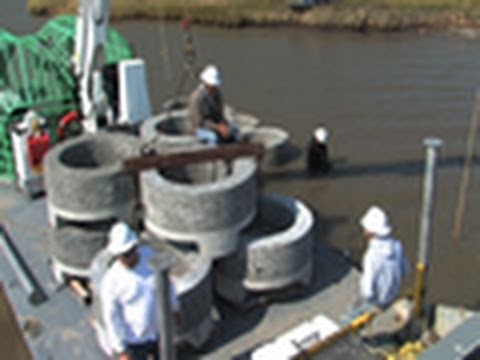
Louisiana’s vermilion bay workers are
building 700 feet of artificial reef
using oyster break rings which are made
of a material called oyster creek the
structure is being designed with the
type of concrete and the ingredient in
the concrete which attracts oysters to
them they have a lot of cavities and
holes and pervious areas that they can
hide in to be able to mature this is an
oyster right here is growing inside one
of the crevices the after just a few
months this section already has growth
toenail is sticking out and he’ll be
growing curbing out this way the Nature
Conservancy has to Louisiana oyster
projects that are comparing the Rings
against another reef building structure
that uses steel and this is just a
demonstration project we’re really
trying to look at across Louisiana
across the Gulf how different artificial
oyster reefs how effective they are in
different habitats it isn’t clear yet
how the oil spill has and will continue
to affect the already vulnerable
Easter’s but efforts to keep the oil
away from the wetlands may have actually
had a negative impact but a lot of
oysters were killed because of the large
amount of freshwater that was put into
the system by opening up our diversions
along the Mississippi River in an
attempt to try to flush oil from the
marsh and to keep any additional oil
from entering the marsh so as government
and non-governmental groups seek ways to
address the negative impacts from the
oil they may also learn more about how
to address some long-standing problems
but coastal restoration is not going to
be solved with any one silver bullet
there’s going to be some large-scale
strategies fresh water diversion that
puts fresh water and sediments back into
the marsh system but there are going to
be some conservation targets if the
oysters are able to latch onto suitable
structures artificial or otherwise both
scientists and oyster harvesters hope
they can make a come back and help
improve the health of the Gulf
post
you
Please follow and like us: