
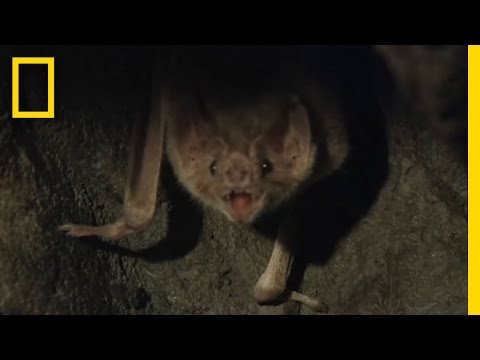
much like their mythical namesakes
vampire bats must feast on fresh blood
every two to three days or die of
starvation they seek out warm-blooded
mammals thriving off domestic livestock
living in the tropical regions of South
and Central America most victims never
feel a thing
in the bite itself is superficial but
increasingly bats are targeting humans
and the encounters are turning deadly
the bats are blamed for rabies outbreaks
in Peru a National Geographic grantee
Daniel Stryker is researching the
environmental causes and extent of the
disease vampire bats are kind of the
perfect storm of different ecological
characteristics on the 110 these bats
are feeding on larger mammals which are
susceptible to rabies and in order to
feed on these animals to drink their
blood they have to bite inviting is also
the main group of transmission and
gravis virus striker is surveying
vampire bats from the Amazon rainforest
to the farms along the valleys of the
Andes Mountains
vampire bats are native to puristic but
500 years ago settlers imported an ideal
food source cattle and as the number of
livestock increases and spreads across
the country so too does the population
of vampire bats today large colonies
thrive near areas devoted to ranching
yet despite the burgeoning bat
population it’s rare for people living
in these agricultural areas to become
infected with rabies rabies is a
frightening and deadly disease a classic
form of the disease turns even docile
creatures into aggressors that folman
the mound but the strain found in
vampire bats is different it’s known as
paralytic or dumb rabies causing
disorientation muscle weakness and event
yeah
to learn more he must turn the tables
this time it’s a human taking blood from
a vampire working at the Centers for
Disease Control and Prevention or the
CDC in Atlanta
Streicher adds a lab strain of the
rabies virus to blood samples he
collected from vampire bats in Peru
after an incubation period the test
results will show which bats had been
exposed to the rabies under the
microscope fluorescent green dye
indicates no antibodies present meaning
the bat was free of disease but if the
results come back clear bat has any
bodies and Stryker knows the bat was
exposed to rabies in the recent past so
this is an important test for us because
it allows us to first determine whether
the virus is present or absent in a bat
population and finally we can ask some
questions at the population level
specifically asking things like as you
have more livestock in a given area do
you see a higher proportion of bats that
have been exposed to this virus
preliminary results indicate the vampire
bats from agricultural areas may
actually have a higher rate of infection
than do bats from other parts of the
country so why then to so few people who
live near cattle ranches fall ill the
phrase if there are so many bats around
infected with the disease Stryker
believes that the livestock act as a
buffer bats prefer passive herds to
people reducing the attacks on people
but as vampire bat populations increase
and more livestock become infected this
could pose a greater rabies threat to
people in the future the same theory may
explain why human rabies is more common
in Peru’s Amazon rainforest here
development such as long combining road
construction is wiped out fast tracks of
habitat and reduce wildlife populations
and since there’s not much livestock in
this area the bats turn to another food
source humans
there may be fewer infected bats but
they bite people more frequently this be
why the disease is far more common here
than in the Angelus there’s much more to
learn about how widespread rabies is
among the countries bat populations what
we don’t know is how this disease is
persisting in the vampire bat so we and
as a correlative that we don’t know
where it is they’re part of us so again
much more widespread potentially it’s
it’s always present formations Stryker
will continue to collect data hoping his
research will eventually help predict
where people will need to be vaccinated
the more he learns about this
frightening disease
the chance we may someday be able to
control it
Please follow and like us: